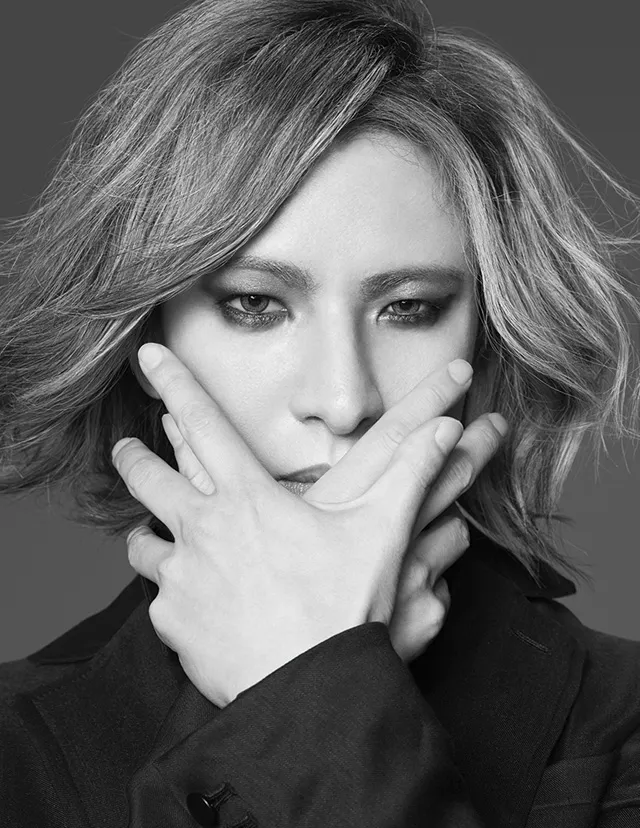
The Architecture of a Life: YOSHIKI and the Discipline of Emotion
by Vera Von Monika
In the global landscape of contemporary artistry, few figures embody the intersection of vulnerability, precision, and myth-making as completely as YOSHIKI. His work - spanning classical composition, rock performance, fashion, philanthropy, and ritualistic reinvention - is not a career so much as an emotional architecture: a world built from discipline, grief, and an almost sacred devotion to expression.
What makes YOSHIKI singular is not simply what he creates, but how he inhabits emotion. His music moves between delicacy and rupture, his fashion work blends elegance with theatricality, his presence oscillates between silence and spectacle. This duality is not contradiction - it is design. It is the blueprint of a life shaped by intensity.
YOSHIKI does not perform emotion, he constructs it.
Every gesture, every chord, every silhouette is part of a broader architecture of feeling.
His compositions are not dramatic for effect, but because they rise from a place that predates performance: the wound, the longing, the refusal to disappear.
Where others express, YOSHIKI endures. Where others entertain, he builds.
This approach has defined his decades-spanning journey.
From the visceral chaos of X Japan to his orchestral performances at global institutions, from his philanthropic commitments to his fashion collaborations, YOSHIKI’s work carries a rare internal coherence.
Across every medium, he returns to the same elemental language: elegance, rupture, devotion, restraint.
There is an unmistakable poetic quality to his presence - not sentimental, but architectural.
A line held too long.
A silence that becomes a statement.
A vulnerability worn like armour.
He is an artist shaped by contradiction: intensity delivered through discipline, spectacle constructed from fragility, beauty born from sorrow.
This tension is where his power lives.
In fashion, he gravitates toward forms that echo his musical world: clean lines, dramatic contrasts, silhouettes that speak in crescendos and diminuendos. His aesthetic is less about appearance and more about atmosphere - the emotional temperature that clothing can hold. Even his collaborations exist within his emotional continuity: they translate his internal world into material form.
His philanthropy, too, follows the same emotional logic. It is not an accessory to his fame but an extension of his worldview - the belief that beauty and responsibility must coexist, that sensitivity is strength, and that expression must be tethered to humanity.
Across continents, YOSHIKI has become a symbol of artistic sincerity in a culture that often celebrates noise over meaning. His work reminds us that emotional extremes can be refined rather than exploited, that grief can be generative, that elegance can be a form of defiance.
To encounter YOSHIKI’s art is to enter a space where emotion has been carved with precision - where pain becomes architecture, where discipline becomes poetry, where presence becomes its own language.
He is not simply an artist in many forms.
He is a world in many forms.
And that world continues to expand - quietly, intensely, deliberately - with every note, every gesture, every act of creation.
This essay continues my exploration of emotional architecture, aesthetic restraint, and the lives of artists who build worlds rather than works. YOSHIKI stands as one of the rare creators whose presence, discipline, and vulnerability form an integrated artistic language - a language that moves beyond genre and medium into something entirely its own.
 @vera.von.monika
 @veravonmonika
 Ameba
Ameba