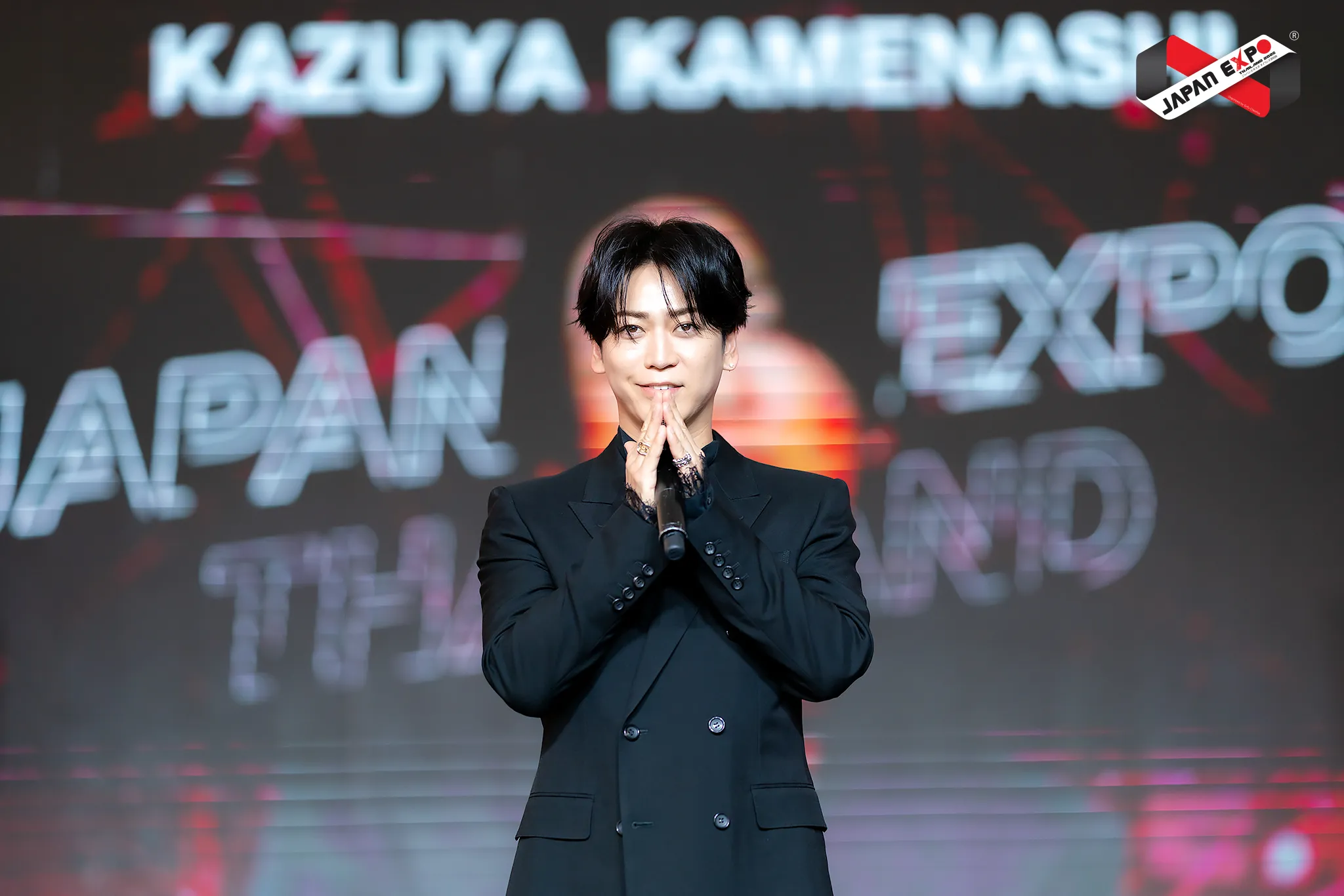
Kazuya Kamenashi:
The Authority of Placement
at Japan Expo Thailand
by Vera Von Monika
In Southeast Asia, presence is read before it is interpreted.
At Japan Expo Thailand, Kazuya Kamenashi’s appearance registered not as performance but as calibration, an understanding that cultural exchange does not require excess, only accuracy. In a space often driven by volume and spectacle, his positioning was quiet, deliberate, and unmistakably intentional.
Kamenashi’s visit to Bangkok formed part of his “TALK to ME” Fan Meeting Asia Tour 2026, held on February 7 at CentralWorld. The structure of the event itself matters: not a distant arena spectacle, but a format built on proximity, conversation, live interaction, controlled performance. The architecture of the encounter mirrored the philosophy behind it.
Visually, the message was equally controlled. Across appearances, he remained in black tailoring: minimal, precise, without ornamental distraction. Even in different silhouettes, the palette never shifted. In a convention space saturated with colour and kinetic energy, that consistency read as decision rather than styling. The choice did not compete with the environment, it stabilized it.
Japan Expo Thailand has long operated as a bridge between Japanese pop culture and Southeast Asian audiences, but not all appearances serve the same function. Some amplify visibility. Others refine meaning. Kamenashi’s participation belonged firmly to the latter. He did not arrive as a legacy figure leaning on recognition, nor as a transient guest chasing reach. He arrived as someone acutely aware of what he represents, and what no longer needs proving.
This distinction matters. At this stage of his career, Kamenashi’s value is no longer tied to output alone, but to selection. Where he appears, how he appears, and what he chooses not to emphasize have become part of the message. Japan Expo Thailand offered a context that privileges cultural fluency over saturation - a region where Japanese entertainment is not consumed as novelty, but sustained as relationship.
What unfolded was not an attempt to dominate the room. It was an exercise in alignment. The setting allowed Kamenashi to exist within a broader Asian cultural conversation without flattening his identity into exportable shorthand. His presence suggested trust in the audience’s intelligence, a refusal to overexplain, overperform, or overcorrect.
This is particularly significant given how Japan Expo Thailand functions. The event is not merely a showcase, it is a convergence point where fandom, industry, and cultural diplomacy intersect. To step into that space without theatrical self-positioning is to understand that influence does not always announce itself. Sometimes it stabilizes the atmosphere instead.
Here is where Kamenashi’s self-understanding becomes legible.
He operates less as a figure seeking expansion than as one maintaining internal consistency. His public choices increasingly suggest a man attentive to proportion, aware that overexposure dilutes meaning, and that clarity intensifies it. This is not withdrawal, nor hesitation. It is authorship exercised through placement: knowing when presence speaks louder than assertion.
There is a particular kind of confidence in that - the kind that does not ask to be noticed, yet changes the temperature of a room when it arrives. It is difficult to miss once you recognize it.
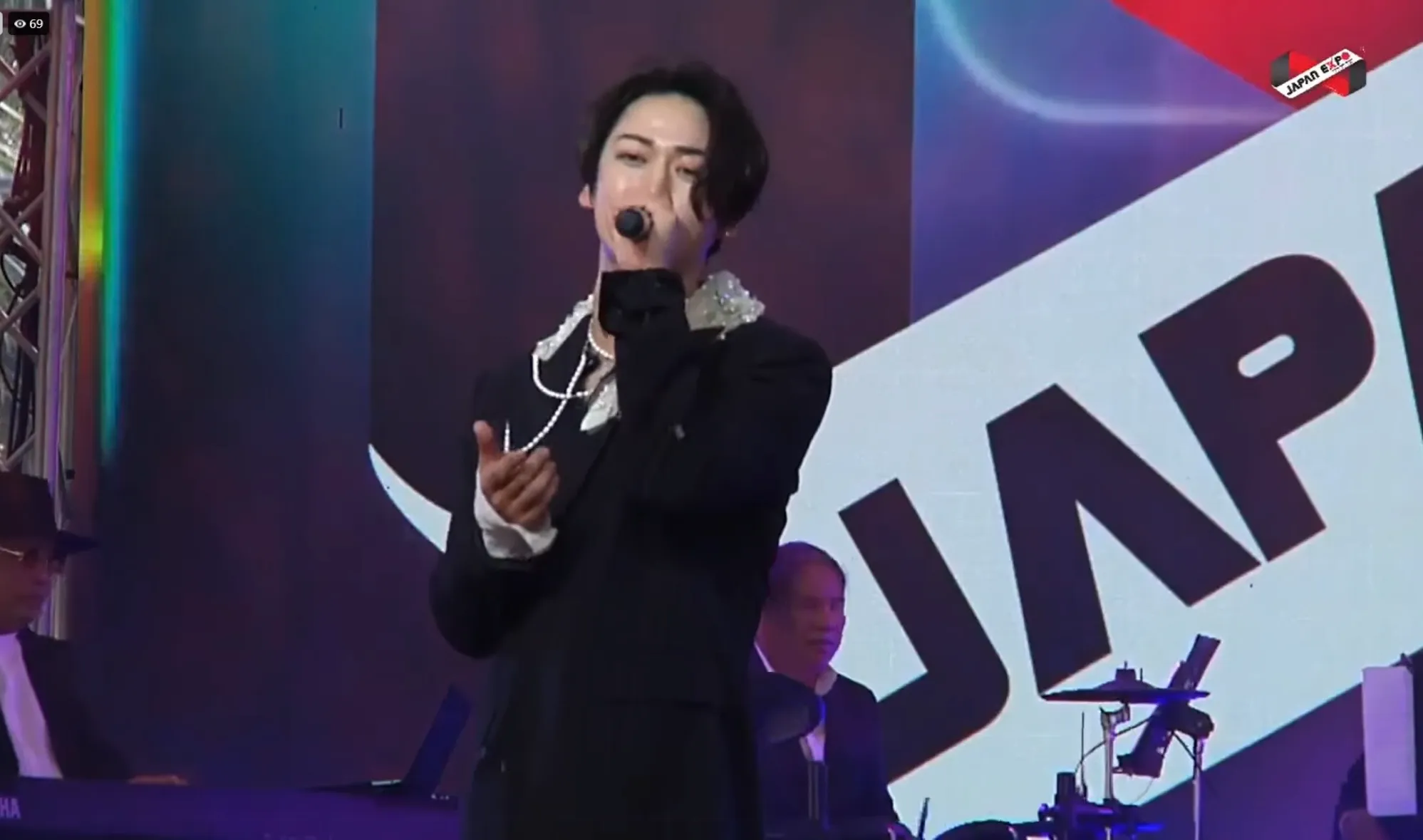
Rather than centering himself as the event’s gravitational force, Kamenashi allowed the environment to carry part of the narrative. In doing so, he positioned himself not above the cultural exchange, but inside it - attentive to regional nuance, respectful of shared histories, and conscious that Southeast Asian audiences respond to sincerity more than spectacle.
There is also something distinctly contemporary about this choice. In an era where celebrity presence is optimized for algorithmic circulation, Kamenashi’s appearance resisted that logic. It was not engineered for virality. It was calibrated for recognition - not of the image, but of the intention behind it.
That intention mirrors the trajectory of his career: from idol visibility to actorly precision, from mass address to selective dialogue. Japan Expo Thailand did not demand reinvention. It required articulation. And articulation, when deliberate, outlasts reinvention every time.
If this appearance communicates anything with clarity, it is this: Kazuya Kamenashi understands that cultural power is not accumulated through constant expansion, but through placement. Knowing where to stand - and when - is part of the work.
At Japan Expo Thailand, he stood exactly where he meant to.
And that choice will be remembered longer than any performance designed to be seen.
Author’s Note
This feature considers Kazuya Kamenashi’s appearance at Japan Expo Thailand as cultural positioning within Southeast Asia’s long-standing relationship with Japanese entertainment. The Bangkok stop of his “TALK to ME” Asia Tour functioned less as expansion and more as consolidation - a deliberate adjustment of visibility in a region where Japanese media has sustained influence for decades.
Appearances of this nature are rarely incidental. They signal placement, market literacy, and an understanding that cultural presence in Southeast Asia is maintained through proportion rather than overexposure.
 @vera.von.monika
 @veravonmonika
 Livedoor