Hublot in Seoul: Jungkook and the Redistribution of Luxury Authority
by Vera Von Monika
Luxury does not relocate its center casually. When it does, the decision is rarely declared - it is staged.
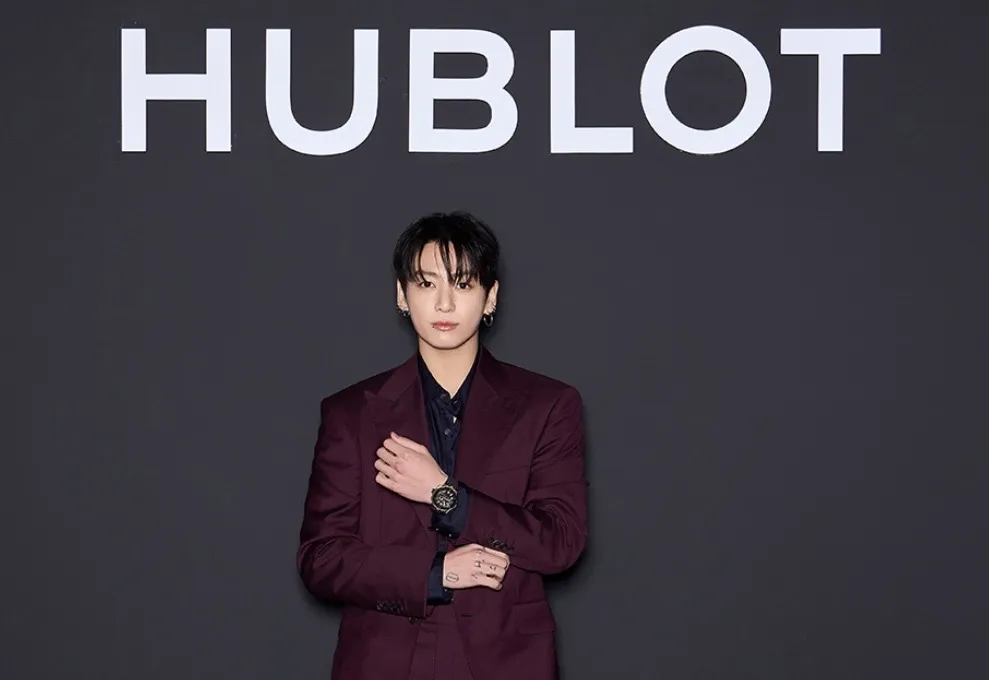
On February 12, 2026, Swiss watchmaker Hublot introduced Jungkook of BTS as its new Global Brand Ambassador in Seoul, South Korea with CEO Julien Tornare present for the unveiling. The setting was controlled: dark backdrop, metallic accents, global press calibrated for immediate syndication, and Jungkook entered with poised confidence, deliberate. It did not read as spectacle. It read as positioning.
This was not simply a celebrity endorsement. It was an acknowledgment of where economic gravity and cultural authority are consolidating.
For much of the twentieth century, luxury power radiated outward from Europe. Paris defined fashion. Geneva defined horology. Milan defined craftsmanship. Asia consumed, adapted, amplified. That hierarchy has not collapsed, but it has evolved under pressure.
South Korea now ranks among the highest luxury spenders per capita globally. In recent years, Korean consumers have accounted for a disproportionate share of global personal luxury growth relative to the country’s population size. In categories central to maisons like Hublot - watches, jewelry, leather goods - demand resilience in Seoul has contrasted sharply with volatility in China and deceleration across parts of Europe.
This matters.
Luxury does not follow attention alone. It follows capital, velocity, and demand stability. Seoul offers all three, alongside something less quantifiable but equally strategic: influence. Korean consumers shape visibility across digitally dense ecosystems that reverberate internationally within weeks.
Within that context, Hublot’s ambassador history becomes instructive. The maison has traditionally aligned with measurable excellence: Olympic sprinters, Grand Slam champions, figures whose discipline mirrors the mechanical precision of Swiss watchmaking. By appointing Jungkook, Hublot recognizes a different but equally rigorous metric: sustained global cultural scale.
As a member of BTS, Jungkook participated in one of the most consequential cultural expansions of the 21st century. BTS did not simply export K-pop, they restructured the economics of global pop distribution - redefining touring geographies, digital fan monetization, and cross-sector brand integration. Their success was not episodic chart performance. It was systemic.
Jungkook’s solo trajectory reinforced that durability, demonstrating commercial autonomy while maintaining collective identity - a balance that reflects how Korean culture now operates internationally: distinct in origin, expansive in reach.
The symbolism of this partnership sharpens further through the lens of time.
A mechanical watch is engineered for continuity. Its value resists disposability. For years, K-pop was dismissed in some Western commentary as cyclical youth culture. Instead, it has embedded itself within global luxury strategy and sustained international consumer ecosystems.
Hublot’s philosophy of fusion - the integration of unexpected materials and disciplines - finds an intuitive parallel here. Jungkook embodies cultural duality: Korean and global, performer and producer, precision and instinct. The alignment operates on conceptual and commercial levels simultaneously.
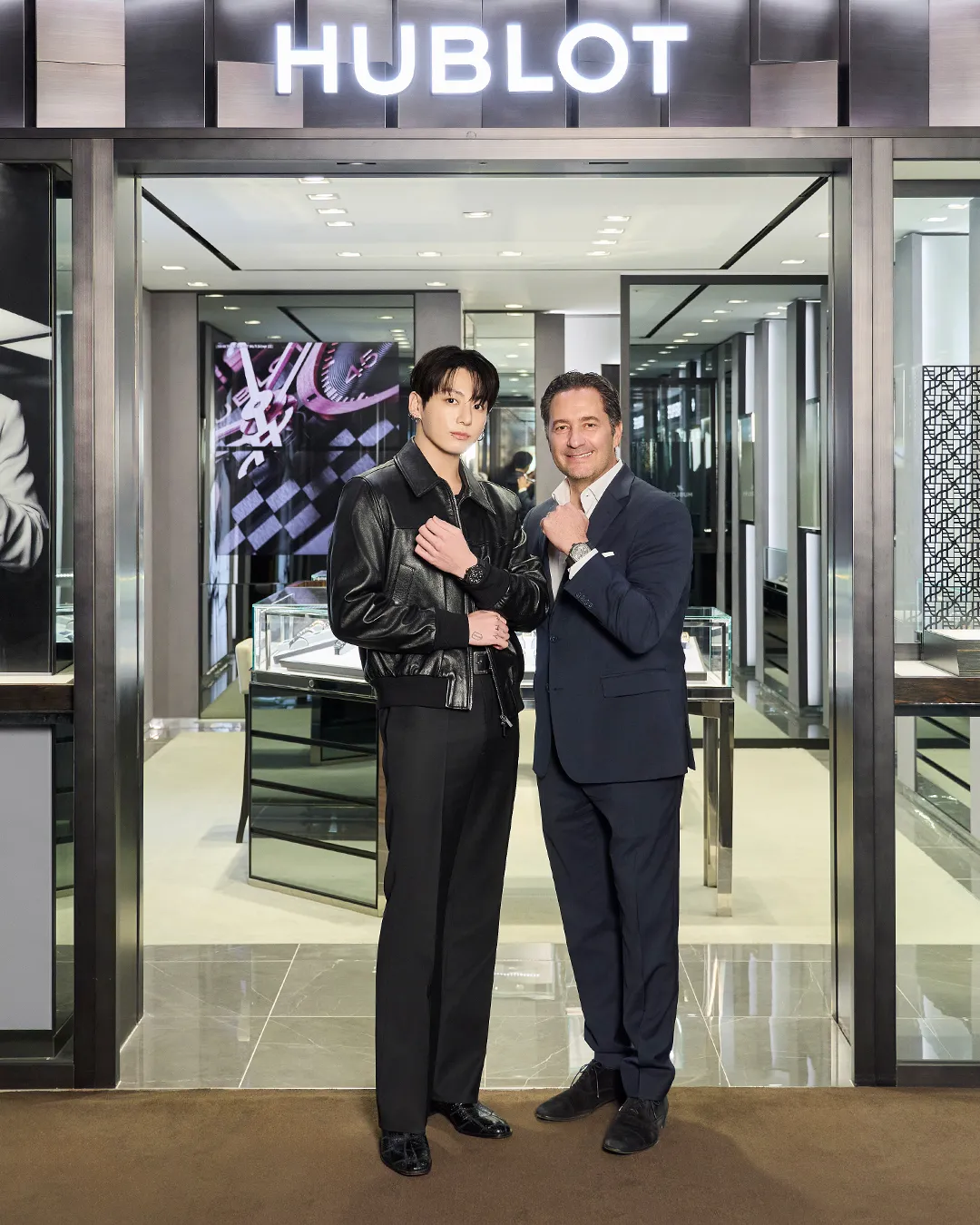
CEO presence underscores seriousness. Executive attendance at ambassador unveilings signals investment priority, not ceremony. In a global luxury landscape where growth has become uneven - with China stabilizing after correction and Western markets facing cautious spending - South Korea represents a rare combination of per-capita intensity and cultural export power.
The implications extend beyond one maison.
Luxury houses increasingly understand that authority cannot be appended through symbolic alignment alone. It must correspond to realities: where audiences reside, where spending concentrates, where cultural authorship originates.
Jungkook’s visibility is not regional. His audience spans North America, Europe, the Middle East, and Asia - a distribution pattern that mirrors the global revenue map luxury brands depend on.
There is also a generational recalibration underway.
Heritage remains foundational to luxury identity - archives, ateliers, lineage. But contemporary prestige requires more than historical legitimacy. It requires fluency in present influence without appearing to chase it. The brands maintaining authority today are those capable of recognizing when cultural power has matured into durable scale.
By unveiling Jungkook in Seoul, rather than relocating the announcement to a traditional European capital, Hublot acknowledged that reality.
The decision reframes Korea not as a passing fascination, but as a stable node within global luxury’s operating map. It suggests that future prestige will be shaped not only by craftsmanship, but by disciplined recognition of where economic strength and cultural authorship intersect.
Timekeeping is precision. Strategically, it is alignment with forces built to last.
The center has not vanished. It has multiplied.
And Seoul now holds measurable weight within that distribution.
Author’s Note
This feature considers Jungkook’s appointment as Global Brand Ambassador for Hublot not as a celebrity announcement, but as a strategic marker within global luxury economics. The unveiling in Seoul, attended by CEO Julien Tornare, reflects South Korea’s increasing weight in per-capita luxury consumption and its expanding cultural influence across international markets.
Luxury decisions at this level are rarely symbolic. They are calibrated responses to sustained market realities.
 @vera.von.monika
 @veravonmonika
 Livedoor