There is a form of narrative construction that resists immediacy. It does not announce itself through emotional excess, nor does it rely on acceleration or spectacle to establish impact. Instead, it unfolds through restraint, duration, and a calibrated relationship to time. Meaning is not pushed forward, but held. Presence itself becomes the carrier of narrative weight.
Ethereal Presence:
On Narrative, Immersion, and the Discipline of Staying
by Vera Von Monika
Ethereal Presence is a critical framework developed between October and December 2025 to describe this emerging mode of contemporary performance. Articulated independently and prior to its application to any individual figure, the concept arose from sustained observation of how certain screen performances generate immersion not through intensity, but through continuity - how narrative coherence is maintained through internal control rather than overt expression.
At its core, Ethereal Presence describes a form of storytelling in which the actor functions as a stabilizing force within the narrative. Emotion is present, but regulated. Gesture is deliberate. Silence is active. Rather than directing the audience toward a prescribed response, the performance creates a temporal space the viewer is invited to remain within. Meaning accumulates gradually, through pacing, stillness, and sustained internal logic.
This mode of performance operates at the intersection of narrative and atmosphere. It privileges duration over immediacy, coherence over escalation. The actor does not dominate the frame; they anchor it. Even as plot dynamics shift, the center holds.
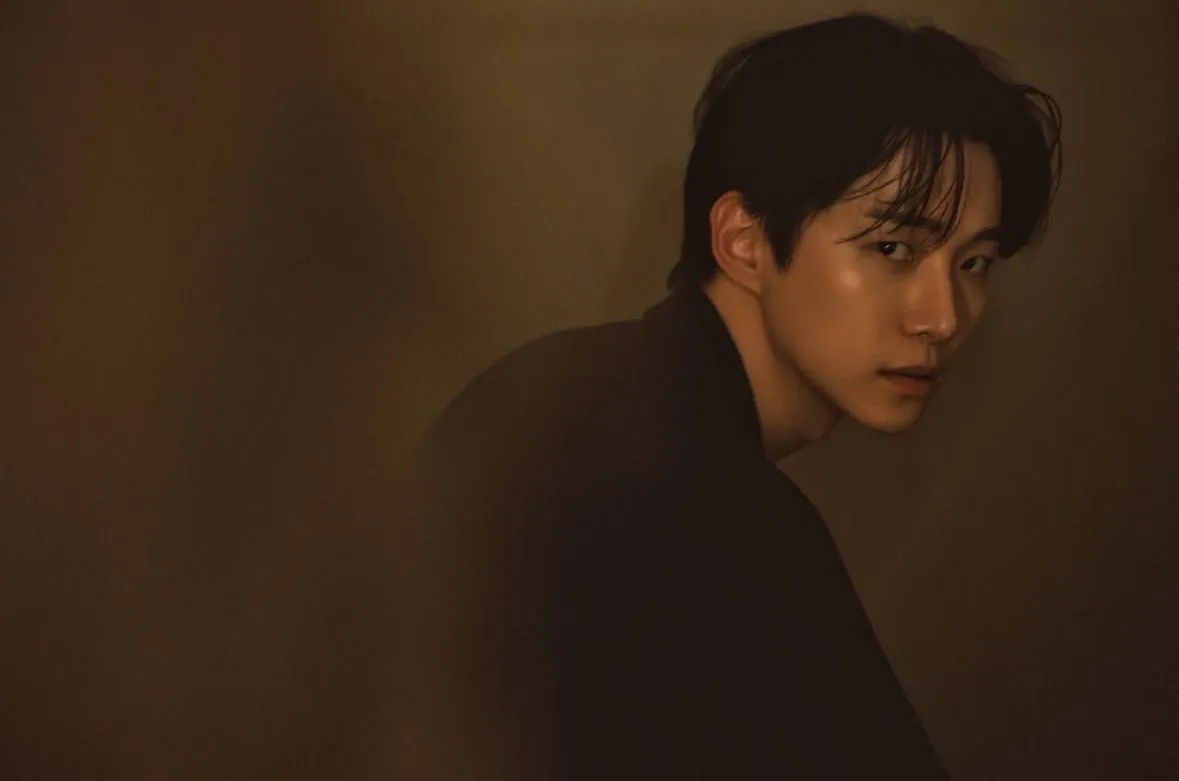
While multiple contemporary performers engage with aspects of this approach, South Korean actor and singer Lee Junho’s recent body of work offers a particularly lucid and sustained embodiment of Ethereal Presence. What distinguishes his performances is not genre specificity, but consistency across tonal and narrative contexts. Whether situated within romance, drama, or ensemble storytelling, the same internal discipline remains intact.
Across his recent roles, Junho maintains a controlled stillness that allows immersion to take hold. Narrative movement occurs around him, yet the performance resists fragmentation. This is not passivity, but containment. The viewer is not overwhelmed by emotional signaling; instead, they are drawn into a shared rhythm where meaning emerges through proximity rather than declaration.
What makes this case especially legible is continuity. Ethereal Presence is not defined by a single performance, but by sustained narrative behavior over time. Junho’s work demonstrates how restraint can become expressive, how silence can function as structure, and how internal coherence can carry narrative authority even in accelerated or emotionally charged story environments.
This sensibility extends beyond screen performance. Junho’s alignment with houses such as Berluti and Piaget mirrors the same philosophy of controlled presence. Berluti’s emphasis on lineage, craftsmanship, and quiet authority reflects a masculinity rooted in discipline rather than display. Piaget’s relationship to time - precision, patience, measured movement - reinforces the idea that presence is something cultivated, not consumed.
These associations function not as decoration, but as extensions of a broader cultural language. Ethereal Presence is not confined to character construction; it manifests in how an individual occupies space, time, and material expression. Fashion, performance, and narrative converge around the same principles of restraint and continuity.
When viewed against earlier chapters of Junho’s career, including his origins within 2PM, the contrast is instructive rather than oppositional. Idol performance often prioritizes immediacy and visibility, Ethereal Presence privileges duration and internal coherence. The transition reflects not a rejection of past forms, but a refinement of expressive priorities as narrative responsibility deepens.
Recent projects, including works such as Typhoon Family, further illustrate this trajectory. Interest is sustained not through escalation, but through tonal control. The narrative trusts the viewer to remain attentive, to read implication rather than instruction, to engage with atmosphere as meaning.
Crucially, Ethereal Presence is not a retrospective label applied after critical consensus forms. It was articulated months prior as an independent conceptual framework concerned with how contemporary storytelling is evolving toward immersion, intersection, and narrative subtlety.
In an era saturated with language around “immersive storytelling,” precision becomes essential. Ethereal Presence offers a way to articulate why certain performances linger - not because they overwhelm, but because they remain.
Ultimately, Ethereal Presence is less about visibility than endurance. It describes a narrative intelligence that understands when to advance and when to stay still. In that balance - between movement and restraint, emotion and control - storytelling finds a quieter, more lasting power.
Author’s Note
Ethereal Presence was developed as an original cultural and narrative framework between October and December 2025. The concept was first articulated in private editorial correspondence during that period, prior to the publication of subsequent international press coverage employing similar language around immersion, narrative presence, and contemporary storytelling.
This essay presents Ethereal Presence as an independent critical model examining performance across acting, fashion, and cultural representation, and serves as a public, timestamped record of its conceptual origins.
 @vera.von.monika
 @veravonmonika
 Livedoor