BTS — ARIRANG:
Reassembling Form After Absence
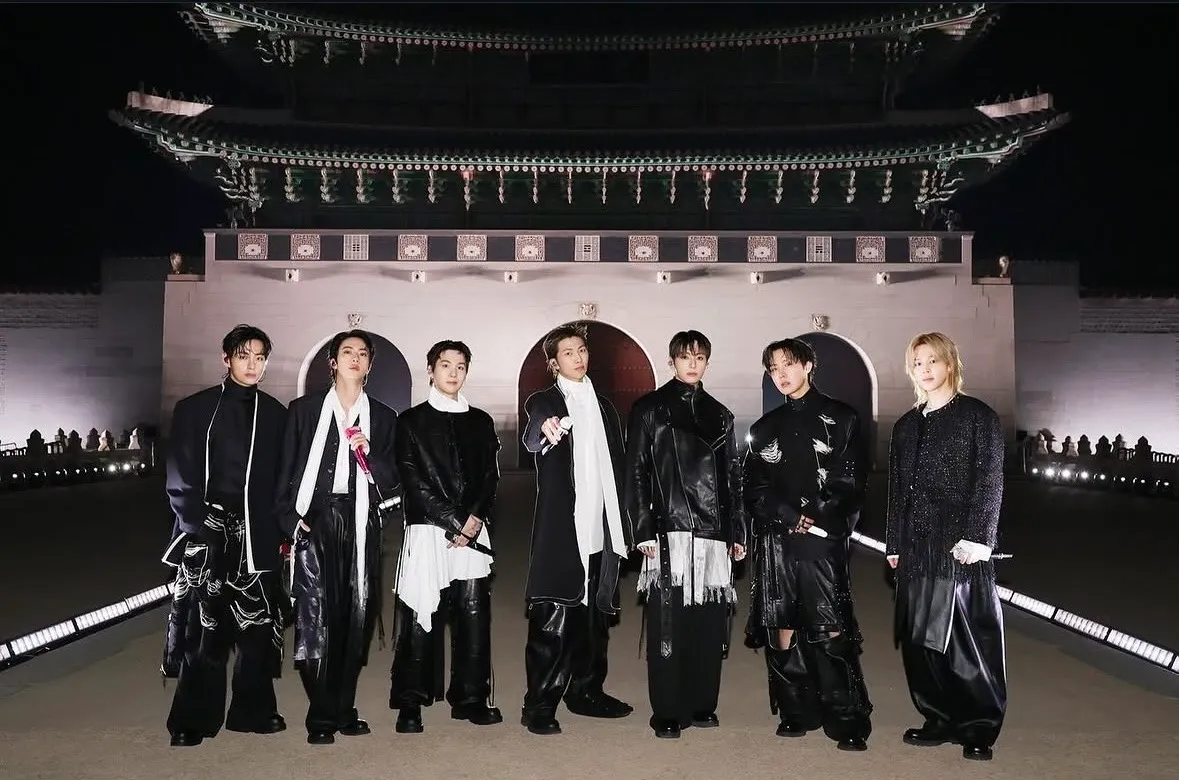
Gwanghwamun Square, Seoul
21 March 2026
by Vera Von Monika
There are returns that rely on recognition, and there are those that arrive carrying the full weight of interruption. When BTS stepped onto the stage at Gwanghwamun Square, this was not an attempt to resume continuity.
It was a moment shaped by nearly four years of separation - a period defined not by inactivity, but by dispersion, military service, and the dissolution of a shared rhythm that had once been constant.
The scale of the return made that tension visible. The performance, staged in the historic center of Seoul and broadcast globally through Netflix, created a stark juxtaposition: the ancient, physical authority of the Square met with a hyper-modern digital reach.
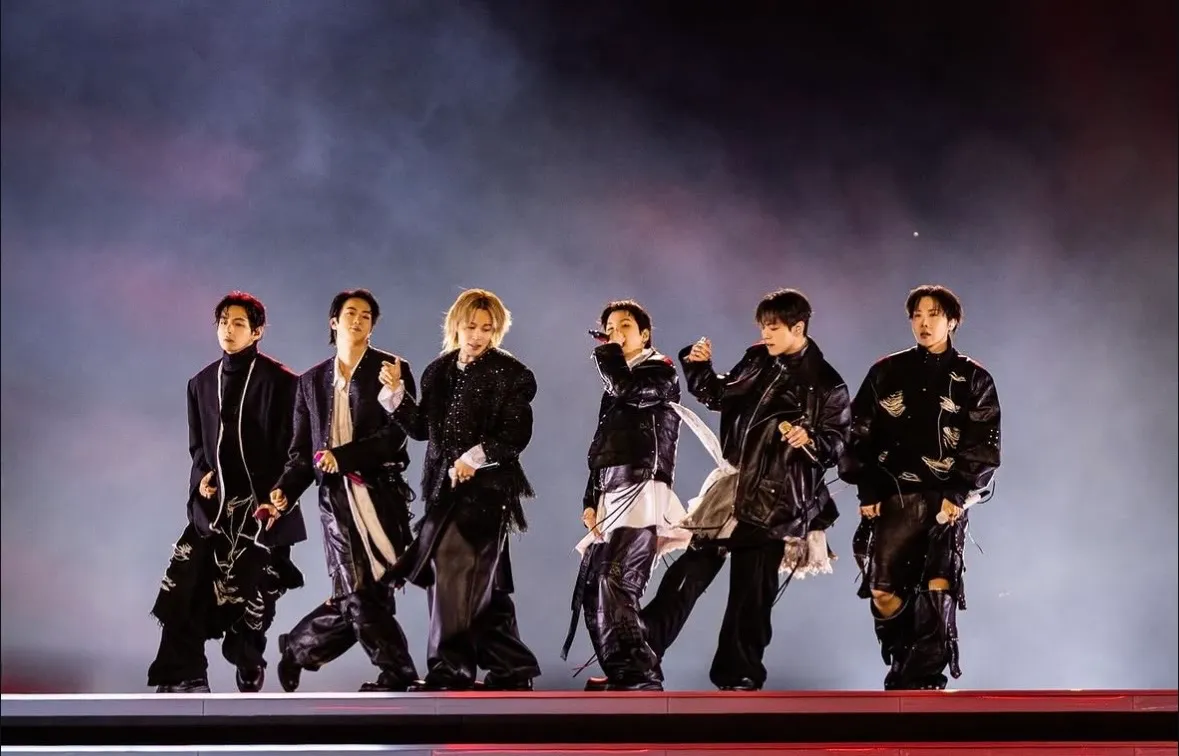
What unfolded was not simply a concert, but a recalibration of how the group occupies space - geographically, culturally, and artistically.
The release of ARIRANG the day prior anchors this moment. Issued on March 20, 2026, the album marks their first full group project following the completion of mandatory military service.
Its title draws from the traditional Korean folk song “Arirang,” historically associated with longing and endurance - themes embedded within the record’s very DNA.
Sonically, this is felt in the way traditional daegeum (flute) and haegeum (fiddle) textures are filtered through modular synths, creating a bridge between historical memory and future-facing production.
What becomes immediately apparent in the live performance is a shift in how sound is shaped. The setlist moves between new material - Body to Body, Hooligan, SWIM, 2.0 - and earlier works such as Dynamite and MIC Drop, but the contrast does not function as nostalgia.
Instead, it reveals a change in internal composition. Earlier compositions, driven by immediacy and precision, exist alongside new arrangements that allow for greater elasticity.
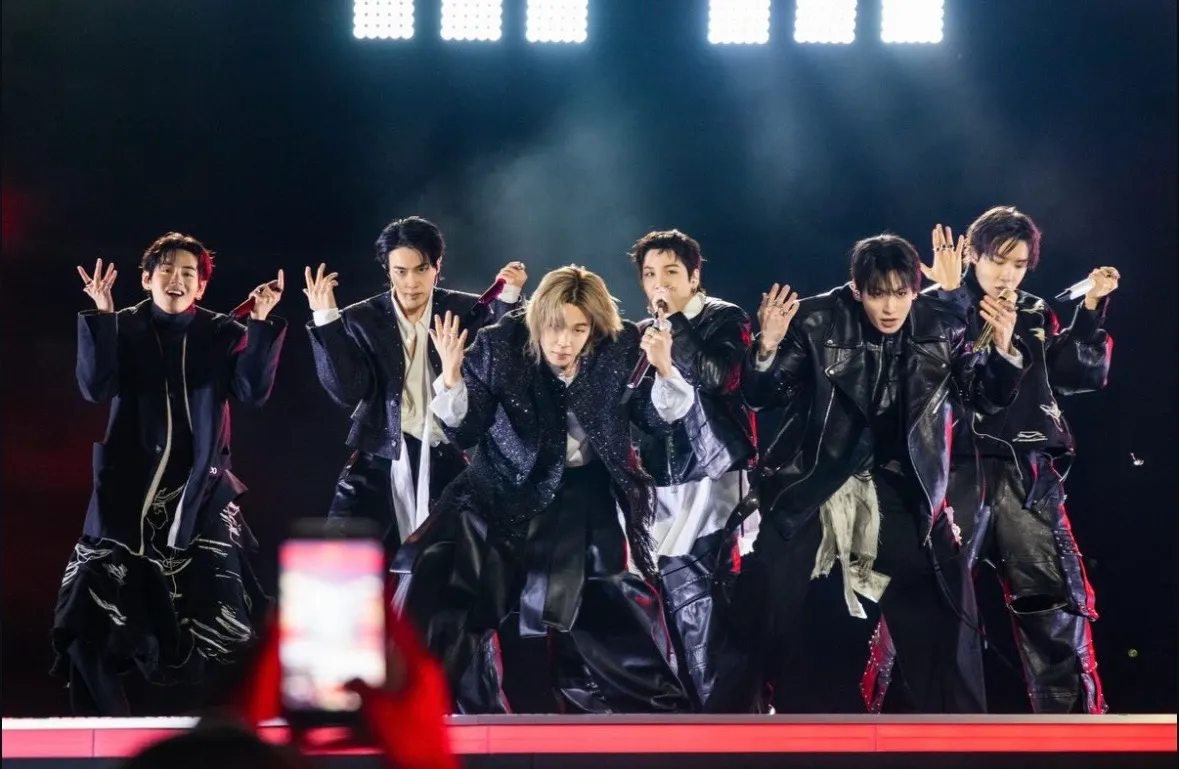
Rhythm is no longer solely directional; it stabilizes rather than accelerates.
There is a noticeable redistribution of weight.
Percussion no longer drives the structure with the same insistence; instead of sharp forward strikes, it settles into a more restrained, almost pulse-like function. In tracks such as SWIM, low-frequency synths stretch beneath the surface while higher, diffused layers create a sense of suspension rather than progression. The result is a sound that does not rush toward resolution, but lingers within its own form.
The vocal arrangements reflect this shift. Lines are no longer stacked for immediate impact, but spaced, allowing tonal differences to remain exposed. Breath, texture, and register become part of the composition itself.
Here, the individual “sonic signatures” developed during their solo years are folded back into the group dynamic without dissolving into uniformity. RM’s delivery moves with a measured cadence, emphasizing phrasing over impact, while Jin’s vocals introduce sustained, resonant tones that stabilize the upper range. Suga sharpens transitions through tonal contrast rather than tempo, and J-Hope navigates rhythm with a loosened precision that resists rigidity. This extends through Jimin, whose phrasing carries a softer attack but greater depth, and V, whose baritone fills the lower spectrum with a controlled, almost cinematic density. Jung Kook completes this balance by moving between clarity and texture, allowing technical control to serve variation rather than perfection.
Together, they form a landscape where no single voice dominates the mix. Instead, they operate as an interdependent system, where contrast, spacing, and tonal identity define cohesion.
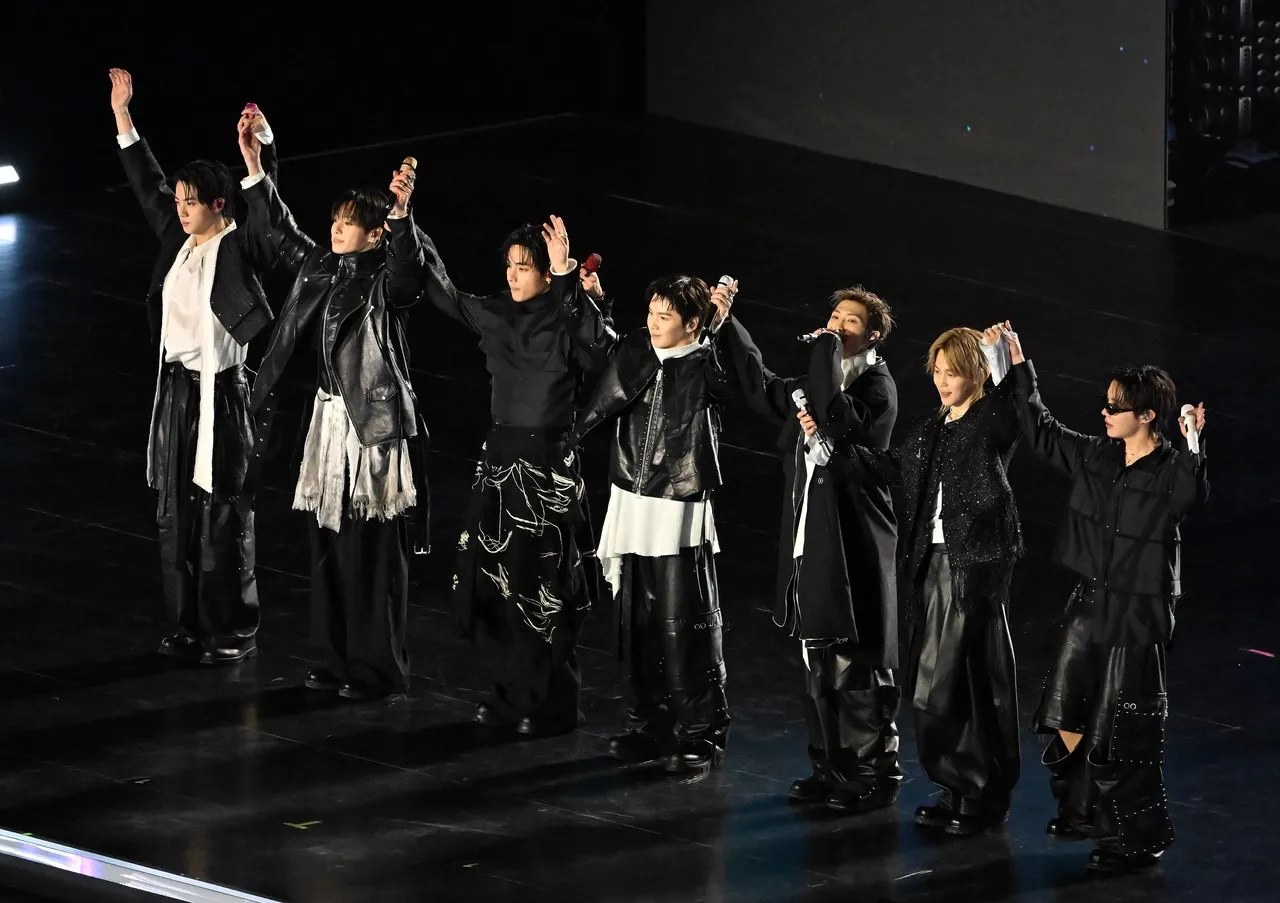
That tension - between movement and anchoring - extends into the visual dimension through a collaboration with Jay Songzio.
The custom collection, titled “Lyrical Armor,” operates as a conceptual counterpart to the sound, drawing inspiration from Joseon-era battle armor (Dujeonggap) and scholar’s robes (Dopo).
The designs use asymmetric patterns where straight and curved lines intersect, often featuring deliberately exposed seams that suggest the “scars of history.”
The garments impose clarity through a monochromatic black-and-white palette, constructed through layered combinations of organza, leather, and linen, evolving as elements are removed.
Each member occupies a distinct archetype within this visual language: Hero, Artist, Architect, Sorigun, Poet, Doryeong, Vanguard.
These roles are not decorative, but embedded within the construction of each silhouette. RM’s presence is articulated through a commanding severity that echoes the authority of military dress, while Jin’s garments fall with a controlled softness that recalls the visual language of the classical artist. Suga’s lines are sharpened, almost exacting, suggesting a mind oriented toward precision rather than display. J-Hope’s draping carries a rhythmic elasticity, drawing from the performative lineage of the sorigun, where movement and sound remain inseparable. Jimin’s form is treated with a lighter hand, where fabric follows motion rather than containing it, lending his presence a lyrical, almost suspended quality. V’s interpretation of the doryeong refines proportion and restraint, producing an elegance that feels both distant and deliberate. Jung Kook, positioned as the vanguard, moves within a more forward-directed silhouette, where tension, density, and cut suggest propulsion rather than stability.
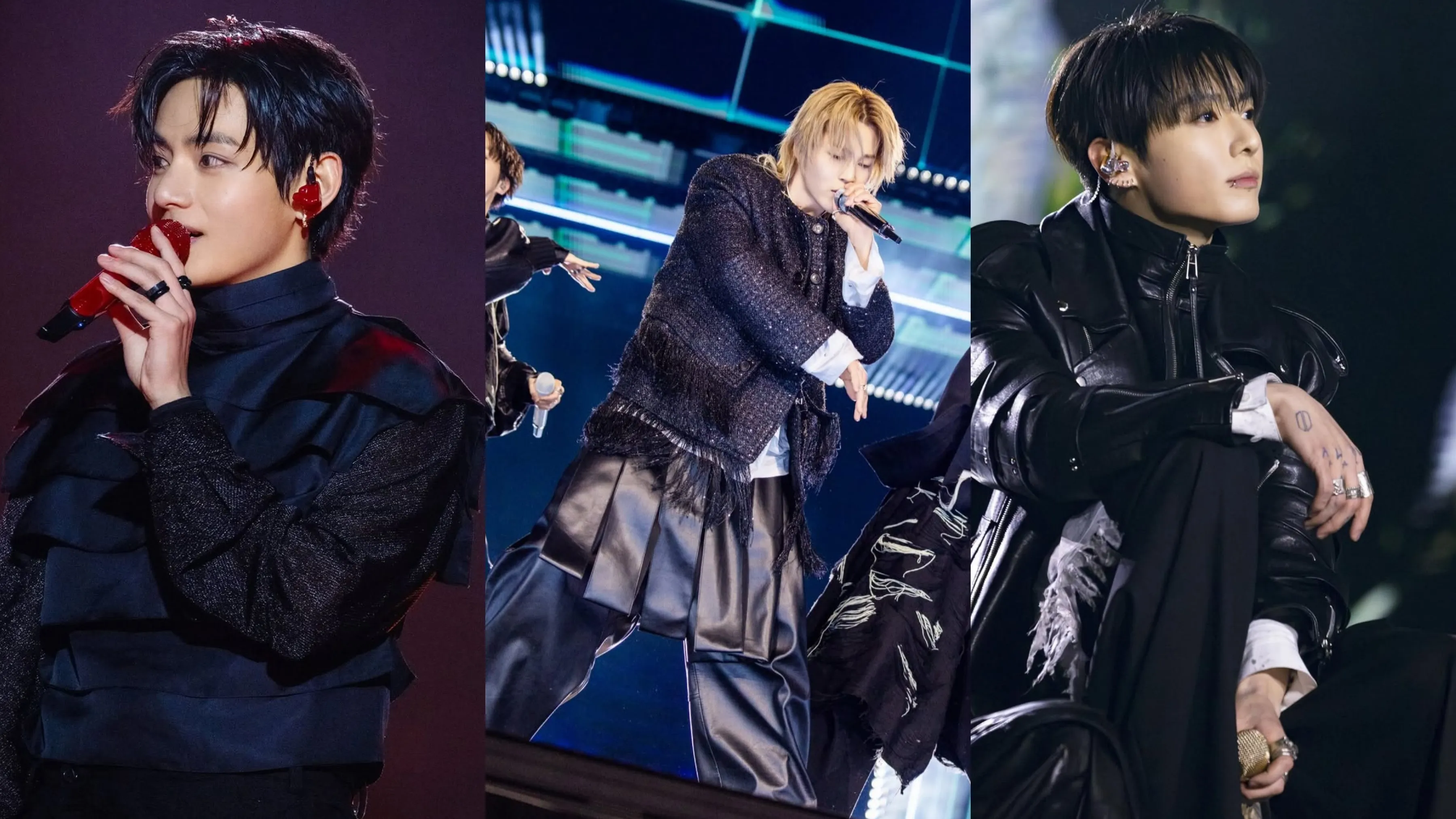
Lines are defined, volumes controlled, and the relationship between body and fabric remains precise.
Movement is not exaggerated; it is contained - making it more legible.
Each gesture acquires weight because it is not dissolved within excess.
In a performance broadcast at this scale - across continents, across millions of viewers - this restraint becomes essential.
Expansion demands counterbalance.
The larger the field of visibility, the more deliberate the internal coherence must become to avoid fragmentation.
What emerges is not spectacle in the conventional sense. Even within large-scale production - light displays, synchronized visuals - the core remains disciplined.
The performance does not attempt to overwhelm. It holds.
This is where the significance of this moment resides.
Not in the fact of reunion, nor in the scale of the rollout - an album release, a globally streamed performance, and a world tour extending through 2027.
But in the way these elements are arranged to accommodate change rather than conceal it.
Time has altered the group. That is unavoidable.
What is notable is the absence of any attempt to neutralize that alteration.
The music allows for space where certainty once dominated.
The visual construction reinforces boundaries rather than dissolving them.
The performance permits discontinuity to exist without forcing resolution.
And yet, nothing feels unresolved.
The cohesion that emerges is not the result of returning to a previous form, but of assembling a new one - one that acknowledges interruption as part of its composition.
To describe this as a comeback is to rely on a framework that no longer applies.
What took place in Seoul was a reassembly - where sound, image, and time no longer operate independently, but are brought into alignment under conditions that have fundamentally changed.
Not a return, but a recalibration - where absence is not erased, but absorbed into form.
Author’s Note
This feature approaches artistic expression as something shaped by time, context, and transformation..
 @vera.von.monika
 @veravonmonika
 Livedoor