The Baeksang “Yardstick”: Industrial Virality, Technical Mastery, and the Shadow of the Daesang
by Vera Von Monika
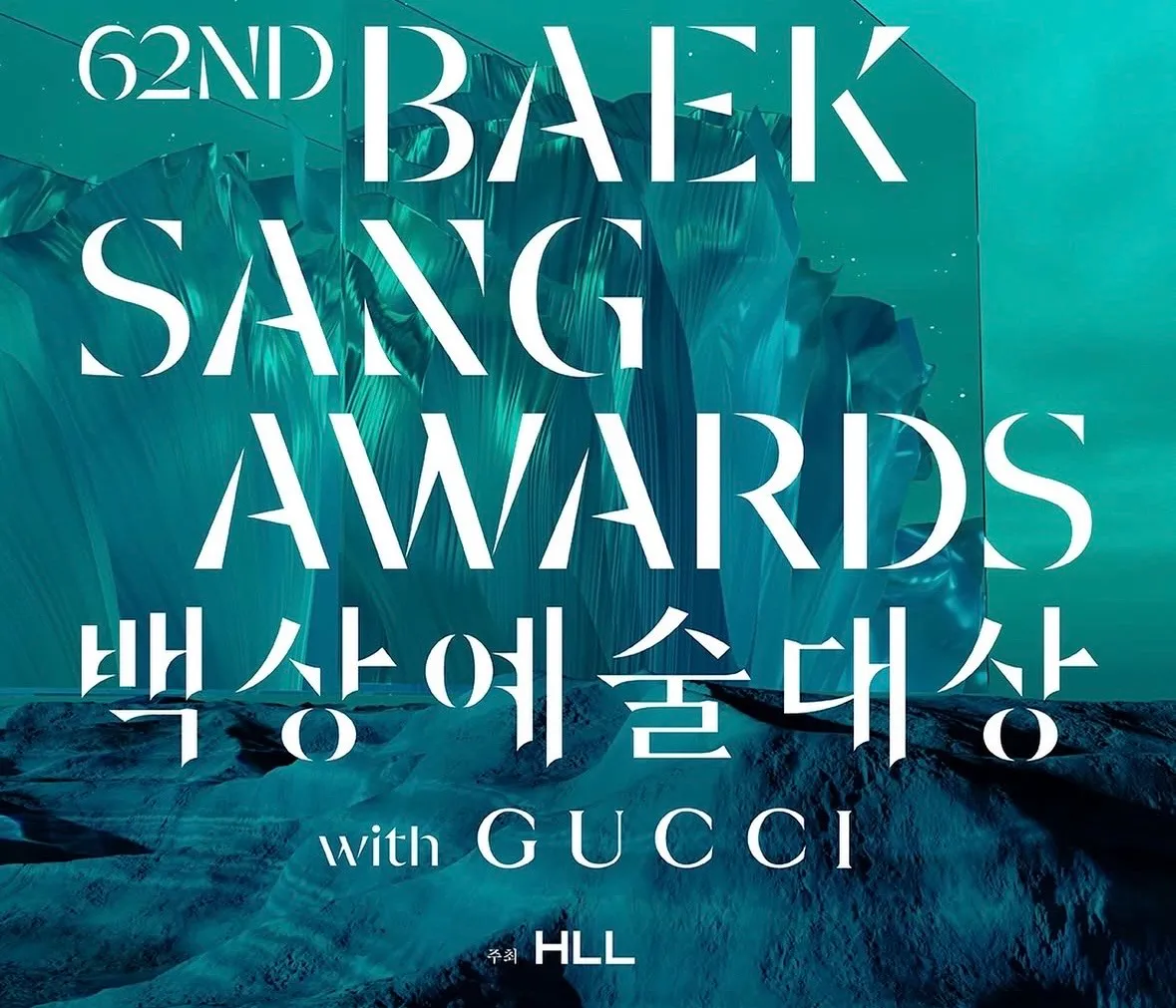
The announcement of the 62nd Baeksang Arts Awards nominees on April 13, 2026, has ignited a fierce debate about the shifting metrics of excellence in the Korean creative industry. While the ceremony is often called the “Korean Oscars,” the 2026 Best Actor shortlist reveals a visible tension between the jury’s appreciation for cultural resonance and the persistent marginalization of technical, genre-breaking mastery. To analyze this fairly, we must look past the individual nominees and into the structural politics of the Baeksang protocol.
THE PROTOCOL: A HIGH-STAKES SELECTION ENGINE
The Baeksang Arts Awards is unique because it is a top-down, expert-led evaluation rather than a submission-based one. The process is designed to operate as a supreme court of artistic merit, proceeding in three stages.
It begins with a preliminary expert survey of 30 to 60 industry professionals per category - including producers, critics, and representatives from organizations like KOCCA - who identify a broad pool of candidates that garnered significant attention between April 1, 2025, and March 31, 2026. From that pool, a specialized seven-member judging panel conducts three rounds of secret, rigorous voting to arrive at a final shortlist.
Beyond acting skill, the jury formally weighs the social messaging of a work, a standard institutionalized through honors like the Gucci Impact Award, which recognizes content that fosters discourse and expands audience awareness.
This final criterion is not incidental. It is the engine that drives many of the outcomes - and the controversies - that fans are currently debating.
THE DAESANG SHADOW: WHY THE GRAND PRIZE DICTATES THE NIGHT
The Grand Prize (Daesang) is the highest honor of the evening, and it routinely creates a trickle-down effect that explains most of the perceived snubs in the individual categories. When the jury’s consensus crystallizes around a single work or performer as the defining statement of the year, the surrounding categories tend to align with that judgment rather than contradict it.
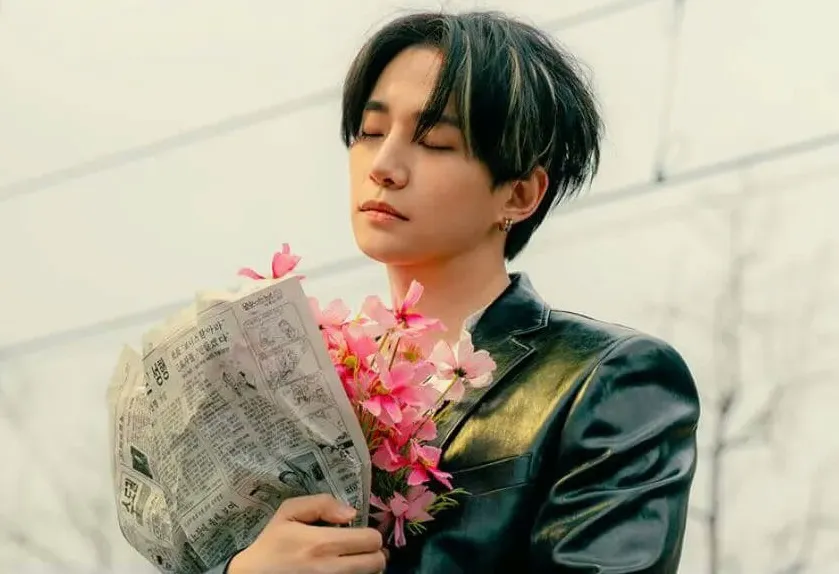
In 2026, insider debate centers on whether the Daesang should reward a production or an individual. Lee Junho is nominated for Best Actor, but critics argue that his drama Typhoon Family - with its record ratings and sustained viral footprint - is the stronger Daesang candidate as a whole work.
The tension is real:
- a production Daesang validates cultural weight
- an individual Daesang reframes virality as personal artistry
Either way, the Daesang functions as a declaration of what Korea intends to be proud of on the global stage — and that statement has consequences for every other category on the night.
THE 2026 BEST ACTOR SHORTLIST: A STUDY IN PRESTIGE
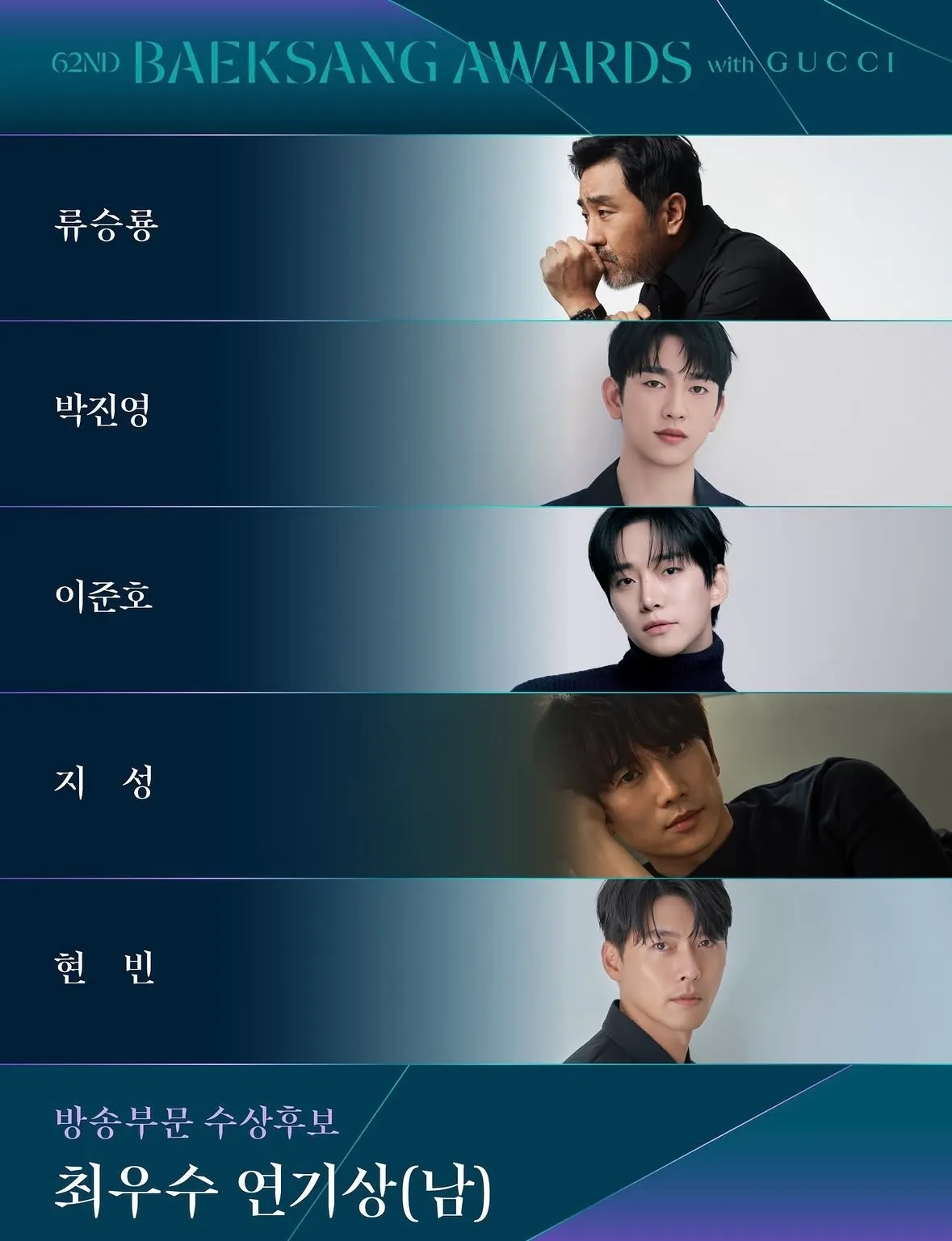
To understand the jury’s logic, we must look at the full 2026 Best Actor (Television) shortlist. It is a formidable list of industrial pillars, each representing a distinct strand of what the Baeksang has historically valued.
- Ryu Seung-ryong (The Dream Life of Mr. Kim) → humanistic emotional core
- Park Jin-young (Our Unwritten Seoul) → emerging prestige anchoring
- Ji Sung (The Judge Returns) → intricate, character-driven authority
- Hyun Bin (Made in Korea) → polished, large-scale prestige
And then there is Lee Junho for Typhoon Family.
Having swept major industry recognition and served as Honorary Ambassador for Busan World Design Capital, Junho occupies a rare intersection of humanism and viral soft power that positions him, in the eyes of many observers, as a default prestige candidate.
His 2022 Baeksang win for The Red Sleeve cemented this status: by humanizing a historical figure within a genuine cultural event, he demonstrated the precise alignment of craft and social resonance the jury consistently rewards.
HISTORICAL PRECEDENTS: THE BAEKSANG MESSAGE
The jury’s preference for emotional humanism and social breakthrough over raw technical range is not a 2026 anomaly, it is a documented pattern.
- Kim Hye-ja (The Light in Your Eyes, 2019) → poetic realism
- Park Eun-bin (Extraordinary Attorney Woo, 2023) → social discourse impact
These decisions establish a clear evaluative logic:
impact is measured outwardly, not internally.
The question is whether that coherence has become a blind spot.
ANALYSIS: THE VIRAL PILLAR VS. THE TECHNICAL OUTLIERS
The exclusion of Ji Chang-wook for The Manipulated is where the limits of the Baeksang framework become most visible.
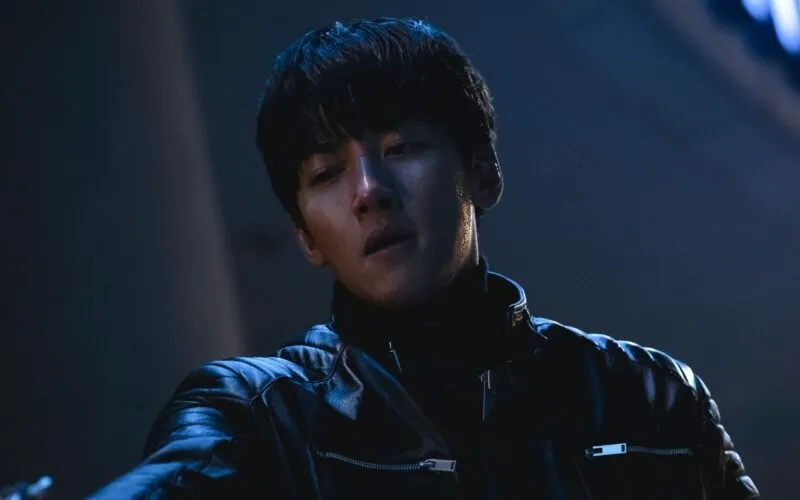
His performance appears built on sustained psychological fragmentation - a form of technical discipline rarely foregrounded in Korean commercial drama. It denied audiences relief: no humor, no warmth, no overt moral framing.
What emerged instead was controlled disintegration:
- micro-shifts in posture
- restrained eye-line changes
- emotional transitions conveyed through stillness
The final interrogation sequence - where shifts of enormous narrative consequence were delivered almost entirely through minimal movement - was widely cited as one of the most technically accomplished scenes of the year.
What the critical record suggests is this:
without a surrounding social discourse, technical mastery struggles to register within the Baeksang system.
The framework appears calibrated to reward work that expands conversation, rather than work that refines craft.
This is not necessarily a rejection of Ji Chang-wook’s performance.
It is a limitation of the system evaluating it.
A similar pattern appears in the omission of Lee Je-hoon (Taxi Driver 3), whose work represents sustained genre excellence. Together, these exclusions suggest not isolated decisions, but a systemic tendency.
CONCLUSION: REDEFINING THE STAGE
The 2026 nominees are deserving. The issue is not their presence, but the systematic absence of others - and what that absence reveals about the award’s architecture.
The 62nd edition’s theme, “The Stage,” offers an opening.
Two structural evolutions would realign the Baeksang with the industry it claims to represent:
- A Genre Excellence category recognizing technical mastery beyond humanistic frameworks
- A transparent jury report, clarifying evaluative criteria post-deliberation
The Korean creative industry now operates across a broader spectrum than ever before. OTT platforms have expanded both form and tone, enabling work that is darker, more technical, and less socially declarative.
The Baeksang’s yardstick was built for a different era.
Updating it is not concession -
it is institutional survival.
Technical mastery, after all, is a cultural impact all its own.
 @vera.von.monika
 @veravonmonika
 Livedoor