EL CAPITXN: The Philosopher of Sound – Where Silence Becomes Fire
There are producers who build sound, and there are producers who carve space. EL CAPITXN - the South Korean producer, founder of the collective VENDORS, and songwriter behind chart-topping work with BTS, IU, PSY, and new acts like AHOF - works at global scale without relinquishing meticulous authorship.
With EL CAPITXN, creation is less about construction and more about subtraction - about what must remain, what must burn, and what must be left unsaid.
What emerges is not a portrait of reinvention, but one of revelation. He rejects the myth of sudden transformation, insisting instead on visibility, on the courage to stop hiding what has always existed beneath the surface. In his world, silence carries voltage; restraint carries force; alignment is the only form of trust.
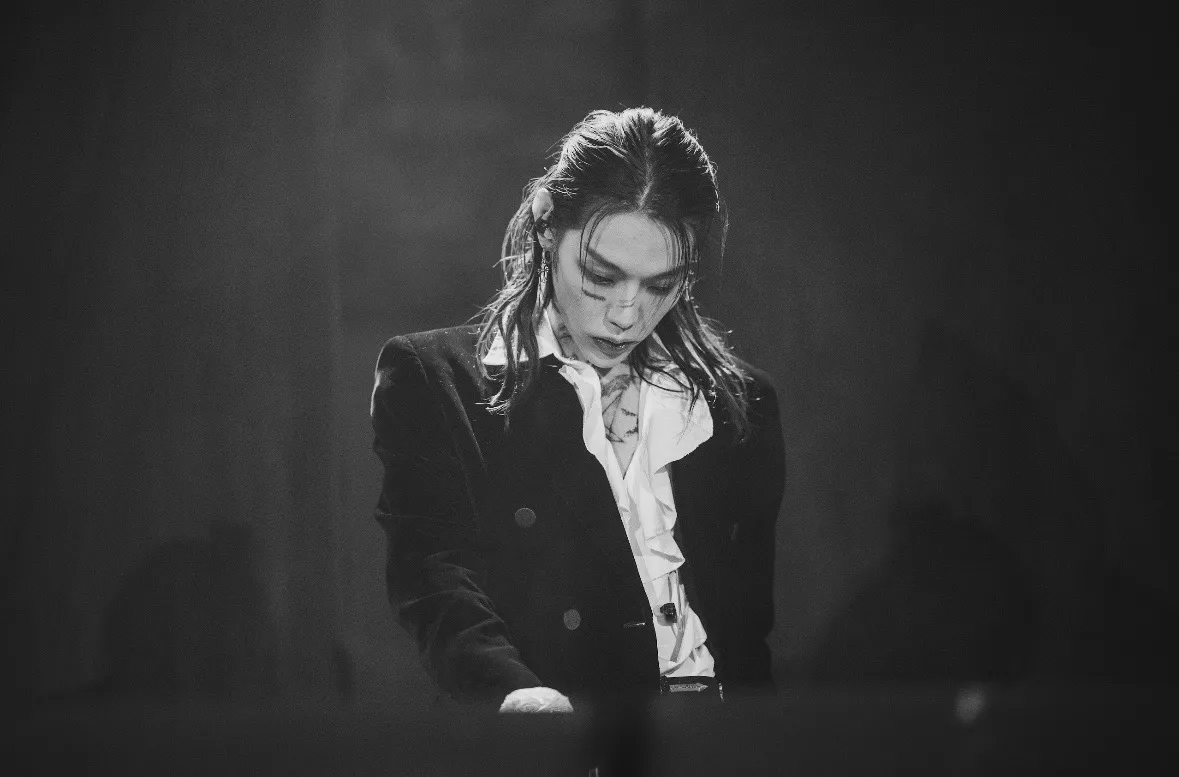
Image courtesy of Vendors Production / CDM Entertainment
Across this conversation, he dismantles the easy language of branding and replaces it with something sharper: sincerity over speed, clarity over blur, alignment over convenience. This is not an interview about production techniques. It is about standards, tension, and the cost of honesty - and about an artist who believes that when music no longer needs explanation, it has finally told the truth.
You are often described as a producer, but your work carries a very distinct emotional signature. How do you personally define your role in the creative process, where does authorship begin and end for you?
I’ve never consciously thought of my music as having a distinct emotional signature, nor have I intentionally tried to create one. There are moments in songwriting when commercial considerations are unavoidable, and in those moments I sometimes feel as though the essence of the music I believe in becomes diluted. If listeners still perceive that emotional clarity, I’m simply grateful. I take it as a sign that I’ve stayed true to myself along the way.
I don’t separate my role as a producer from my role as a songwriter. The process begins the moment I decide what should remain and what should be left in silence. And it ends when the music no longer needs my explanation.
Many of your productions balance intensity with restraint. Is this something you consciously shape, or does it emerge naturally from how you listen to sound and emotion?
I don’t like blurred boundaries. In life and in emotion, I prefer clarity. When something needs to be expressed, I express it clearly—almost like fire. And when something must be accepted, I can become unexpectedly cold and silent. Perhaps because both currents exist within me, what people perceive as balance simply emerges naturally.
You have worked closely with artists who are deeply involved in their own storytelling. How does collaboration change when the artist arrives with a strong inner narrative versus when they are still searching for one?
I don’t easily allow someone to force their way into my standards or creative space.
But if an artist is focused on change, I help them fully realize that transformation. And if they want to continue on the path they’ve already walked, I help them walk it more clearly and powerfully.
Ultimately, collaboration is not about redirecting someone’s path—it’s about sharpening the truth they already carry.
Silence, space, and pacing feel essential in your work. How important is what you don’t add to a track compared to what you do?
I’m a greedy person in the sense that I often want to express many things at once. Sometimes I feel the urge to put everything into the music. But that is my desire, not necessarily what the listener can receive. Even sensing a single core message is not easy.
So I constantly reflect on what to remove rather than what to add. Instead of listing multiple messages, I try to focus more deeply on a single center. What remains is defined by what is taken away. Silence is not emptiness. It is tension, memory, and breath.
Sometimes choosing not to add anything becomes the most emotional decision.
Your personal style, both visually and sonically, feels very intentional. How do you think about style as part of your creative identity, and does it influence the way you approach music-making or collaboration?
Over the past year, the question I’ve heard most often is, “Why have you suddenly changed?” But I want to question that premise. Is it truly that easy for someone to appear completely changed overnight? Or is it simple that something long hidden has finally become visible?
At some point, I decided not to hide myself anymore. I believe you must respect and genuinely love yourself to have the courage to reveal who you are. So I no longer choose to remain within the image others expect of me. What people see now is not transformation. It’s closer to who I have always been.
Style is not decoration to me. It is the outward result of invisible decisions. Sound, image, and movement must all originate from the same emotional source. Otherwise, it remains superficial.
In an era where music is consumed quickly, how do you think about longevity, not just of a song, but of an artistic voice?
I believe art ultimately comes from sincerity.
Just as people cannot be deceived forever by empty words, a single sincere feeling or phrase can make this harsh world feel worth living in again. It moves people.
I believe that kind of truth lasts longer than time itself.
Collaboration requires trust. What makes you feel creatively safe with an artist, and what immediately disrupts that process?
This question still feels like an ongoing assignment. Creative safety begins when neither person hides their vulnerability. The moment protecting an image becomes more important than telling the truth, the process begins to collapse. Music cannot survive where honesty disappears.
Collaboration is not simply about working together. It requires a complete alignment of emotional direction beforehand. In a world where it’s difficult to make choices that satisfy everyone, that alignment feels even harder. But that’s precisely why it must be achieved.
Technology is transforming music production at a rapid pace. How do you maintain emotional authenticity when tools become increasingly automated?
I don’t believe technology itself threatens emotion. The real issue is the distance from emotion. As tools become more automated, I try to ask more often: why must this be felt?
For me, technology should not be a way to move away from emotion, but a way to move closer to it.
I’m not someone who resists change out of stubbornness—I try to read the flow. Rather than fighting the current, I look for the direction that allows me to go further and higher within it. If technological progress lies on that path, then it is not something to reject but a language that must be learned. That is also how VENDORS operates.
However, if someone cannot embed sincerity into music from the beginning, they will not master technology—they will be consumed by it. We cannot physically outrun the speed of innovation. If there is one standard that remains in the end, I believe it is the human heart.
Looking ahead, what kinds of projects or emotional territories are you most curious to explore next, even if they sit outside expectations?
I’m continually drawn to unresolved emotion territories - spaces between belief and doubt, beauty and destruction, silence and confession. Not because they are dark, but because they are deeply human. My next story always begins there.
For a long time, I lived hiding myself, watching my own collapse as if I were only an observer. But I no longer want to hide in this world.
EL CAPITXN has endured quietly for a very long time.
I feel that period is finally coming to an end.
 @vera.von.monika
 @veravonmonika
 Livedoor