Sihyoung Lee: Intellectual Property, Narrative Strategy, and the Future of Creative Worlds
As global entertainment continues to evolve, the relationship between storytelling, technology, and investment has become increasingly interconnected. Behind every successful intellectual property lies not only creative vision, but also the strategic frameworks that allow stories to grow across industries, platforms, and audiences.
Sihyoung Lee, Representative Director of Angaesup Media (안개숲미디어), operates at the nexus of these worlds. With a background spanning private equity, corporate strategy, narrative consulting, and literary creation, he brings a rare perspective to the changing architecture of contemporary content. As both a novelist and creative strategist, his work explores how stories — ranging from original literature and webtoons to global K-drama adaptations — are built, adapted, and structurally positioned within an increasingly competitive marketplace.
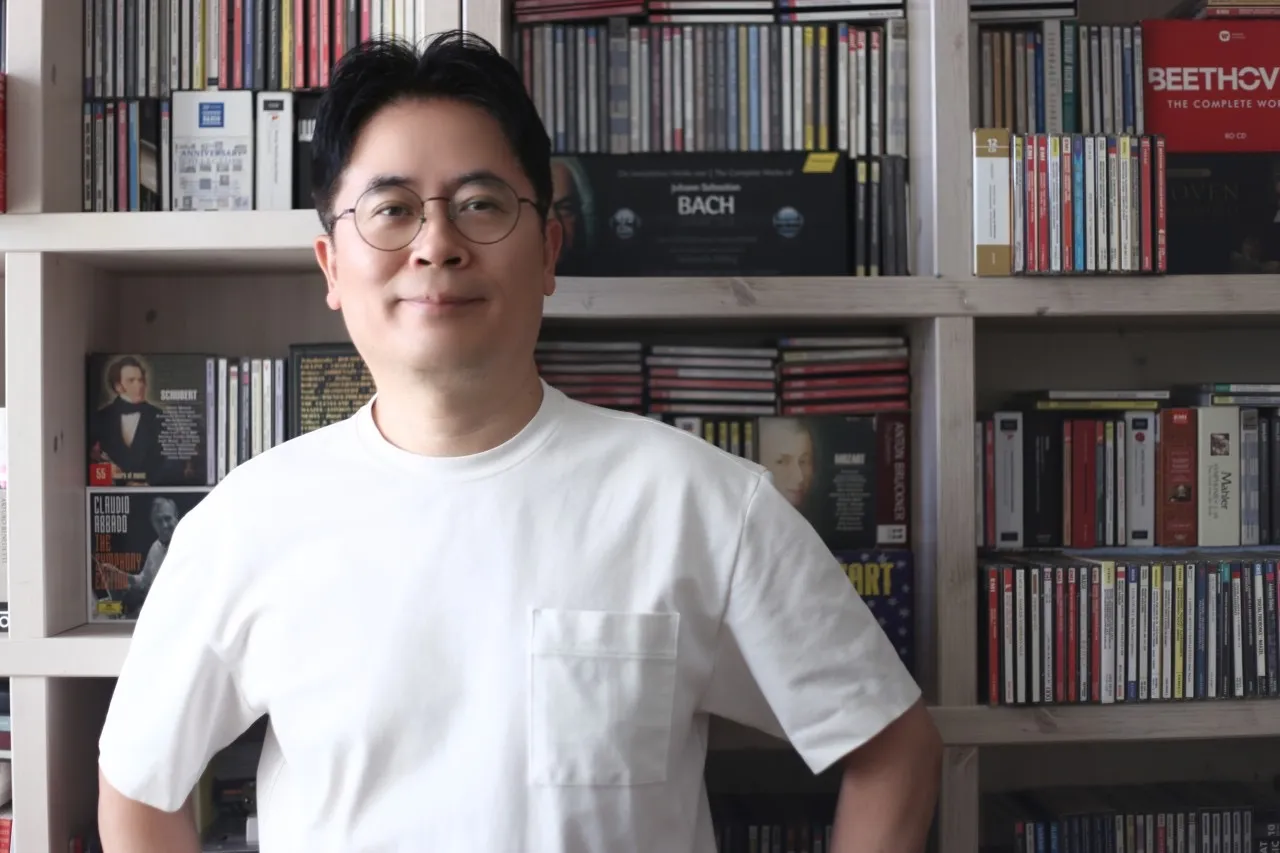
Photo courtesy of Sihyoung Lee
In this interview, Director Lee discusses the evolution of intellectual property in South Korea, the impact of global investment on creative development, the challenges of adapting literary works for screen, and why human imagination remains the most valuable asset in an age increasingly shaped by technology.
Your career reflects a background in enterprise procurement, private equity experience with Keystone Partners, and creative leadership as Representative Director of Angaesup Media. From an investment perspective, how has the influx of global private equity and venture capital fundamentally restructured the way original intellectual property (IP) is incubated and scaled in South Korea today?
Working across the very different worlds of business and creative writing has led me to one interesting observation: whenever new capital and new distribution channels enter an industry, they reshape both its value chain and the balance of negotiating power.
In a conventional market value chain — raw materials, producers, manufacturers, distributors, and consumers — negotiating power depends on who has capital, who controls access to consumers, and who possesses a product that cannot easily be replaced.
I believe the content industry operates in much the same way. The traditional structure of creator-producer-broadcaster-audience has been transformed by the rise of global OTT platforms into creator-producer-OTT-global audience.
As Korean content has attracted worldwide attention, the participation of global platforms and foreign capital has expanded. This has given producers greater resources and better conditions to realize scenes and ideas that might previously have been difficult to produce.
That has clearly contributed to the development of the Korean content industry.
At the same time, however, capital naturally pays close attention to the likelihood of recovering its investment. As a result, greater attention tends to flow toward commercially proven stories, including successful webtoons and established web novels.
In other words, capital has increased the scale of creative production, but at the same time it can push creativity toward safer territory. The risk is that experimental original stories — stories that require greater uncertainty and creative risk — may receive less attention, potentially weakening the industry's willingness to explore new possibilities.
From my experience working in both business and creative fields, investors tend to speak in the language of scalability, returns, and risk, while creators speak in the language of characters, worlds, and originality. I believe a strong IP company must understand both languages. It must make sound business decisions while still being willing to support experimental content that may open new possibilities for the future.
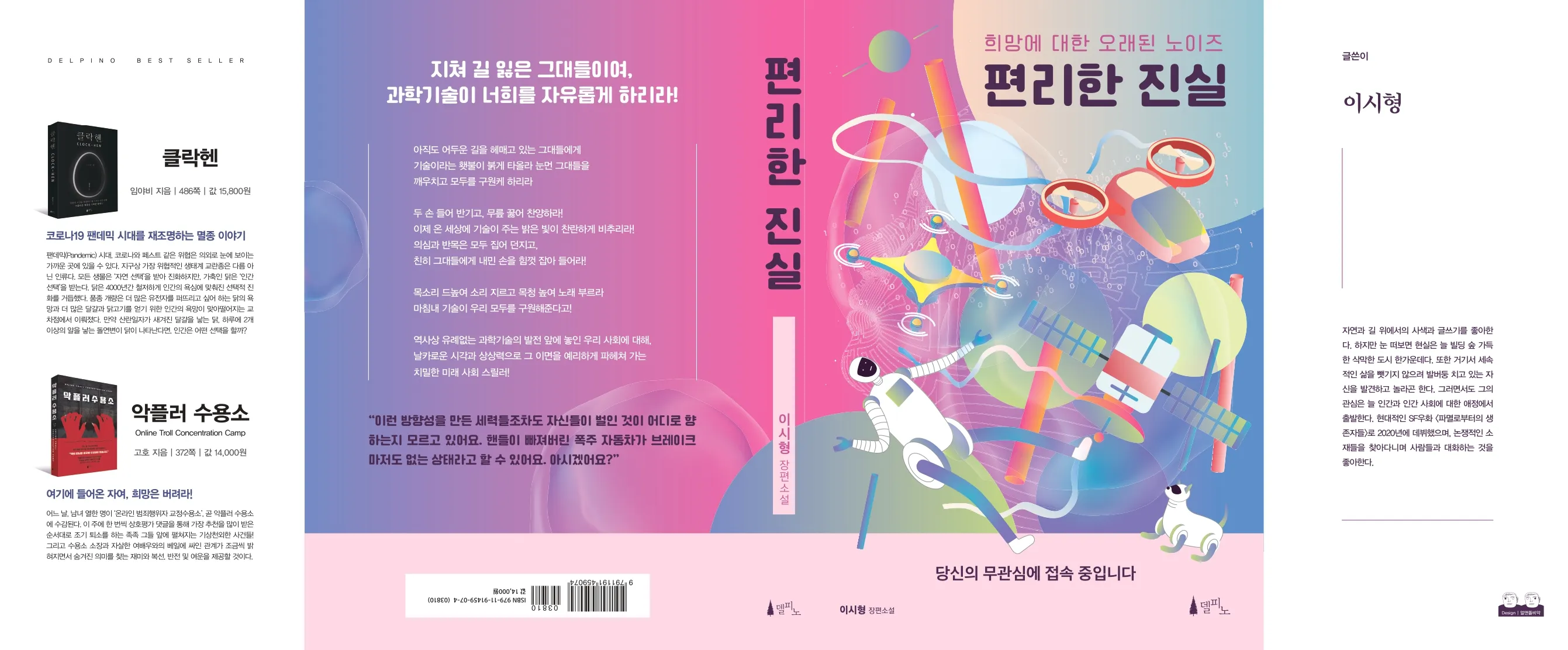
A Convenient Truth: Book cover image courtesy of Delpino
Your novels, including A Convenient Truth and Survivors from Ruin, explore complex narrative worlds. When adapting literary IP into a commercial screenplay or drama project, what structural changes are most essential to preserve artistic depth while ensuring market viability?
My novels, including these two works, are ultimately connected by a common concern with humanity and human rights. Although capitalism has become increasingly advanced and democracy may appear to have taken root, war and violence continue throughout the world. Even countries regarded as developed nations are facing their own crises of leadership, while self-interest driven by factors such as race and regional divisions continues to generate new conflicts around the world. In that sense, I believe these issues have become more important than ever.
For me, the most important question in the adaptation process is whether this underlying philosophy can be preserved while being communicated effectively.
But preserving it does not mean simply transferring the novel's sentences and explanations directly to the screen. The real question is whether those ideas can be expressed through concrete actions and choices that fit the language of film or television. Put simply, adaptation is a process of recreating the story by finding the most appropriate means of expression for each scene.
One example can be found in my second novel, A Convenient Truth, published in 2021. The novel deals with the risks posed by technological innovation and the social hostility that exists around us. One particular sequence involves the chaos caused by a data center fire. In the novel, the incident is depicted through a conversation between two AI panelists with contrasting perspectives.
If I were adapting it for the screen, however, I might intercut the data center fire with scenes of a self-driving car overturning and an airplane crashing. I believe this would communicate the risks of a society dependent on technology more effectively.
This is one example of transforming a literary theme into cinematic conflict, allowing the audience to see that the issues the writer wants to emphasize are not distant abstractions but realities that exist around us. In fact, the issues of digital vulnerability and social hostility that I raised in the novel later appeared in similar forms in Korean society, including a major data center fire involving a digital platform company in 2022 and a mass-casualty incident in Seoul that same year.
There is one more point I would like to make: I think we need to move beyond the assumption that artistic value and market viability are inherently opposed to each other. If the philosophical themes of the original work are transformed into conflicts and events that allow audiences to experience them more vividly, and if unnecessary exposition is replaced by characters' choices and actions, audiences may actually engage more deeply with the themes the original author intended to convey.
Audiences do not go to theaters or streaming platforms to attend a philosophy lecture; they go there to experience an engaging story. No matter how meaningful a creator's message may be, it is difficult to communicate that message effectively unless it is transformed into narrative pleasures such as tension and conflict. Conversely, when those narrative devices do more than simply entertain and are organically connected to the philosophy of the work, I believe it is possible to preserve artistic depth while also increasing its commercial appeal.
Therefore, I see a good adaptation not as a process of reducing the philosophy of the original work, but as a process of recreating it in a narrative structure that allows a broader audience to experience it.
Angaesup Media specializes heavily in narrative strategy and story rebuilding.
When evaluating a pre-existing or struggling script, what are the primary indicators that signal a story's core architecture needs a structural overhaul versus simple dialogue refinement?
I would look at this from three main perspectives.
The first is whether changes made during the writing process have altered the theme of the work in ways the creator can genuinely accept.
Writing is ultimately the process of constructing a logical structure. Even when a writer begins with a clear blueprint for the larger story, it is easy to become captivated by a particularly attractive scene or idea and feel tempted to expand it. The problem is that this can create fractures in the story that are especially difficult for the writer to recognize in their own work. A fascination with the microscopic can sometimes create weaknesses in the macroscopic structure, and at times the work itself seems to force the creator into difficult choices.
Even the great Austrian composer Anton Bruckner (1824-1896) repeatedly revised major works such as his Third and Fourth Symphonies, leaving multiple versions behind. To me, this illustrates how difficult choice can be, and also why it is such an interesting part of the creative process.
Writing is likewise a continuous series of choices and, in a broader sense, a process of strategic decision-making. A creator may recognize and resolve these problems consciously, but in many cases they can simply pass unnoticed. A writer may feel strongly about emphasizing a particular idea in one scene, but if that idea disrupts the overall direction and balance of the work, what was intended as a strong statement can become noise.
The second issue is whether the method of communication is appropriate.
Creators must continually ask whether the way they are expressing something is actually effective in strengthening the larger theme. Is dialogue enough for this scene, or would a concrete event communicate the idea more effectively?
These choices are often difficult for creators to judge objectively when they are deeply immersed in their own work.
The third issue is what I call the reward for the audience.
Creators often have many things they want to say. But if a story becomes simply a sequence of the creator's ideas, readers or viewers can quickly lose interest and leave. If we ask audiences to give us their time, attention, and emotional investment, we also need to give them something in return. I think of this as a narrative reward.
Take The Glory. It portrays the painful reality of school violence, but audiences are able to continue through that suffering because Moon Dong-eun's carefully prepared revenge is eventually carried out and the perpetrators face consequences. The completion of that revenge creates catharsis. In that sense, it becomes a gift to the audience.
The same principle can be found in Alexandre Dumas's The Count of Monte Cristo. Readers watch Edmond Dantès lose everything despite being innocent and endure years of suffering in prison. Dumas does not simply demand that readers endure that suffering without reward. Later, Dantès returns as the Count of Monte Cristo and one by one confronts those responsible for his destruction, transforming the anger accumulated by the reader into catharsis.
I believe this is an important promise between creator and audience. The more patience a story demands from its audience, the more meaningful the narrative reward should be. That reward might be revenge, the fulfilment of love, the answer to a mystery, an extraordinary twist, or emotional resonance.
When these three problems appear together, I see them as a sign that the story needs structural redesign.
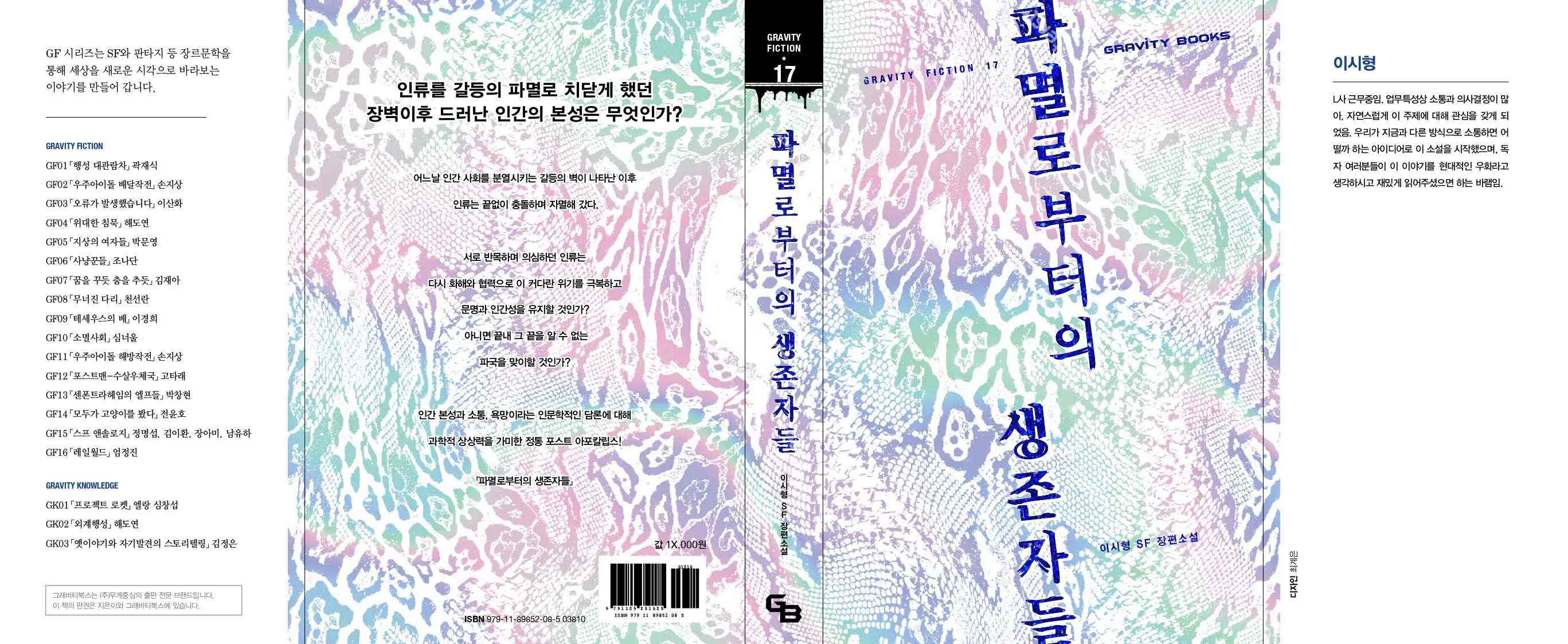
Survivors from Ruin: Book cover image courtesy of Gravity Books
South Korean content has achieved unprecedented global dominance, yet scaling an IP transnationally requires deep cultural adaptability. What are the unique strategic hurdles when formatting a narrative concept so that it retains its distinct domestic authenticity while maximizing its resonance with mainstream Western and European streaming audiences?
I do not believe the recent success of Korean content can simply be explained by saying that these works were designed from the beginning for global success. There are certainly exceptions, but many Korean works that have created a major international response are fundamentally rooted in social realities.
Squid Game, The Glory, and Parasite, for example, all begin with distinctly Korean realities, yet the themes they explore are universal. A semi-basement home or Korea's highly competitive education culture may be unfamiliar to foreign audiences, but the realities beneath them — wealth disparity, inequality, discrimination, violence, and survival — are issues that people everywhere can understand.
The details are Korean, but the emotions and human concerns beneath them are universal. Paradoxically, I believe one reason Korean content is receiving such unprecedented global attention is that many societies around the world now share problems that Korea experienced in a particularly compressed and intense form.
Korea experienced colonial rule, war, extreme poverty, and authoritarian government within the span of only a few generations, while also undergoing extraordinarily rapid economic development and democratization. As a result, freedom, human rights, inequality, and social justice have not been merely abstract philosophical concepts in Korea. They are issues Korean society has experienced and debated directly.
Fortunately, Korea has also had a long tradition of creators willing to speak openly about uncomfortable social realities and questions of justice. I believe that creative tradition has contributed to a deeper public engagement with unjust power, inequality, and human dignity.
For that reason, I think it can actually be a strategic mistake to remove too many local elements simply because a work is intended for the global market. If the Korean children's games in Squid Game had been replaced with American games, or if the semi-basement home and jjapaguri in Parasite had been replaced with things more familiar to foreign audiences, those works might have lost some of the distinctive texture that made them memorable.
The real challenge, then, is not to remove unfamiliar elements, but to present them convincingly while revealing the universal themes beneath them.
I believe Korean content has connected so deeply with international audiences precisely because it has been willing to show the distinctive colors of Korean culture while remaining focused on the human story at its center. Audiences around the world have discovered something universal within those very specific stories, and I think that is one of the main reasons interest in Korean content has continued to grow.
As K-drama increasingly operates within a broader global entertainment ecosystem, visual identity has become as important as narrative itself. How important is the integration of fashion, branding, and cross-disciplinary creative talent in expanding the international reach and cultural impact of contemporary Korean context?
I would also approach this question through the particular characteristics of Korean society.
Korea is, in many respects, an intensely competitive society. From an early age, people grow up in an environment shaped by competition, and physical appearance has often been treated as one element of social competitiveness.
In that environment, fashion, brands, cosmetics, beauty, and even cosmetic surgery have long functioned not only as forms of personal care, but also as forms of social communication.
These social characteristics are reflected in Korea's visual content industries as well. Fashion, cosmetics, beauty culture, and cosmetic surgery developed and became highly industrialized within an intensely competitive domestic market.
These industries then became intertwined with film, television, and popular culture, which in turn influenced consumers, creating a continuing cycle.
More recently, a character's style has increasingly become part of the narrative language itself. Clothing and visual appearance can communicate a character's social position, personality, and psychological state before a single line of dialogue is spoken.
This shows us that successful content can provide not only a story, but an entire cultural experience. Korean cosmetics exports have grown rapidly in recent years, and Korean foods eaten or used by characters on screen can also attract international attention.
I believe these boundaries will become even less distinct in the future. In the past, we might have imagined global content as being created primarily by writers, directors, and actors. In the future, fashion designers, beauty professionals, branding specialists, game developers, chefs, spatial designers, and architects may all participate in constructing a single narrative world.
Successful content encourages audiences not only to follow a story, but also to experience the clothes, music, food, and spaces associated with its characters.
Of course, there are also concerns within Korean society about the extent to which competitive culture has penetrated personal appearance and fashion.
Yet, paradoxically, it is also interesting — both culturally and industrially — that this intense environment has helped accelerate innovation in fashion, beauty, and design.
With your background spanning investment, procurement, and media strategy, how do you see cross-border entertainment partnerships evolving over the next five years? What role will independent creative studios play in connecting film, television, music, and gaming IPs within an increasingly global market?
Because I spent many years in business evaluating value, I would like to approach this question somewhat differently from the conventional media-industry perspective.
Just as in the physical economy, I believe the IP industry ultimately depends on finding something scarce and distinctive. In the physical economy, we call that a product. In the IP industry, we call it content.
The key is to discover distinctive content that competitors do not possess and bring it successfully to the market. That process requires collaboration with many different partners. Technical partners who can express the story effectively on screen are important, but so are the professionals responsible for capital, resources, production, and other stages of the project. The ability to coordinate these partners can ultimately determine whether a project succeeds.
In the past, even an excellent piece of content was difficult to bring to market without access to capital, production infrastructure, and distribution. I believe that is beginning to change. Advances in technologies including AI are lowering barriers to production, while new distribution channels are creating more opportunities to reach audiences directly. As a result, distinctive original IP may become increasingly important relative to capital or platforms.
We can see a possible parallel in the physical economy. In the past, manufacturers generally reached consumers through large retailers. Over the past several years, however, many manufacturers have developed their own online stores and begun selling directly to consumers. This has allowed them to offer value more directly while also gaining access to customer data.
A similar development may eventually take place in content. Production companies may gain greater opportunities to distribute their work directly without being entirely dependent on broadcasters or major platforms.
In the past, broadcasters were almost the only major distribution channel for Korean screen content. The arrival of global OTT services such as Netflix expanded the choices available to independent production companies. Global video platforms and social media continue to evolve, and this could create an increasingly favorable environment for content producers.
Of course, traditional broadcasters and major OTT platforms will continue to have considerable influence for the foreseeable future. But independent producers may also experiment with new content and distribution through channels outside legacy media. Considering how rapidly the quality of content distributed through platforms such as YouTube has improved, I believe this is a very plausible future.
Al could accelerate this change even further. Just as digital technology helped democratize artistic production, AI can reduce the costs of video production, translation, dubbing, and visualization. Smaller companies that own original IP but previously lacked access to large-scale screen production may be able to create their own pilot videos and test audience reactions directly.
There may naturally be resistance from participants in established content industries, but smaller original-IP companies that were previously outside large-scale production structures may have greater freedom to experiment. We can already see a growing volume of such content on platforms like YouTube.
I therefore believe one of the most important changes in the content industry may be that creators with strong IP and established fandoms increasingly gain the ability to choose the capital, production, and distribution partners that are best suited to them.
I have even imagined that, in the near future, I might use AI to turn one of my own novels into a feature film. I doubt I am the only person who has imagined such a possibility. What matters is that if such ideas become genuinely feasible, the value chain of the content industry could change dramatically.
Looking ahead, what is the ultimate cultural and narrative legacy you wish to construct through Angaesup Media, and what specific types of international creative partnerships are essential to achieving that vision?
It is extremely difficult to predict how continuing technological development will affect art and creative work. Some people worry that AI may eventually replace writers. But I think those concerns also force us to ask a more fundamental question: what does it mean to be human?
I actually believe that as technology advances, interest in and participation in human-centered creativity may become even stronger. If changes such as a four-day workweek and shorter working hours become more widespread, giving people more leisure and creative time, that tendency could accelerate further.
When we consider how quickly generative Al has spread over just the past three or four years, can we really predict what technological development will bring over the next five? It may become possible for an ordinary office worker to create a story based on personal experience and then use technology to develop characters or even turn that story into moving images.
Yet even if technology makes creative production easier, what may become increasingly scarce is a genuinely valuable story — a story rooted in the reality of human life.
That is also the goal I have for Angaesup Media: to discover deeply human stories, give them structure, use technology to bring them into concrete form, and find ways for those stories to communicate directly with the world beyond the influence of any single legacy system.
Recently, I had an interesting discussion with an overseas partner about technology that could bring characters from a novel into visual form. When we consider how such technology might be applied to the content industry, the possibilities become even more interesting.
Traditionally, a story might be adapted into a film or game and then consumed in that form. In the future, I believe many more possibilities will emerge. A writer or storyteller might create a character and a world, then work with an overseas AI or technology startup to visualize or animate that character first. From there, the same IP might expand through collaboration with global creators into music, fashion, or games, and then be introduced to wider audiences through global platforms.
In other words, we may move beyond the traditional one-way path from novel to film and enter a world in which characters can appear across many different creative stages and forms.
There is one more important point: the human being.
AI can learn from what humanity has already experienced, but human creators can discover emotions that have not yet been fully expressed in language and ask questions about things we do not yet understand. That is possible because human beings possess the freedom of imagination.
Ultimately, what matters most is the human story. That is where truly valuable stories begin. When more writers and storytellers shape those stories into compelling structures, technology can help bring them to life in increasingly diverse ways.
I hope to connect those stories with a wide range of partners — international film and television producers, game developers, musicians, designers, and others— and create works that can communicate directly with audiences around the world without depending entirely on a particular OTT platform or media company.
No matter how far technology advances, I believe the starting point of every story will remain human. The legacy I want Angaesup Media to leave is not a future in which technology replaces human imagination, but one in which human imagination is expanded by technology and enabled to travel farther.
“No matter how far technology advances, I believe the starting point of every story will remain human."
— Sihyoung Lee
 @vera.von.monika
 @veravonmonika
 Livedoor