Super Changddai: Composing the Sound of K-Pop and Fashion
From shaping some of K-pop’s most recognizable hits to creating soundscapes for international fashion runways, Super Changddai has built a career that moves seamlessly between commercial music and high fashion. Best known for his work with groups such as 2PM, 2AM, and miss A, his production credits also extend across artists including Apink, Teen Top, and Ladies’ Code.
Today, his work reaches far beyond the traditional boundaries of pop music. Whether producing chart-driven records or composing for global fashion presentations, Super Changddai continues to explore how sound can shape emotion, identity, and visual storytelling.
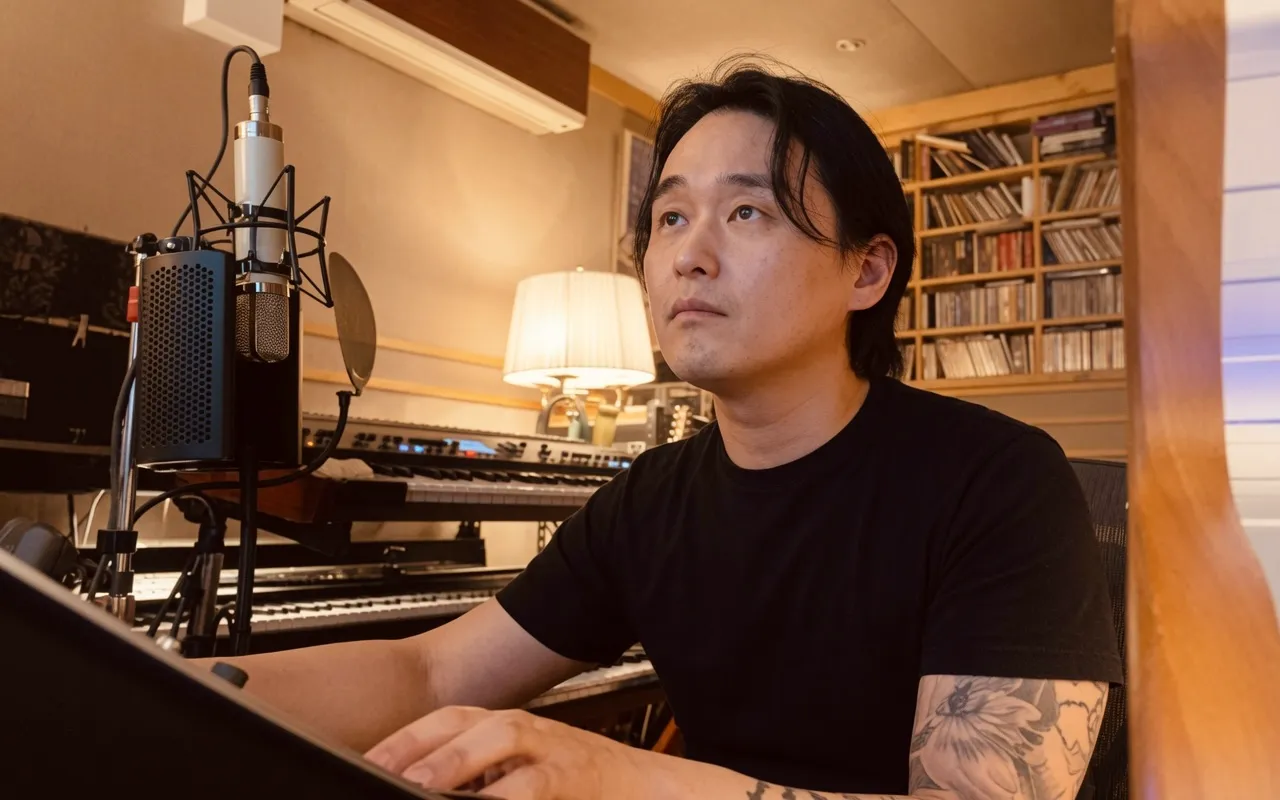
Photo: Instagram / Super Changddai
In this interview, Super Changddai discusses the differences between producing K-pop and runway music, the creative language of fashion designers, the challenges of moving between artistic worlds, the growing influence of AI, and the passion that continues to drive his work after nearly two decades in the industry.
Your work spans from defining 2PM’s sound with tracks like “I Hate You” (니가 밉다) and “Tired of Waiting” (기다리다 지친다) to composing for international runways. When you look back at your K-pop production work, what defined your approach to building a group’s sound—and how does that translate into your work today?
Tracks like "I Hate You" and "Tired of Waiting" are quite old to me now, but I am simply grateful that there are still many people who love them. I don't have a fundamentally different approach just because the artist is an idol. Whether they are an established singer or an idol, across different generations, to me, they are all equally vocalists and artists I need to produce.
The first thing I keep in mind when working with artists is the genre they want to sing and express, as well as the direction they want to take and the musical path they have walked so far. I focus on creating their next step to be a bit more fresh and sensible, continuing from that journey.
Of course, it's slightly different when the artist is a rookie. I communicate extensively to find the direction the company wants, the artist's tendencies I've observed, and the musical roots of what they enjoyed singing and wanted to do before debuting. Once a track is selected, I tend to communicate a lot with the artist to modify the song and create effective elements to perfect it.
When composing for the runway, what determines the starting point: the physical tempo and movement of the walk, or the visual language of the collection?
Yes, exactly. When composing runway fashion show music, I utilize every possible element that can be a seed for musical expression—the models' walking tempo, the colors and textures of the clothes, the designer's philosophy, texts they've written, the brand's identity, and so on. I check all these and request them from the designer. Sometimes, I even ask for their personal diary. I research from various angles—whether the design aims only for commercial trends or is based on the fundamental classics of fashion—and continuously share thoughts and communicate with the designer.
How does the “language” of a fashion designer differ from that of a K-pop artist when they describe the sound they are looking for?
The communication and work process with fashion designers is incredibly challenging yet unique. Sometimes we communicate using professional language and methods, but other times we connect in a very primal way. The designers I've experienced often have a genius-like, yet sometimes very raw, instinctual, or incredibly childlike nature. As a composer, I also share similar traits as a fellow artist, so naturally, friction can occur. When that happens, the very first point of compromise is the "design" itself. The design solves the issue.
As a commercial pop music composer, I always aim for flawless, high-quality sound. However, during the process, there are times when a system error occurs, causing a specific part of the sound to crush or distort. Interestingly, there are instances where the designer catches that exact flaw and absolutely loves it, finding it fresh. As a musician, these are moments that are quite hard to understand. I believe these moments are exactly the "difference in language" that occurs when working with fashion designers, and it serves as a new artistic inspiration.
In K-pop, music often drives performance. In a runway setting, it must support rather than dominate. What is the most difficult shift in mindset when moving between those two roles?
The most important principle when working on runway music is that the music must strictly serve as "ambience"—a background and an effect—and the designed clothes must be the main character. Of course, the brand's identity and the designer's sensibility must also be densely packed into that background. It's a highly personal thought from working in this field, but even though the music acts as a perfect background and effect on the runway, I often feel that designers treat the music as if it were a main character itself.
In K-pop, on the other hand, the music itself is the most critical element taking center stage. Since it has become a massive industry, everything surrounding it—visuals, performance—has to be perfect. The most difficult thing when moving between these two roles is the rapid genre shift. I think there is a significant emotional fatigue that comes from rapidly switching genres and sensibilities between the background music of the runway and the driving music of K-pop.
Working across global platforms such as Paris Fashion Week, have you found that designers seek a distinct “Korean” sensibility in your work, or something more universal?
When working on global stages, foreign designers do not explicitly demand a specific "Korean" sensibility. However, I think they have a lot of curiosity and fascination with "Hangul" (the Korean alphabet) itself. In fact, when I utilized Korean vocal elements in my work, I heard that both the designers involved and the local response were very positive.
Across your work as a producer, from JYP Entertainment to your current projects, is there a piece that most clearly reflects your musical identity as Super Changddai, and what does it reveal about how you approach sound?
Because every single song I've made holds its own precious meaning, it would be really hard to pick just one. If I had to choose, wouldn't it be "the song that will be released next"? (Laughs)
What areas, whether in sound, technology, or cultural shifts, are currently shaping how you approach new work?
I absolutely think it is "AI technology." I believe that depending on how well we utilize this new technology in the right places, we can preserve and develop traditional values while simultaneously creating entirely new realms of art.
Across these different spaces —idol music, production, and fashion— what remains constant in your work?
I am a musician and a professional composer. My job is to materialize what someone wants into music, and I've been walking this path for nearly 20 years. However, amazingly, just like when I first dreamed of becoming a composer as a child, I still deeply love this job and get as excited as a kid when I work. Even though the genres and stages may change, I believe that this pure passion and joy I feel when facing music is the core "essence" that remains constant across all my work.
“Even after nearly 20 years, I still love this job and get as excited as a kid when I create music.”
— Super Changddai
 @vera.von.monika
 @veravonmonika
 Livedoor