Chris Kwon: Building Bridges Between Korean Entertainment and the Global Market
With more than 28 years of experience in the Korean entertainment industry, Chris Kwon (Kwon Young-jun), founder of Bestwill Co., Ltd., has built a career across music production, artist development, live events, and international entertainment. From his early beginnings in music to working with established artists and developing projects across Asia, his professional journey reflects the changing landscape of Korean entertainment and its growing international reach.
Having experienced the industry through periods of expansion, uncertainty, and transformation, Kwon has continued to explore new possibilities beyond traditional music production. His work now encompasses international entertainment partnerships, artist representation, fan engagement, and live commerce, revealing a broader perspective on how Korean entertainment can connect with different markets.
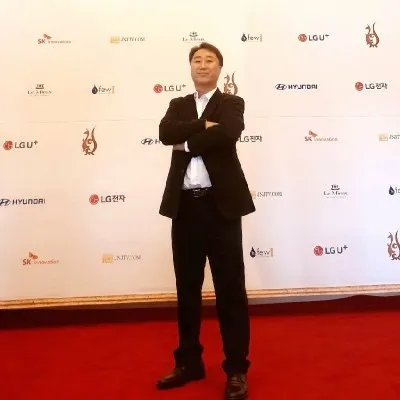
Photo courtesy of Chris Kwon
In this interview, Chris Kwon reflects on the experiences that shaped his career, the realities of building international partnerships, and the evolving relationship between Korean entertainment and the global market.
You have been active in the music industry since 2003 before expanding into live events and production. What first inspired you to pursue this path, and what ultimately led to the creation of Bestwill?
I played guitar in a band from my late teens to my mid-twenties.
While being absorbed in the guitar, I realized in my mid-20s that continuing to make music while working was not easy. So I went to a senior in the studio who knew about recording, composing, and arranging, and learned by doing the free projects they assigned. In the end, I was entrusted with planning and music production as well.
While sending the project proposal and music to several major agencies, I met a senior who recommended me to the main scene — the Korea Entertainment Producers Association. Alongside music production, I handled copyright affairs and managed member managers for the Entertainment Producers Association; I was in charge of Dream Concert for two years.
After that, I built my career at Astas Entertainment, the label of Korea’s largest company, and while overseeing the debut and growth of many artists as the executive director of the legendary Korean ballad team Vibe, I founded Bestwill in 2006 to focus more on music production, taking charge of publishing and producing music for numerous singers.
After that, I worked on music and OSTs for various singers and entered the music industry by producing for multiple artists myself. As a result, my understanding of and affection for broadcasting and performing arts deepened, and based on that, I began working across the entire entertainment industry.
After stepping away from the industry for a period of recovery, you returned to a landscape that had continued to evolve. What changes stood out to you most upon your return?
First of all, the world has changed drastically before and after COVID-19; the K-POP industry has moved beyond what individual producers could achieve, becoming a large-scale enterprise and a difficult industry to operate without massive organization, and capital has become far more necessary than before. Over the past three years, I took time off work to focus on my health, and upon returning, I found that this had become even clearer. I realized that without an organization and capital, it is not easy to work and lead in this industry relying solely on individual capabilities. As I pursued and advanced overseas business, I began to see a broader world and pioneered a new area where I could excel, not one dominated by huge capital and organizations. That was the professional IP promotion and agency for overseas performances and fan meetings. With TikTok's rapid rise globally, I felt the dawn of a new world of shoppertainmentand devoted myself to influencer and overseas businesses.
Returning with new experience and perspective, how has your approach to leadership and running a company changed compared to the past?
As I answered question 2, it has now become impossible to lead industries without massive organizations and capital; professional managers who understand corporate culture are now driving industries rather than those with just specialized experience, and the way operations are conducted has shifted from relying on personal networks, human relationships, and trust to a B2B structure between companies.
As a result, what was once less systematic evolved into andriven approach emphasizing corporate efficiency, shifting to a method of formally following steps through precise contact points in a style that cannot be resolved by the individual level of each producer.This is only a major change of less than ten years.
Bestwill recently signed an agreement with HZ Media to introduce Korean products through TikTok Live commerce in Vietnam. What made Vietnam an important market for you, and what opportunities did you recognize there early on?
I foresaw the saturation of the Korean market early on and believed it was time to go global, so in 2008, when Epik High was at the top in Korea, I led their entry into Japan. Later, I focused on the huge Chinese market, maintaining strong relationships for eight years with major partners such as Golden Disc China, the Tsinghua Group, Baidu, and the People’s Daily to promote Korean artists’ entry into China and expand the performance market. Just as I was ready to spread my wings in business with a strong foundation, the political issue of THAAD between Korea and China arose, and I suffered the full brunt of its impact.
Since I never changed my belief that Korea was too small, I looked for an alternative country to China and turned my attention to Vietnam, which was experiencing an economic growth rate of over 7% at the time, and in 2017, I just go for crossed over to Vietnam to open up the market.
After encountering countless trial-and-error experiences and the wrong people, I met the right partners and, with a considerable amount of capital, established a company in Vietnam.
Based on entertainment, it was a business combining live commerce, MCN, and the beauty industry; in 2019, I brought Vietnam’s national actress Truong Ngoc Anh to the Seoul Drama Awards, where she won the Asia Star Award, establishing my status in Vietnam within three years and becoming a prominent figure.
In 2020, since Super Junior's first Vietnam tour before nine years, my company won the bid among five companies, discussed on-site inspections, and combined the hosting funds for the Dream Concert Vietnam to hold the first overseas Dream Concert, but COVID-19 struck and I lost everything.
After COVID-19 Since I no longer had the capacity to invest large capital like before, I focused on building an exchange business based on my own capabilities, intuition, network, and infrastructure. Along the way, I signed an agreement with HZ, Vietnam’s top MCN, invited three top Vietnamese influencers to SeoulCon hosted by the Seoul Metropolitan Government, and managed their activities in Korea.
I established myself as a Korean entertainment company well-versed in Vietnam and managed the Vietnam segments of idol Truck and idol K Store broadcasts, hosted by SBS and the Korea Small and Medium Business Administration, for two years. Seeing the potential for Vietnam to become a central hub in Southeast Asia, I tryed set up an MCN locally to Live streaming daily, introduce and distribute authentic Korean products, and prepare to create and manage influencer. However, due to a sudden decline in health, I had to stop all activities and take a three-year break.
As live commerce continues to grow globally, how do you see it changing the relationship between artists, events, brands, and audiences?
In fact, many countries have already seen celebrities and stars achieve massive sales and significant financial gains through live broadcasting beyond just brand and product marketing. Many brands, aware of this, are focusing more on online marketing and live commerce rather than traditional offline stores. With the rise of social media platforms like TikTok and the growth of their user base, marketing and purchases have naturally connected through viewing and enjoyment of content. In a few limited countries, sales live broadcasts via TikTok Shop and Facebook are surpassing regular offline sales, and it seems that a culture has emerged where people view and enjoy the content, develop curiosity and trust in the products, and take purchasing for granted.
I believed that in the influencer market, where KOLs and KOCs are distinguished, KOCs — those who build influence through sales — would rise more than KOLs who rely on fame, and that reality has become a reality over the past three to four years.
Bringing a Korean production to international audiences requires much more than booking venues. From your experience, what are the most important factors in successfully developing a multi-city tour abroad?
In many countries, K-pop IP has already become a highly interesting business opportunity.
A large audience wants BTS, Blackpink, and GD, and they are touring the world with impressive ticket revenues.
Even though it is such a promising industry, there are still major barriers.
It is not easy to find a good local partner, and even if you communicate in English, communication is not 100% accurate due to cultural differences; many financial issues arise during the intermediary process.
It is true that local promoters find it difficult to connect properly with people who can handle Korean IPs, and Korean IPs find it hard to find capable and trustworthy partners locally.
As a result, many cases proceed through connections made via Koreans in the local area, or if a proper connection is not established through unverified intermediaries online.
In fact, fraud involving forged contracts or appearance consent forms often occurs during performances or fan meetings of many major artists, causing not only significant financial losses but also creating even greater difficulties in carrying out work due to a loss of trust.
Promoters who have been burned once need Korean IPs, but because trust in Korean partners is hard to build, they constantly distrust each other and start demanding increasingly difficult conditions.
In this case, even if they are a proper promoter and agency, the chance of the deal going through drops to less than 50%.
It is difficult to obtain accurate information about the local market, assess the promoter’s capabilities from the start, and verify the agency’s reliability, making it hard to close deals before booking venues and even opening promotional posters on site.
Therefore, to broaden my reach beyond the promoters I know, I decided to open up my LinkedIn profile, and to increase transparency about my list book, I have also disclosed the costs — something no promoter or agency has done until now.
I feel that overseas promoters are interested in me, and I think that once a little more time passes and my references are further implemented, I can receive contact from qualified local promoters.
When evaluating potential partners in different regions, what qualities or values do you look for before committing to a collaboration?
I believe that trust in words is the most important thing in business.
I believe the most important thing is that the mindset and cautious words from the moment of approach remain unchanged until the end, and when that priority is met, their abilities and networks become achievable.
I have often experienced situations where the initial statements and approach changed later, and the other party denied everything.
Collaboration means putting aside some of our own greed to achieve a project together, but when we talk in depth, many end up trying to minimize their own losses and maximize their own interests, which often results in spending time and energy on each side without getting the work done.
So I want to meet a partner whose initial words would not changed, whose conditions would not shifted much, and who has an attitude of consideration and respect for others, and I intend to do the same.
Photo courtesy of Chris Kwon
As Bestwill enters this new chapter, what kinds of artists, brands, promoters, or international partners are you most interested in connecting with?
I have now fully entered the Korean fan tech business, and as a result, I am striving to secure a solid IP.
In fact, my list book includes many IPs from artists with strong recognition and business potential, and I work through a network with minimal steps within Korea, focusing on realistic returns without being greedy.
As many promoters have probably experienced, it’s rare to see a company who open the operate like this, as I did.
I have seen the costs of IP and agencies snowball through the various stages, and I know as multiple steps were taken, communication and progress often became sluggish.
I acknowledge that I still need more time to earn their trust, and I will establish my stance, build trust with several promoters through consistency, and wait for their contact.
and also hope to have a transparent and proactive approach with me and are looking for a partner who can respect each other's trust and interests.
In fact, people do the work, I believe that once this is established, the rest can be coordinated and arranged throughmutual consultation.
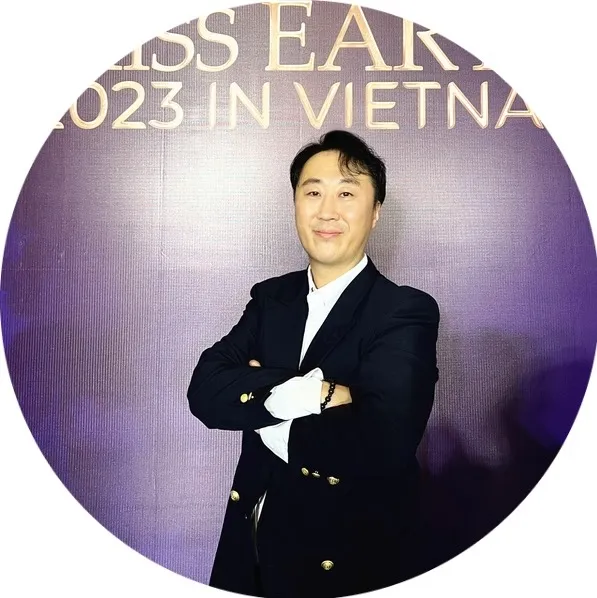
Photo courtesy of Chris Kwon
“I believe that trust in words is the most important thing in business."
— Chris Kwon
 @vera.von.monika
 @veravonmonika
 Livedoor