Dr. Ju Hyung Kim, President of South Korea’s Security Management Institute: On Deterrence, Drone Warfare, and East Asia’s Strategic Future
South Korea is exporting fighter jets to Southeast Asia, negotiating localization agreements in the Gulf, and preparing for security scenarios that could reshape the balance of power across the Indo-Pacific. Yet questions surrounding defense exports, trilateral cooperation, and the credibility of U.S. extended deterrence are rarely examined as part of the same strategic picture.
Dr. Ju Hyung Kim operates right at the core of these security dynamics. As President of the National Assembly-affiliated Security Management Institute, his work directly informs the ROK Joint Chiefs of Staff, the Ministry of National Defense, and the Defense Acquisition Program Administration — helping translate theoretical security research into practical, operational defense strategy.

Image courtesy of Dr. Ju Hyung Kim
In this exclusive interview, Dr. Kim discusses South Korea’s defense export ambitions, the growing threat posed by drone warfare, and the challenges of a simultaneous Taiwan–Korean Peninsula contingency. He also explains why a NATO-style alliance in Asia remains unlikely, what a durable Japan–South Korea security partnership could look like instead, and whether the credibility of U.S. deterrence can endure in an increasingly unstable regional environment.
You recently noted that while Indonesia may still want the KF-21, it appears less interested in the financial and technical commitments associated with co-production. How does this shift affect Seoul’s broader KF-21 export strategy, and what does it reveal about the ROK’s ambition to become a leading global defense exporter?
Jakarta’s recent shift in position does not necessarily indicate that the KF-21 has lost its appeal as a fighter aircraft. Rather, it reflects Indonesia’s long-standing difficulty in meeting its financial commitments to the program and its eventual conclusion that purchasing the finished aircraft may be a more viable option.
This offers a clear lesson for Seoul. South Korea needs a more flexible arms-export strategy that carefully distinguishes between countries genuinely willing to participate in development and production and those primarily interested in acquiring an advanced combat aircraft.
South Korea has already demonstrated its ability to supply competitive military platforms at affordable prices and within relatively short delivery timelines. However, becoming a top-tier global arms exporter requires more than simply producing superior weapons. It also demands the ability to structure financing, manage technology transfer, respond to localization requirements, absorb political risk, and maintain long-term relationships with client states.
This is particularly important at a time when it remains unclear whether South Korea’s post-2022 surge in arms exports represents a durable new trend or merely an exceptional period. Seoul should therefore place greater emphasis on strengthening these broader financial, political, industrial, and diplomatic capabilities in the coming days ahead.
With the ROK expanding its defense industry exports significantly into Europe and Southeast Asia, how can Seoul balance its commercial success as an arms exporter with its own strategic need to standardize regional security networks?
Arms purchasers are increasingly demanding higher levels of localization, particularly in the Middle East, where countries such as Saudi Arabia and the United Arab Emirates seek local production, technology transfer, and greater participation by domestic industry. To meet these requirements, South Korean weapons will likely need to be exported in increasingly customized forms tailored to regional and country-specific needs.
Against this backdrop, South Korea could pursue two complementary approaches to preserve a degree of regional standardization.
First, Seoul could offer region-wide capability packages rather than treating each procurement campaign entirely on a country-by-country basis. In the Middle East, for example, South Korea could propose a Gulf-adapted version of its Three-Axis System. Different countries could be assigned distinct operational roles according to their strategic needs: Saudi Arabia could receive Chunmoo multiple-launch rocket systems to strengthen its retaliatory capabilities against Iran, while Bahrain could be offered counter-unmanned aerial systems and point-defense capabilities. Although the precise configuration would vary by country, the underlying South Korean systems could remain interoperable, standardized, and integrated within a broader regional security architecture. I am currently consulting a South Korean defense company on this issue.
Second, South Korea could continuously modernize its exported platforms and offer customers regular upgrade packages. Common upgrades in sensors, communications, software, ammunition, and command-and-control systems would help prevent national variants from diverging excessively over time.
By combining region-wide capability packages with sustained platform modernization, South Korea could preserve export growth while maintaining a meaningful degree of standardization and interoperability among its customers.
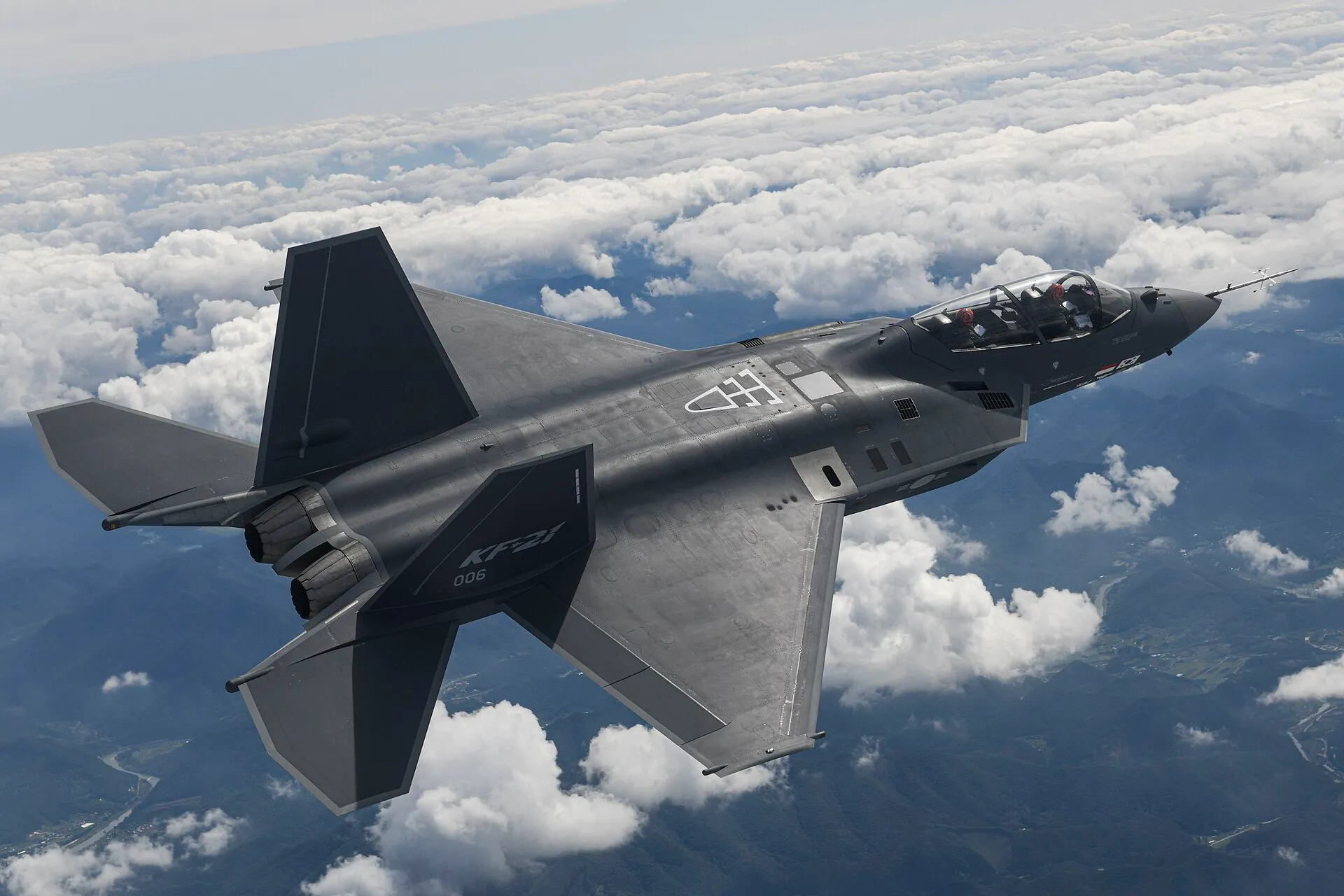
The KAI KF-21 Boramae supersonic fighter jet in flight. Dr. Ju Hyung Kim notes that managing technology transfer and industrial partnerships for platforms like the KF-21 is central to the ROK's ambitions as a top global defense exporter. (Image: Korea Aerospace Industries / KAI)
In your research, you examine the possibility of simultaneous crises in Taiwan and on the Korean Peninsula. From an operational perspective, how should the United States, Japan, and South Korea divide responsibilities to ensure neither theater becomes strategically vulnerable?
In the most severe scenario — similar to the dual-contingency situation examined in the Atlantic Council’s Guardian Tiger tabletop exercises — China and North Korea could undertake simultaneous military actions against Taiwan and South Korea, respectively. Under such circumstances, the United States would likely concentrate primarily on the defense of Taiwan, while the Japan Self-Defense Forces could also be deployed to support U.S. operations in accordance with the 2015 Guidelines for Japan–U.S. Defense Cooperation and Japan’s 2015 security legislation.
According to Self-Defense Force officers whom I have interviewed, approximately 60 to 70 percent of Japan’s air and naval assets could be committed to operations related to a Taiwan contingency, with the remainder retained for the defense of Japan, particularly its southwestern islands.
South Korea’s immediate operational objective, meanwhile, would be to contain and delay invading North Korean forces for as long as possible. The rapid arrival of substantial U.S. reinforcements envisioned in earlier Korean contingency plans, including OPLAN 5055, might no longer be realistic if many of those forces were already committed to the defense of Taiwan.
South Korea might also be asked to facilitate the temporary redeployment of certain U.S. Forces Korea assets to the Taiwan theater, provided that such a move did not critically weaken deterrence against North Korea. In any dual contingency, however, U.S. military assets would be stretched across multiple theaters, making it considerably more difficult for both Japan and South Korea to preserve regional stability and manage simultaneous threats.
While a formal, NATO-style military alliance faces steep historical hurdles in Asia, you’ve argued for closer coordination instead. What realistic steps can Japan and the ROK take to build a more permanent, resilient maritime and intelligence-sharing dialogue?
Given the historical, geopolitical, and cultural differences between Northeast Asia and Europe, an Asian version of NATO — as advocated by former Japanese prime minister Ishiba — appears unlikely to emerge in the region. A comparable effort was made through the Southeast Asia Treaty Organization during the Cold War, but SEATO ultimately failed to develop into a durable regional alliance and was dissolved.
A Japan–South Korea mutual defense treaty is also improbable, owing to Japan’s constitutional constraints and persistent negative public sentiment toward Japan in South Korea. At the same time, an Asian equivalent of the nineteenth-century Concert of Europe is unrealistic because the major powers in Northeast Asia are deeply polarized and show little flexibility in forming shifting coalitions against a commonly recognized regional threat.
The most realistic option, therefore, would be to develop an informal security arrangement between Japan and South Korea within the broader framework of U.S.–Japan–South Korea trilateral cooperation. This would require political creativity on both sides, particularly in identifying avenues for practical security cooperation without immediately pursuing a binding defense pact. In this respect, the 1904 Entente Cordiale between Britain and France offers a useful historical precedent.
Even an informal arrangement, if pursued consistently, could strengthen deterrence against regional challengers. A practical first step would be the conclusion of a limited Japan–South Korea Acquisition and Cross-Servicing Agreement. Such an agreement would be less politically sensitive than a mutual defense treaty, yet substantial enough to facilitate broader forms of security cooperation and signal to potential adversaries that trilateral coordination among the United States, Japan, and South Korea is becoming increasingly seamless.
Security cooperation between Seoul and Tokyo has advanced significantly in recent years, yet public opinion in both countries can remain fragile. How can policymakers build security frameworks that remain durable even when political leadership changes?
Historical disputes — including South Korea’s collective memory of Japan’s colonization of the Korean Peninsula in the early twentieth century and the continuing dispute over Takeshima/Dokdo — will remain potential sources of tension between the two countries. Nevertheless, leaders in both Japan and South Korea can explain to their publics that the deteriorating regional security environment, including China’s increasingly coercive activities around Taiwan and North Korea’s advancing nuclear and long-range missile capabilities, leaves both countries with little choice but to maintain close security cooperation.
In this regard, political leaders on both sides should signal to their respective constituencies that, although bilateral historical disputes must be addressed, they should be handled with restraint and within the broader context of regional security. Public sentiment should not be allowed to undermine necessary security cooperation between Japan and South Korea.
The ultimate objective should be the institutionalization of bilateral cooperation. A particularly important historical precedent is the gradual reconciliation between France and West Germany, including their participation in Euratom and the signing of the Élysée Treaty in 1963.
To be sure, achieving a similar outcome would be a Herculean task in democratic societies, and there is no guarantee that leaders of the caliber of Konrad Adenauer and Charles de Gaulle will emerge in Japan and South Korea. Nevertheless, it remains a political experiment worth pursuing for both countries, especially at this critical juncture.
Given the changing security environment in East Asia, how confident is Seoul today in the long-term credibility of U.S. extended deterrence, and do you foresee greater emphasis on indigenous defense capabilities in the years ahead?
Perhaps the greatest concern is that U.S. extended deterrence could come to be perceived as less credible by regional challengers, particularly North Korea, regardless of how South Korea itself assesses the reliability of the U.S. commitment.
As illustrated in the Atlantic Council tabletop exercise report mentioned earlier, North Korea used a tactical nuclear weapon against a South Korean naval base, while the United States chose not to respond with nuclear weapons. It ultimately retaliated conventionally, presumably out of concern that a nuclear response might unnecessarily escalate the conflict with China.
It is impossible to know with certainty how seriously the North Korean leadership would interpret such a scenario. Nevertheless, repeated signals of restraint could gradually erode the perceived credibility of U.S. extended deterrence, even though the United States retains more than sufficient capability to inflict devastating retaliation.
From my perspective, therefore, before focusing on whether South Korea should acquire its own nuclear weapons or further strengthen its Three-Axis System, the more immediate priority is to ensure that any North Korean use of nuclear weapons would unquestionably trigger intolerable retaliation against Pyongyang. Most importantly, that threat must be credible in the eyes of the North Korean leadership. Such retaliation could be carried out by the United States, South Korea, or both, using whatever means are necessary and available.
You have written about the vulnerability of South Korea’s armored and mechanized forces to saturation drone attacks, drawing on lessons from Ukraine. What immediate, structural pivots should the Ministry of National Defense prioritize to counter this threat?
Although the Ukrainian battlefield differs significantly from the Korean Peninsula, it nevertheless highlights the likely threat posed by saturation drone attacks and the growing vulnerability of South Korea’s armored forces, which consist largely of K1-series and K2 main battle tanks originally designed to counter massed North Korean armored formations.
One possible response would be to install unmanned turrets on older platforms, including K1-series tanks and K21 infantry fighting vehicles, following an approach similar to that now being pursued in Ukraine. Ukraine’s reported modernization of Leopard 1 tanks with Belgium’s Cockerill 3105 turret offers a relevant example.
At the same time, battalions equipped with K2 main battle tanks should be supported by reconnaissance drones, counter-FPV-drone capabilities, dedicated electronic-warfare detachments, and short-range air-defense systems.
Future tank modernization should also prioritize survivability over further improvements in firepower. In this respect, South Korea’s armored-vehicle modernization should incorporate modular overhead protection where tactically appropriate, along with other measures designed to improve resilience against drones, loitering munitions, and top-attack threats.
Your analysis often draws parallels to historical defense frameworks, like Sweden’s Cold War posture. What can East Asian democracies learn from Stockholm’s concept of total defense and operational resilience during periods of alliance fracture?
For more than seventy years, the U.S.–ROK Mutual Defense Treaty has helped deter North Korea from launching another full-scale invasion of South Korea. However, in an era increasingly shaped by the possibility of a dual contingency and concerns over nuclear decoupling, South Korea must be prepared to mobilize all available national resources to deter and withstand North Korean aggression for as long as necessary.
If U.S. reinforcements were delayed or reduced— whether because of an alliance fracture, such as congressional opposition to deploying additional forces from the continental United States, or because of structural constraints, such as the concentration of U.S. assets around Taiwan during a simultaneous contingency — Sweden’s concept of total defense would offer an important model for South Korea.
North Korea’s participation in the Russia–Ukraine war may also allow it to absorb lessons from modern high-intensity conflict. In a future contingency, Pyongyang could combine nuclear coercion, saturation drone attacks, special-forces operations aimed at destabilizing rear areas, hypersonic missile strikes, and large-scale conventional warfare.
Under such conditions, South Korea could not rely on the armed forces alone. It would need to mobilize every layer of society — including central and local government, industry, infrastructure operators, emergency services, civil defense organizations, and the general public — to sustain national resistance and counter a comprehensive, multi-domain assault.
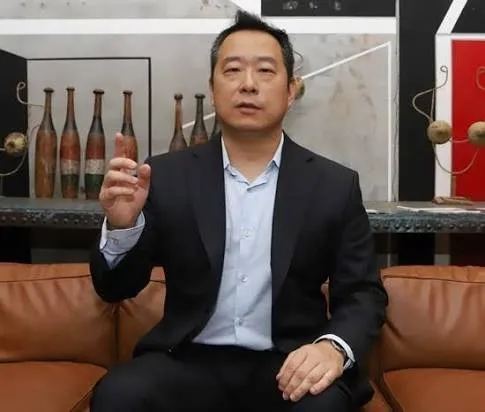
Image courtesy of Dr. Ju Hyung Kim
Dr Kim, having advised both the National Assembly-affiliated Security Management Institute and the Joint Chiefs of Staff, you’ve seen the intersection of policymaking and military planning firsthand. What is the greatest challenge in translating academic security research into practical defense strategy?
Among the many challenges, perhaps the most important is persuading senior decision-makers who may not possess a deep understanding of a particular weapons system or its broader strategic context, often within a very limited period and through only a brief explanation.
Because experts frequently offer competing policy recommendations, the proposal presented by the most persuasive or politically adept advocate often has the greatest chance of being adopted. A comparable problem emerged in the U.S. Congress during the 1970s, when debates over intercontinental ballistic missiles became so technically complex that legislators often gravitated toward those who could explain the issues most clearly and convincingly.
For this reason, future senior decision-makers should ideally spend the earlier stages of their careers building a broad understanding of weapons platforms, military technology, and defense strategy. Such experience would better equip them to distinguish persuasive presentation from substantive merit and to determine which policy option best serves South Korea’s overall defense interests.
“South Korea could not rely on the armed forces alone. It would need to mobilize every layer of society to sustain national resistance and counter a comprehensive, multi-domain assault.”
— Ju Hyung Kim
 @vera.von.monika
 @veravonmonika
 Livedoor