Moto Fukushima: The Musical Language of the Six-String Bass
Few bassists approach the instrument as a complete musical language. For Moto Fukushima, the six-string bass is not simply an expansion of range but a structural framework in which melody, harmony, and rhythm can coexist within a single voice. Born in Kobe and now based in New York, Fukushima developed his musical perspective through early training on piano and later studies at Berklee College of Music, combining technical discipline with a constant exploration of sound, clarity, and musical architecture.
Much of that voice has emerged through his work with the internationally acclaimed trio House of Waters, whose album On Becoming received a nomination for Best Contemporary Instrumental Album at the 2024 Grammy Awards. Within the ensemble, Fukushima’s bass frequently moves beyond its traditional supporting role to occupy melodic and harmonic space, reflecting decades of rigorous practice and a philosophy that treats technique not as an end in itself but as a means of achieving transparency in musical expression.
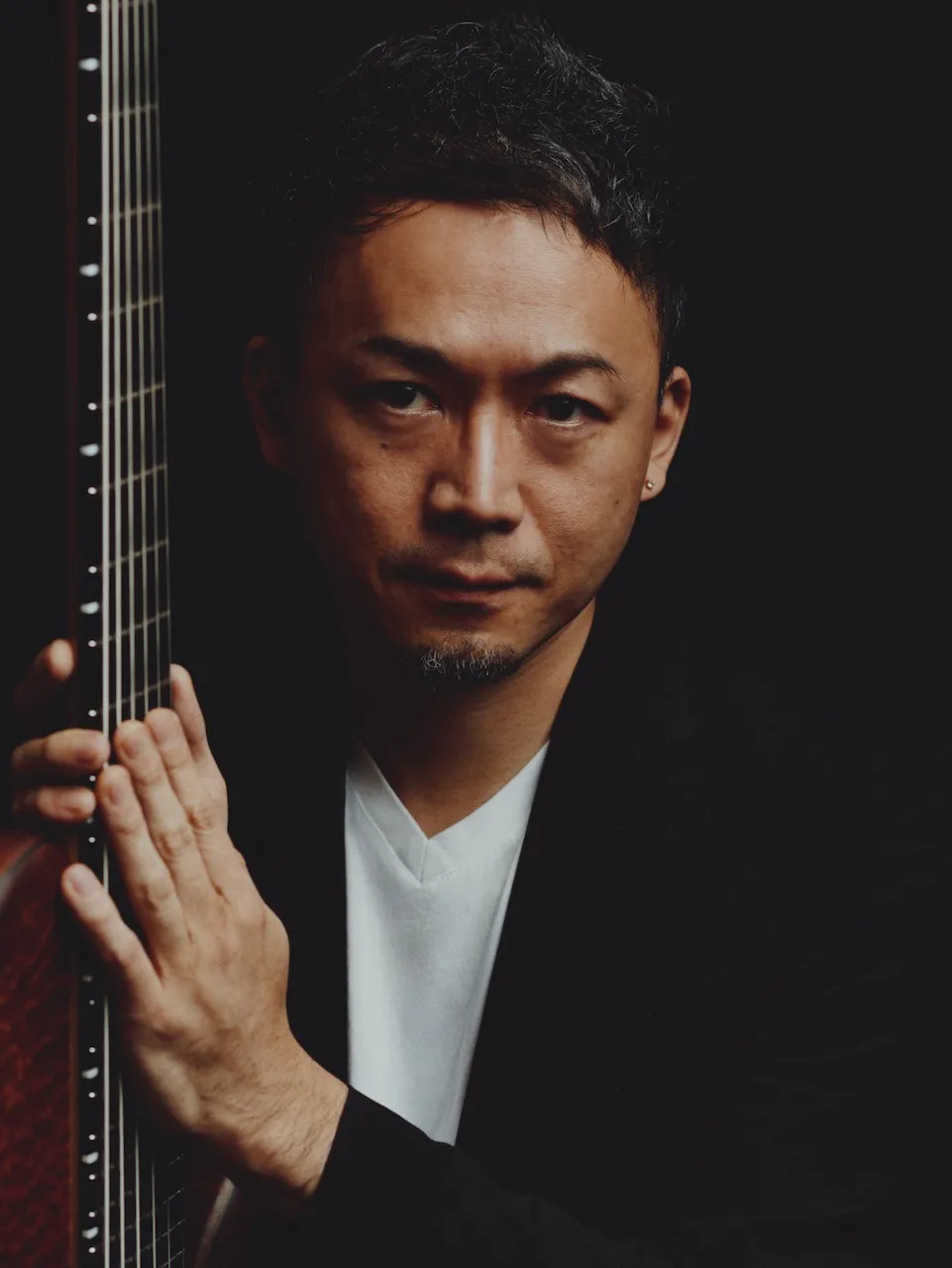
Image courtesy of Moto Fukushima
In this conversation, Fukushima reflects on the evolution of his practice, the endurance required by the instrument, and the expanding possibilities of the six-string bass - now voiced through his Adamovic Basses instrument.
You chose the six-string bass in a field where four strings remain the norm. What made expansion feel necessary rather than excessive?
A couple of things led me there. I grew up playing piano, so having a wider range than a regular bass felt natural to me from the beginning. Another big reason was actually very simple: a friend of mine was selling an old used six-string bass for $100, and I thought, “Okay, I’ll take it.” That bass ended up being a huge part of my journey. I used it for my Berklee audition, throughout my entire time in college, and even when I started my career in New York City. So it was definitely a very good buy.
Your articulation remains clear even in dense passages. How much of that clarity comes from your physical touch, and how much from the architecture of your Adamovic?
Nikola Adamovic built a truly beautiful instrument, and it definitely helps me translate what I hear inside into sound. The bass responds in a way that supports my musical ideas. At the same time, I believe clarity mostly comes from daily practice and consistency. Technique is really just a set of tools that allows us to express what we hear. I’m still working on that every day, and I hope I can keep doing it better.
Physical endurance is rarely discussed publicly. How has your relationship with the instrument evolved in terms of stamina and ergonomics over time?
In some ways, it connects to the previous question. Through practicing with passion and a sense of mission, both my physical and mental endurance have become stronger over time. In the beginning, practicing was much more challenging, but after many years, I can now play or practice for long periods with much better focus and clarity. It’s been a very interesting process. Of course, to be honest, I’m also starting to feel my age a little more now. But somehow, I’m also finding better and more efficient ways to play and concentrate.
Advanced instruments demand advanced discipline. How has your practice routine evolved from your early career to now?
Some parts of my routine have stayed the same for more than 25 years. For example, I still do long-tone exercises at an extremely slow tempo. Maybe I don’t absolutely need to do that anymore, but it helps tune me into the day, into life, into the instrument, and into music. I try to balance those kinds of fundamentals — scales, arpeggios, voicings, rhythm — with more modern concepts in improvisation and composition. I always want to learn new things, but it takes me time to really dive deep and digest them. It’s a slow process, and sometimes challenging. I often wish I could do better. But I also enjoy that struggle, because practicing has taught me so much — not only about music, but also about life and myself.
The six-string bass allows melody, harmony, and rhythm simultaneously. When you improvise, are you thinking structurally in harmony or instinctively in motion?
These days, I try not to think at all — I try to keep an empty mind. It’s not easy, but that’s what I’m aiming for. Of course, when I practice, I think about every detail: harmony, scales, rhythm, structure. I try to visualize everything very clearly. But on stage, I don’t want to be thinking about technical data. I want all of that preparation to already be inside me, so that in performance I can just listen, respond, and be present.
Your work with House of Waters often places the bass in a lead role. With that harmonic freedom, how do you decide when to assert space and when to leave it open?
Playing in a trio with a hammered dulcimer and drums is quite a unique situation for a bass player. The dulcimer has certain tonal and scale limitations, so part of my role is to find what works best within those limitations and then help expand the possibilities from there. In that kind of setting, playing and resting have equal power. It’s really about the ensemble. We listen very closely and try to find the best blend as one unit. So my approach includes both theory and technical understanding, but at the same time, pure listening is just as important in deciding what to play — or not to play.
On Songs Belong to the Night, you treated the bass as a standalone instrument. How did your understanding of “the bass role” shift when you carried the full narrative weight alone?
Of course, the traditional “bass role” in an ensemble is very different from solo playing or carrying a melody. But when I think of the six-string bass simply as a musical instrument, it has a very unique range and tone that can’t really be imitated by any other instrument. I believe it has a warmth that comes from the thickness of the strings and the character of the instrument itself. I happen to use the bass, but really, my focus is just on making music. This is simply the best instrument for me to express what I hear internally. Another interesting thing is that the range of the instrument is actually quite close to my vocal range — at least in the upper and middle registers. I probably can’t sing the very low notes, of course, but maybe that similarity is another reason I feel so comfortable using it as a solo instrument.
Japan has a legendary culture of technically refined bassists. Do you feel rooted in that lineage, or operating within a broader global conversation?
I would say both. In general, Japan has produced many great musicians and has a very strong music education culture, and I was very fortunate to grow up in that environment. Back then, we didn’t have the internet or iPhones, so information was much more limited, and maybe that made us listen more deeply. I’m sure I carry roots from Japanese music and musicians. I grew up in the 1980s, which was really a prime era for city pop, and I’m actually surprised that music has become so popular again in recent years. Those performances were incredible, and the songwritings were also superb. At the same time, I’ve now spent more than half of my life in the United States, and I’ve had the chance to travel and perform in almost every state. So I feel rooted here as well. In that sense, I feel connected to both a Japanese lineage and a broader global musical conversation.
Your recent GRAMMY nomination and peer recognition mark a significant milestone. Did that alter your internal expectations, or reinforce them?
It was a wonderful surprise, and I felt very honored. The band has been playing together for 19 years. We started by playing restaurant background music and performing in subway stations, and over time, that path led to opening for Snarky Puppy and eventually to a GRAMMY nomination. It hasn’t been easy, but it has been a deeply rewarding and very fun process. At the same time, the nomination itself doesn’t change the value of our work or our music. We’re still the same trio, ready to go anywhere and play anytime if people want to hear our music.
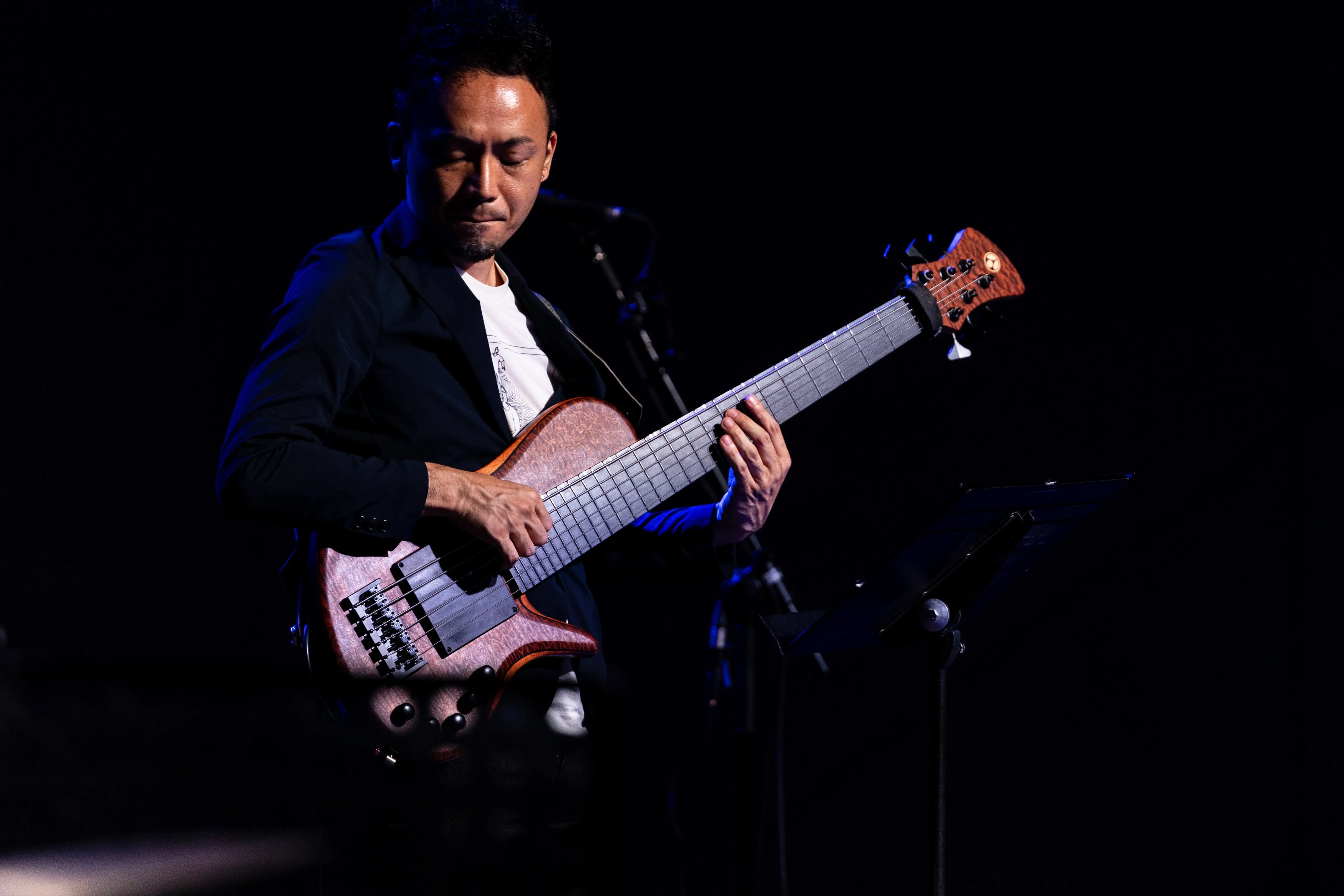
Image courtesy of Moto Fukushima
When someone hears your playing for the first time, what should remain with them after the complexity fades?
I try to keep my music transparent. People can feel something, or nothing — both are okay. I don’t want to impose any specific impression or message from my side. I just want to bring the sound. But of course, if my music resonates with someone, that gives me great joy.
 @vera.von.monika
 @veravonmonika
 Livedoor