GACKT: The Discipline of Being Yourself
For more than three decades, GACKT has occupied a singular place within Japanese entertainment. Musician, performer, actor, and cultural icon, he has built a career defined not by convention, but by an unwavering commitment to his own vision. Yet beneath the large-scale productions, public image, and decades of reinvention lies a philosophy that has remained remarkably consistent: the belief that individuality is not something inherited, but something earned through discipline, self-awareness, and the courage to think independently.
At a time when public opinion is increasingly shaped by algorithms, constant visibility, and the pressure to conform, GACKT continues to advocate for personal responsibility, independent thought, and the importance of remaining true to one’s convictions. Whether discussing music, acting, creativity, or society itself, he repeatedly returns to the same question: how does a person remain authentic without surrendering their own judgment to the expectations of others?
That philosophy is perhaps most visible in his current Maou Symphony 2026 -INFINITY- tour, a production that places nearly seventy musicians on stage and reflects his belief that the most meaningful artistic experiences cannot be reduced to convenience or digital consumption alone. For GACKT, true artistry is not measured by visibility, but by its ability to move people on a deeply human level.
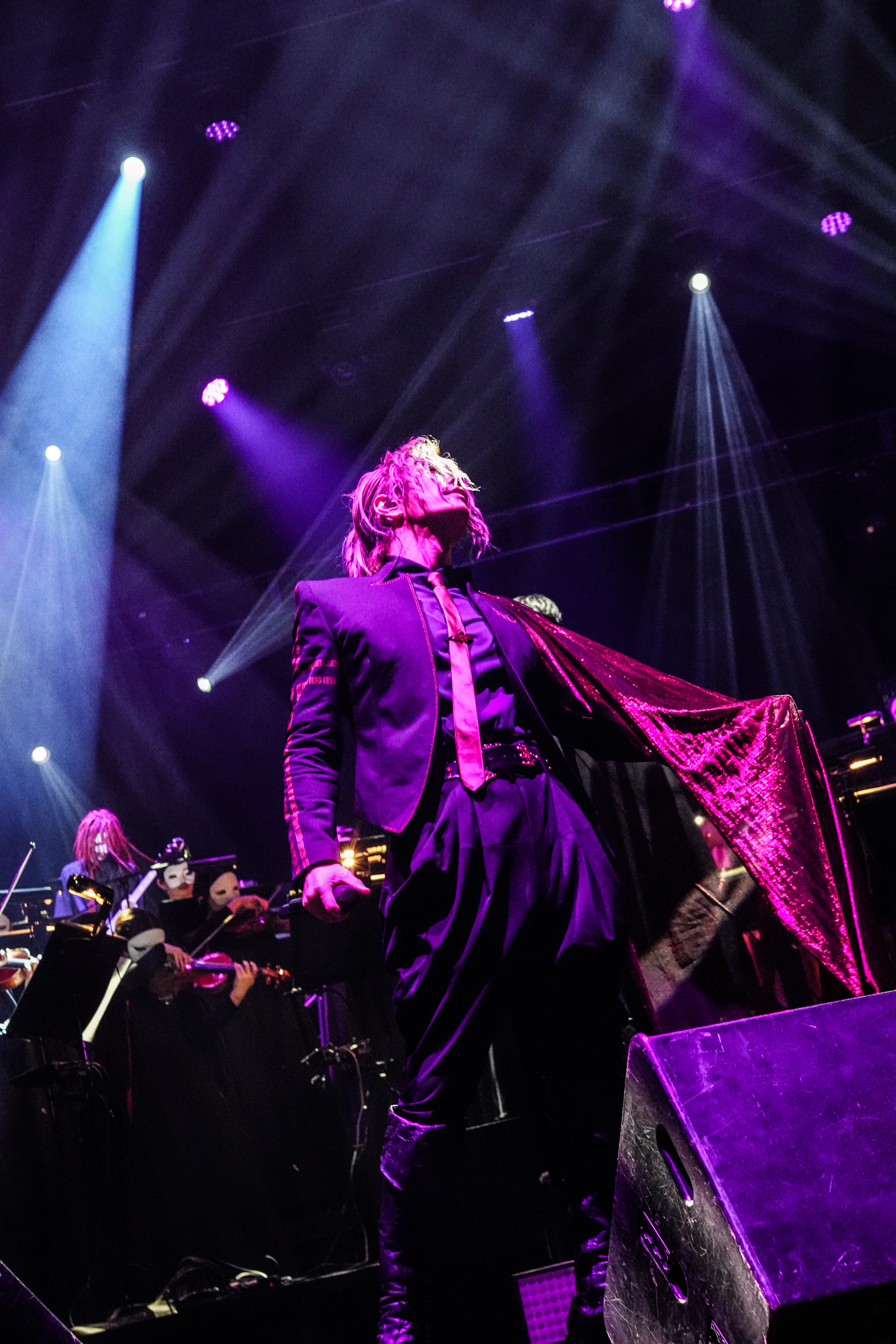
Photo Courtesy of GACKT
In this exclusive and deeply personal interview, GACKT reflects on the evolution of his voice, the meaning of live performance, the cost of creative freedom, his latest role in the Fuji TV drama Black Trick, and the philosophy of discipline, authenticity, and independent thought that continues to guide his life and work today.
Gackt, you have spent decades performing with a voice people recognize instantly as yours. Has your relationship with your own voice changed over time? What do you understand about it now that you couldn't have understood twenty years ago?
I first began my career as a vocalist when I was eighteen. After that, I joined MALICE MIZER as the band’s vocalist, and at twenty-six, I started my solo career.
Up until I was around thirty, I never really liked my own voice.
At some point, I realized there was no point in continuing to dislike something I couldn’t change. So instead of fighting against my voice, I decided to understand it. I went back to the fundamentals, reexamined every aspect of how I sang, and rebuilt my approach from the ground up. The vocal style people know today is the result of that process.
You don’t have to love everything about yourself. But I believe you can stop hating it.
That shift in perspective changed the way I approached singing. Rather than forcing my voice to become something it wasn’t, I learned how to make the most of what only my voice could express.
Today, I’ve gone one step further.
I now blend the rawness and intensity of the way I sang when I was younger with the control and nuance I’ve developed over the years. By combining both, I’ve been able to expand my range of expression in ways I couldn’t have imagined twenty years ago.
In the end, your voice isn’t just a sound. It’s a reflection of who you are at that moment in your life. As you grow, your voice grows with you. That’s probably what I understand now that I couldn’t have understood back then.
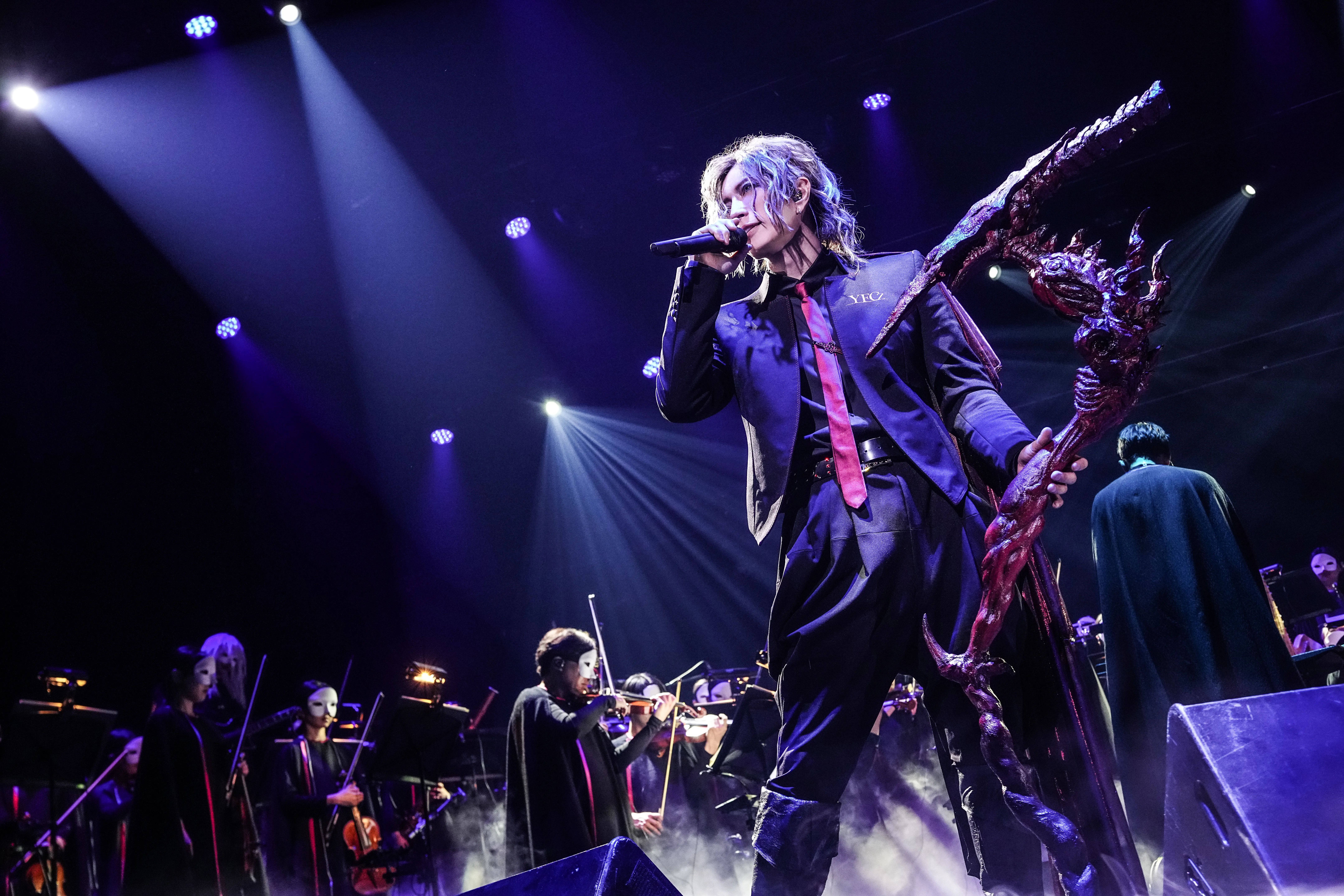
Photo Courtesy of GACKT
Maou Symphony 2026 -INFINITY- brings nearly seventy musicians onto the stage, creating an experience designed to be felt as much as heard. At a time when music is increasingly consumed through phones and algorithms, why does that physical scale still matter to you?
No matter how advanced technology becomes, I believe the thing that moves people the most will always be the energy that only another human being can create.
I’m not saying convenience is a bad thing. Technology has made our lives easier in countless ways, and there’s no denying the value of that.
But every step forward comes with something left behind.
At the end of the day, people don’t just want comfort. They want to be moved. They want their hearts to tremble. They want goosebumps. Sometimes, they even need an experience so overwhelming that it shakes them to their core.
Those moments remind us that we’re alive.
Convenience makes life more efficient. It helps us function. But efficiency and meaning are two completely different things.
If you ask me what gives life meaning, my answer is simple: it’s those moments of genuine emotion, the moments that leave a mark on your soul.
Could AI eventually create experiences like that? Maybe.
Perhaps one day technology will be capable of reproducing even the deepest emotions.
But today, at least, nothing comes close to what human beings can create for one another.
When a real person pours everything they have into a performance, that passion, that energy, reaches another human being in a way no algorithm can replicate.
That’s why people leave saying, “I’ve never experienced anything like that.”
For me, that’s what live performance is all about.
There are people who tell me they’ve had goosebumps from the moment the show began until the very end. I believe that’s something unique to my concerts.
A live performance isn’t simply about listening to music.
It’s about sharing the same space, breathing the same air, and experiencing something that can only exist in that one moment.
That’s why a live performance will always have a value that nothing digital can ever replace.
When you are creating, what arrives first — an image, an emotion, a sound, a scenic or a question you can't stop thinking about? And at what point do you know a piece belongs to the world rather than to yourself?
When I write music, it never begins with a still image or a single emotion.
What I see is a story — vivid, cinematic, almost as if an entire film is already playing in my mind.
From there, I begin asking myself a series of questions.
How can I translate this story into words so that people can truly understand it?
How should I build the music so the emotions and the narrative become one?
And ultimately, what is this story trying to say? What feeling is it meant to leave behind?
That’s how I create.
I step back and look at the vision as objectively as I can. Then I shape the music, choose the words, and refine the emotion until everything points toward the same destination.
Of course, every piece I create passes through me, so my own experiences, beliefs, and emotions naturally become part of it.
But I never begin with, “What do I want to say?”
I begin with, “What is this vision asking me to express?”
In that sense, I don’t feel as though I invent my music from nothing.
I feel more like someone entrusted with a vision — someone whose responsibility is to translate what appeared before me into something the world can see, hear, and feel.
People tend to celebrate reinvention without asking what it costs. What have you had to sacrifice to keep moving forward instead of repeating what already worked?
When it comes to music, I’ve never believed in chasing trends or adapting my style to fit the times.
There’s no point in it.
I’ve always had a clear vision of the music I want to create, and everything I do begins from that foundation.
To be honest, I’ve never thought of myself as someone who keeps repeating success.
I’ve never been interested in recreating what worked before.
All I’ve ever done is devote myself to creating the work I truly want to create, giving everything I have to each project.
The reality, however, is that not everyone can keep up with that pace.
Some reach their physical limits.
Some struggle mentally.
Others simply lose the ability to share the same creative instincts.
When that happens, I don’t hesitate to make changes.
People often see that as being cold, but I don’t make those decisions because I lack compassion.
I make them because the work comes first.
I’ve seen too many projects lose their momentum because someone was no longer able to move forward, or because hesitation and compromise began to limit what we were capable of creating.
If I allow that to continue, the work itself suffers.
That’s something I refuse to accept.
Of course, there are people who have been by my side for many years, and I value those relationships deeply.
But staying together has never been the goal.
The purpose has always been to create something extraordinary.
If I believe I’ve been given a mission in life, it’s not to surround myself with familiar faces.
It’s to bring into this world the work that only I can create.
To fulfill that mission, I have to keep finding the right people at the right time, build the team that each project requires, and continue moving forward without hesitation.
That’s simply the responsibility I’ve chosen to carry.
You have spent much of your career presenting Japanese aesthetics and values through a very global lens. What do you think outside audiences still get wrong about Japanese culture?
There are certainly many things people overseas misunderstand about Japan.
At the same time, there are also many people outside Japan who understand and appreciate the country’s beauty even more deeply than some Japanese people do.
Japan is a nation with countless remarkable qualities.
Its culture, its values, its sense of beauty — there is so much here that deserves admiration. But that doesn’t mean everything about Japan is admirable.
Just as there are aspects of Japanese culture that are truly exceptional, there are also ways of thinking that are deeply insular and don’t necessarily translate well in today’s global society.
Ironically, some of those very characteristics are what people overseas find so fascinating.
From the outside, they can appear unique, elegant, or even romantic. But living within that culture is a different experience.
Not every tradition or mindset should be idealized simply because it is uniquely Japanese.
There are values that have stood the test of time because they are genuinely beautiful.
At the same time, there are others that make it difficult to communicate openly, build relationships across cultures, or adapt to an increasingly connected world.
I believe Japan still carries certain deeply rooted, inward-looking ways of thinking.
In some situations, those qualities become obstacles rather than strengths, making it harder to engage with the international community on equal terms.
Loving Japan doesn’t mean pretending every part of it is perfect.
It means recognizing both its strengths and its weaknesses, preserving what deserves to be protected, and having the courage to change what no longer serves us.
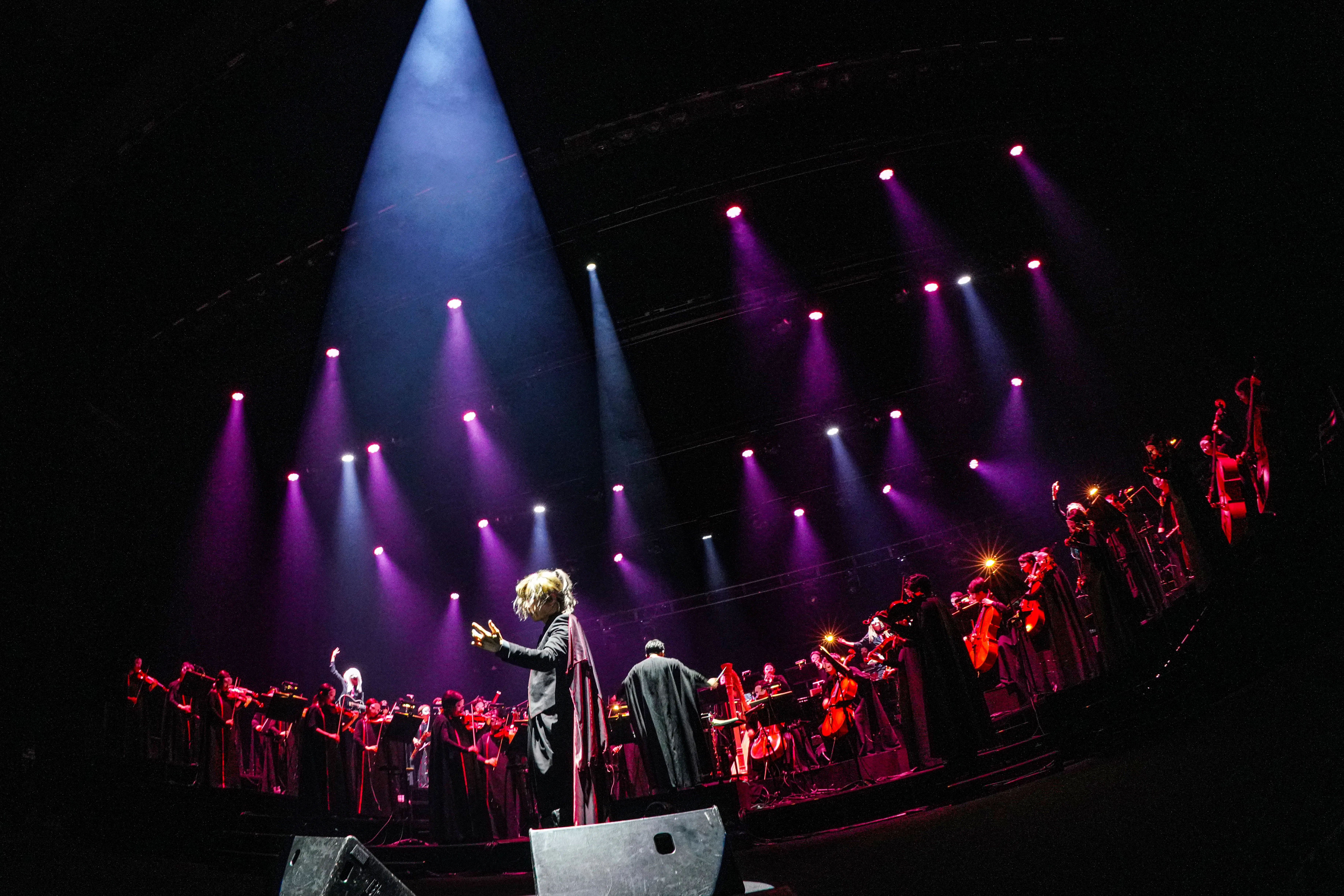
Photo Courtesy of GACKT
In Black Trick, Naoto Uramawashi operates in a world where truth and fabrication constantly overlap. How do you approach a character whose power comes from ambiguity rather than certainty?
I’m not even sure this is the answer you’re expecting, but when I take on a role, I don’t approach it by thinking, “I’m going to play this character.”
Instead, I try to express something that already exists within me.
When I was younger, I was very conscious of “acting.” I believed my job was to become someone else, to create a character that was completely separate from who I was.
That way of thinking changed after I met Ken Ogata.
He taught me something that has stayed with me ever since: you cannot portray something that doesn’t exist within you.
That realization completely changed my approach to acting.
Since then, I haven’t tried to manufacture emotions or force myself into a character.
Instead, I search through my own experiences, my own emotions, and everything I’ve accumulated throughout my life. I open those drawers within myself and draw out whatever the role requires.
In other words, I’m not trying to become someone else. I’m revealing another part of myself.
That’s why I don’t spend much time thinking about “playing a role.”
What I focus on is expressing, as honestly as possible, something that already exists inside me.
I believe that’s the only way a performance can feel genuine. When an audience senses something real, it’s because what they’re seeing isn’t an imitation — it’s a truth the actor has actually lived.
When you played Uesugi Kenshin in Fūrin Kazan, Ken Ogata publicly defended your casting when others questioned it. Looking back now, what did you learn from him that stayed with you long after filming ended?
What I learned from Ken Ogata went far beyond acting. He taught me how to live, how to engage with people, and what it truly means to express yourself.
The lessons he gave me weren’t limited to the craft of acting. They shaped the way I see life itself.
The reason I continue to act today isn’t because I have an endless desire to play different roles.
It’s because I don’t want what he gave me to disappear.
People often ask me, “What kind of role would you like to challenge yourself with next?”
The truth is, I don’t think that way.
I’m not interested in taking on a role simply because it’s new or because it expands my career.
If I believe there’s something meaningful I can express through a project — something that exists within the range of what I can honestly bring to it — I’ll do it.
But if I feel the role doesn’t need me, or that someone else could express it more truthfully, I’ll simply walk away.
That’s always been my standard.
There was a time, especially in my early thirties, when I wanted to challenge myself on a global stage. I had opportunities in Hollywood, and at one point, three films had already been lined up.
Then everything changed.
A tax scandal involving my former management company became headline news. Although I had nothing to do with it, the media wrote the story as if I were personally responsible. Because of the compliance concerns that followed, every one of those Hollywood projects disappeared.
Looking back, I remember thinking, “So this is how it works.”
Even Hollywood wasn’t immune to that kind of reality.
After that, I lost my interest in pursuing acting as a career through the media or chasing success overseas.
Today, I have no ambition to become a global actor.
That’s no longer what drives me.
The only reason I continue acting is because I want to carry forward what Ken Ogata entrusted to me.
If I believe I can genuinely contribute to a story, I’ll accept it.
If I don’t, I won’t.
For me, acting has become less about ambition and more about responsibility.
Modern audiences often expect immediate and constant access to the people they admire. Do you think mystery still has a place in artistry, or has transparency become the new performance?
I don’t believe mystery is something you create by deliberately hiding parts of yourself. It’s something that naturally follows the way you live and the way you think.
I share a great deal of my life on social media. I don’t feel the need to conceal who I am or carefully control what people see.
People often tell me that I have an air of mystery, but I’ve never consciously tried to cultivate that image. If anything, it’s something other people have created based on the way I live, the way I think, and the things I choose to say.
I’ve never been interested in manufacturing a persona.
The truth is, my way of thinking isn’t particularly conventional.
In many respects, it’s quite different from the majority. Because of that, people often tell me, “I don’t know what you’re thinking.”
Perhaps that’s where this idea of mystery comes from.
But I’ve never lived my life worrying about how other people perceive me.
At the same time, I don’t believe my opinions are always right, nor do I speak because I want everyone to agree with me.
I simply express what I genuinely think.
I continue to pursue a way of living that feels true to who I am.
That’s all I’ve ever done.
Living your life to satisfy other people’s expectations has never made much sense to me.
In the end, what people call “mystery” isn’t the result of secrecy.
It’s simply the byproduct of living honestly, thinking independently, and refusing to become someone else just to make other people comfortable.
You have never seemed particularly interested in saying what people expect you to say. When you look at contemporary society, what's a belief or assumption most people accept without ever questioning?
I think one of the biggest problems today is that too many people are afraid of being rejected.
They’re afraid of being seen as different.
They’re afraid of standing apart from the crowd.
Because of that, they unconsciously accept the way the majority thinks.
Eventually, that becomes their default.
They stop questioning.
They stop thinking for themselves.
Instead, they simply adopt whatever everyone else is saying.
To me, that’s no longer a matter of common sense or misconceptions.
It’s something even more fundamental.
Many people believe they’re thinking, but in reality, they’re not. They’re repeating someone else’s opinion as though it were their own. They’re borrowing someone else’s words and calling them their beliefs.
Real conviction doesn’t come from imitation.
It comes from experience.
Your own philosophy should be built through what you’ve lived, what you’ve questioned, and what you’ve discovered for yourself.
That’s how genuine thinking is formed.
But today, many people skip that entire process.
Without experiencing something firsthand, they accept information at face value and convince themselves it’s true simply because they were told it was.
Once that becomes a habit, people become remarkably easy to influence.
Governments, institutions, corporations, and the media all understand how societies function.
And throughout history, they’ve often used that understanding to steer public opinion and shape people’s behavior in ways that serve their own interests.
This isn’t something unique to our time.
It’s been happening for centuries.
It’s one of the reasons wars continue.
It’s why demonstrations and social movements are sometimes driven by agendas that have little to do with the people participating in them.
That’s exactly why I believe people need to reclaim the ability to think independently.
Not to reject everything.
Not to distrust everything.
But to stop accepting everything without first asking themselves a simple question:
“Do I actually believe this because I’ve thought it through… or simply because someone else told me to?”
I think that’s a question far more people should be asking themselves.
The public sees the discipline, the confidence, the execution. What's a philosophy, doubt, or private struggle that has shaped your life far more than people realize?
I don’t see myself as a particularly strong person, nor do I think of myself as someone with extraordinary discipline.
If anything, I know I have plenty of flaws.
There are parts of myself that are lazy, inconsistent, and far from ideal.
That’s precisely why I created a simple rule for myself:
Once I make a decision, I follow through.
Nothing more.
People often describe me as stoic, but that’s not how I see it. I don’t keep my promises because I’m naturally disciplined.
I keep them because I know my own weaknesses better than anyone else.
The only way I’ve found to overcome those weaknesses is to honor the promises I make to myself, no matter how small they may seem.
Over time, that has simply become the way I live. Because of that, I don’t feel as though I’m forcing myself to endure anything.
I’m living exactly the way I’ve chosen to live.
There was a time when I would say things like, “People don’t understand me,” or “I’ve been betrayed.”
I don’t think that anymore.
Looking back, I realize that most of what happened in my life was ultimately the result of my own choices.
Once you accept that, there’s no reason to depend on other people, and there’s no reason to fear being alone.
These days, I live from a much more neutral place.
One thing I believe many people misunderstand is the difference between living in harmony and conforming.
Those are not the same thing.
Living in harmony means staying true to your own principles while coexisting with society.
Conforming means abandoning those principles simply to fit in.
I have no desire to rebel against society or break its fundamental rules.
At the same time, I have no intention of surrendering my own judgment just because the majority believes something.
When I feel something needs to be said, I speak.
When I believe silence will accomplish more than confrontation, I remain silent.
Not every disagreement needs to become a battle.
People don’t enjoy being told they’re wrong.
If your goal is truly to reach someone, simply proving that you’re right isn’t enough.
How you deliver a message matters just as much as the message itself.
Finding that balance has become increasingly important to me.
I don’t want to isolate myself from society.
But I have no interest in losing myself to it, either.
For me, the challenge has always been to remain authentic while living among others.
That’s the balance I continue to pursue.
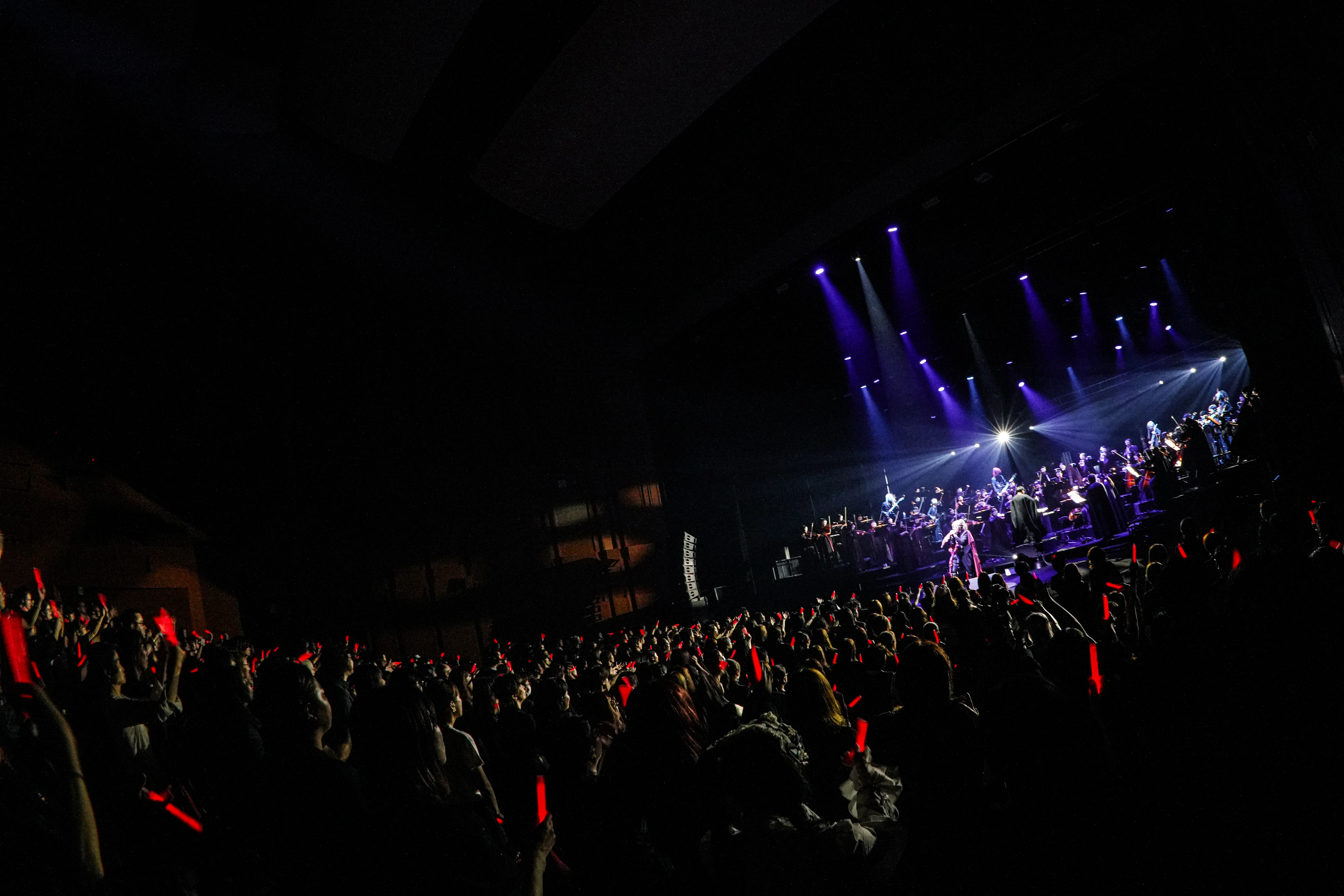
Photo Courtesy of GACKT
“Living in harmony means staying true to your own principles while coexisting with society. Conforming means abandoning those principles simply to fit in."
— GACKT
 @vera.von.monika
 @veravonmonika
 Livedoor