Eun-Chul Oh: The Symmetry of Silence and Sound
There are artists who move between genres, and then there are artists who seem to move beyond them altogether. Across rock, crossover, tango, and classical composition, Eun-Chul Oh has built a creative language defined not by category, but by emotional honesty. Whether performing with CRAXILVER, shaping the vocal landscapes of Forte di Quattro, or sitting alone at the piano, his work reveals a rare balance between technical precision and instinctive expression.
Yet beneath every arrangement, performance, and composition lies a quieter pursuit: the search for a voice that feels unmistakably his own. For Eun-Chul Oh, music is not simply a craft, but an ongoing conversation between memory, imagination, and self-discovery. The piano is not merely an instrument of performance, but a private refuge where the soul must confront itself without a mask. It is a philosophy built on the understanding that the truest resonance is born not from flashing spotlights, but from the heavy shadows of a quiet, deliberate detachment from the world.
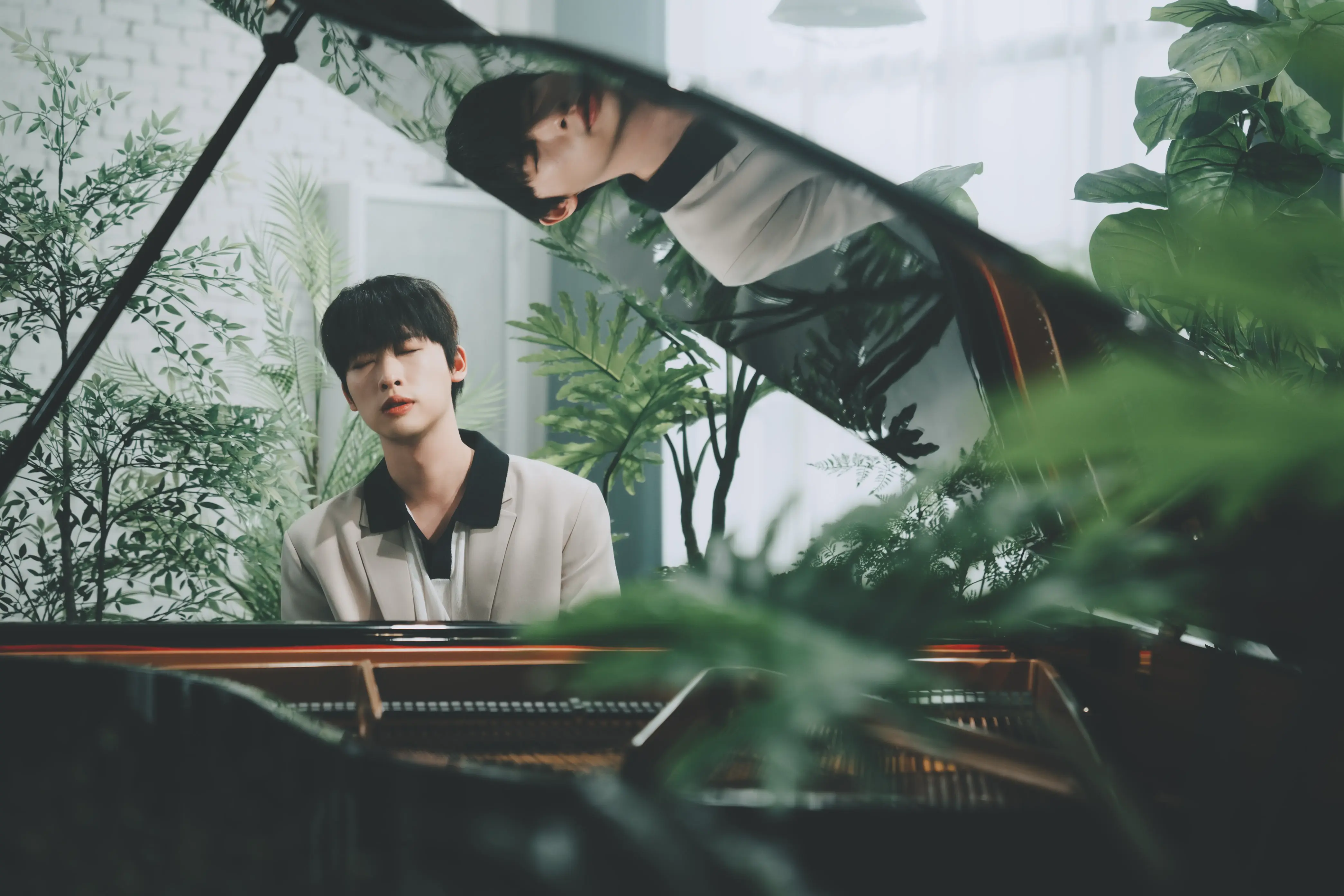
Photo courtesy of ARTS & ARTISTS
In this interview, Eun-Chul Oh reflects on his classical foundations, the emotional architecture shared by rock and crossover, the lessons learned through tango, and the lifelong process of finding an artistic identity beyond genre.
You trained within some of Korea's most respected classical institutions before moving into rock and crossover work. Was there a particular moment, piece, or realization that made you feel the need to move beyond the traditional classical framework?
While studying composition at a music university in Korea, one of my professors encouraged me to transfer to a music school in the United States. Throughout that period, I kept asking myself what kind of music I truly wanted to pursue.
I had been studying composition since middle and high school, and I always loved the excitement of performing something I had written in front of an audience and hearing their applause. So from the very beginning, music was never only about creating a piece for me. The idea of communicating with people through my own music — through something I had created — was always very important to me.
But as I went deeper into contemporary classical music, I gradually began to feel that I was moving away from the reason I had started making music in the first place. Then, while I was studying in the U.S., I heard an incredible contemporary piece written by one of my senior colleagues. It was such an impressive work that, strangely enough, it made me think, “If I don’t love contemporary music enough to go this far and devote myself to it completely, then perhaps I shouldn’t pursue it at all.”
That realization became an important turning point for me.
Later, I returned to Korea for my military service, and over time I began working with tango, rock bands, jazz, film music, Korean popular music, crossover, and many different kinds of musicians. Ironically, it was through stepping outside the traditional classical framework that I rediscovered the feeling I had when I first began composing.
Working on my latest album has made that feeling even clearer. In the end, I realized that what I had been searching for was never a particular genre. It was the answer to a much more personal question: What is the music I genuinely love, and what is the music I truly want to share with people?
Is there a classical composer or a specific piece from your classical training that you still return to — something that shaped how you hear music even now, inside and outside the classical world?
It is difficult for me to choose just one piece or one composer. I have been influenced by many composers in very different ways, and those influences still naturally find their way into my work today.
For example, from Rachmaninoff, I learned about lyricism and the emotional power of music that can connect directly with an audience. From Mahler, I learned about creating a deep narrative through music over a long span of time. Ravel taught me so much about instrumental combinations and the possibilities of color, while Bach showed me how even the most rational and meticulously constructed music can carry extraordinary emotional depth. I am also deeply drawn to Poulenc, particularly his distinctive approach to harmony and rhythm.
So rather than having the influence of one particular composer, I think my music carries traces of many composers I have loved throughout my life. Those different musical languages and personalities enter me, mix together, and gradually transform into something of my own.
Your solo album MOMENTS exists in a very different space from CRAXILVER. Without a vocalist or band dynamic shaping the narrative, what did that process reveal about your own artistic voice as a composer and pianist?
When I sit at the piano with nothing in front of me — almost like facing a blank page — I naturally begin to go deeper into myself.
I imagine certain images, or return to scenes and emotions I have actually experienced, and then try to express them through my own musical language. Things like texture, dynamics, accompaniment patterns, and the shape of the music are not always decisions I make logically in advance. I tend to follow where my emotions want to go and, perhaps even more importantly, where my ears want the music to go.
Through that process, one of the most important things I discovered was that I have to be honest with myself.
Rather than constantly comparing my work with other music or using other pieces as references, I need to ask myself what I genuinely want to hear and what I truly want to express. I realized that this is when something that feels unmistakably like “me” begins to emerge.
Perhaps an artistic voice is not something we can force ourselves to create. For me, it seems to reveal itself most naturally when I am completely honest with myself.
CRAXILVER is often defined by the meeting point between classical sensibility and rock energy. For you, where does that dialogue actually happen — through harmony, touch, dynamics, improvisation, or something less tangible?
For me, I think it ultimately comes down to energy.
Classical music and rock can be very different in terms of instrumentation, technique, dynamics, and many other elements. But on stage, everyone’s energy has to align for the music to become one. If even one person is moving in a completely different direction, the whole thing can lose its balance. But when everyone is looking toward the same place, the boundaries between genres suddenly become much less important.
My experience playing in bands when I was younger also helped broaden my musical spectrum tremendously. I think the structure and sensitivity I learned from classical music now coexist naturally within me alongside the instinctive energy and explosiveness I discovered through rock.
So for me, the dialogue between classical music and rock in CRAXILVER does not happen through one particular harmony or technique. It happens when different musical languages begin moving toward the same energy.
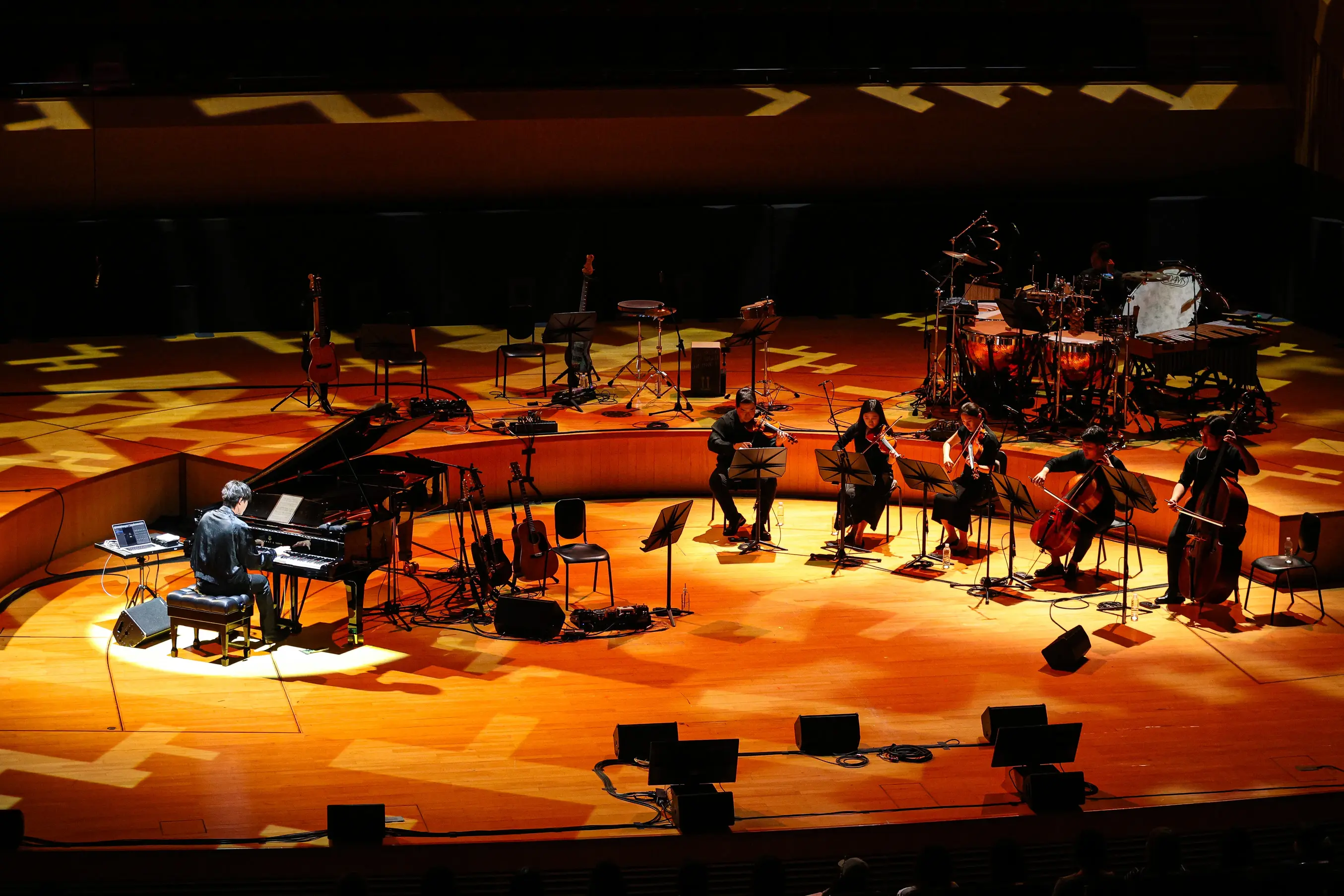
Photo courtesy of ARTS & ARTISTS
Arranging for Forte di Quattro requires writing around four distinct voices rather than placing the piano at the center. How does that shift your perspective as both a pianist and a storyteller?
It requires me to be aware of so many things at the same time.
While playing the piano, I have to constantly listen to and support all four vocalists, while also being aware of everything happening among the other instruments. Sometimes I guide the ensemble physically, through gestures, and sometimes I lead through the music itself. In moments when there is no separate conductor, the piano can also become the instrument that holds the overall musical direction together.
There is also a constant exchange happening in real time. If one of the vocalists makes a spontaneous musical gesture, I may respond to it immediately through improvisation. And sometimes the opposite happens — I make a musical gesture first, and the singers respond and follow me.
That is why this kind of music can never be fully realized by relying only on what is written in the score.
Ultimately, the most important thing is to keep your ears and your heart open to everything around you. You cannot think only about what you are playing. You have to keep listening to what everyone else is saying through the music and respond to it.
And then, occasionally, there is a moment when every singer and every musician truly becomes one. Everyone feels the same breath, and the music begins moving in exactly the same direction. As a performer, there are very few experiences more thrilling or moving than that.
You have also worked extensively with tango, a genre built on its own discipline and rhythm. What has tango taught you that classical training alone could not?
Tango has taught me so many things that I could never have learned anywhere else, and I believe it has changed both my music and my playing enormously.
To me, a tango score is almost half written music and half improvisation. Playing what is written accurately is important, of course, but listening to the other musicians and reacting in the moment is just as essential. Depending on what is happening, the pianist may need to spontaneously fill more space — or, just as importantly, know when to leave that space empty.
The physical language of tango is also quite different from classical music. There are many effects and percussive techniques that we rarely use in classical playing, and the piano itself is often treated almost like a percussion instrument.
One of the most fascinating things tango taught me is that producing a “beautiful” sound is not always the right answer. Sometimes the music needs to sound rough, distorted, or even deliberately raw in order to come alive.
In that sense, tango taught me not only how to make a beautiful sound, but also when to have the courage to let go of beauty altogether. I think that is one of the things I love most about it.
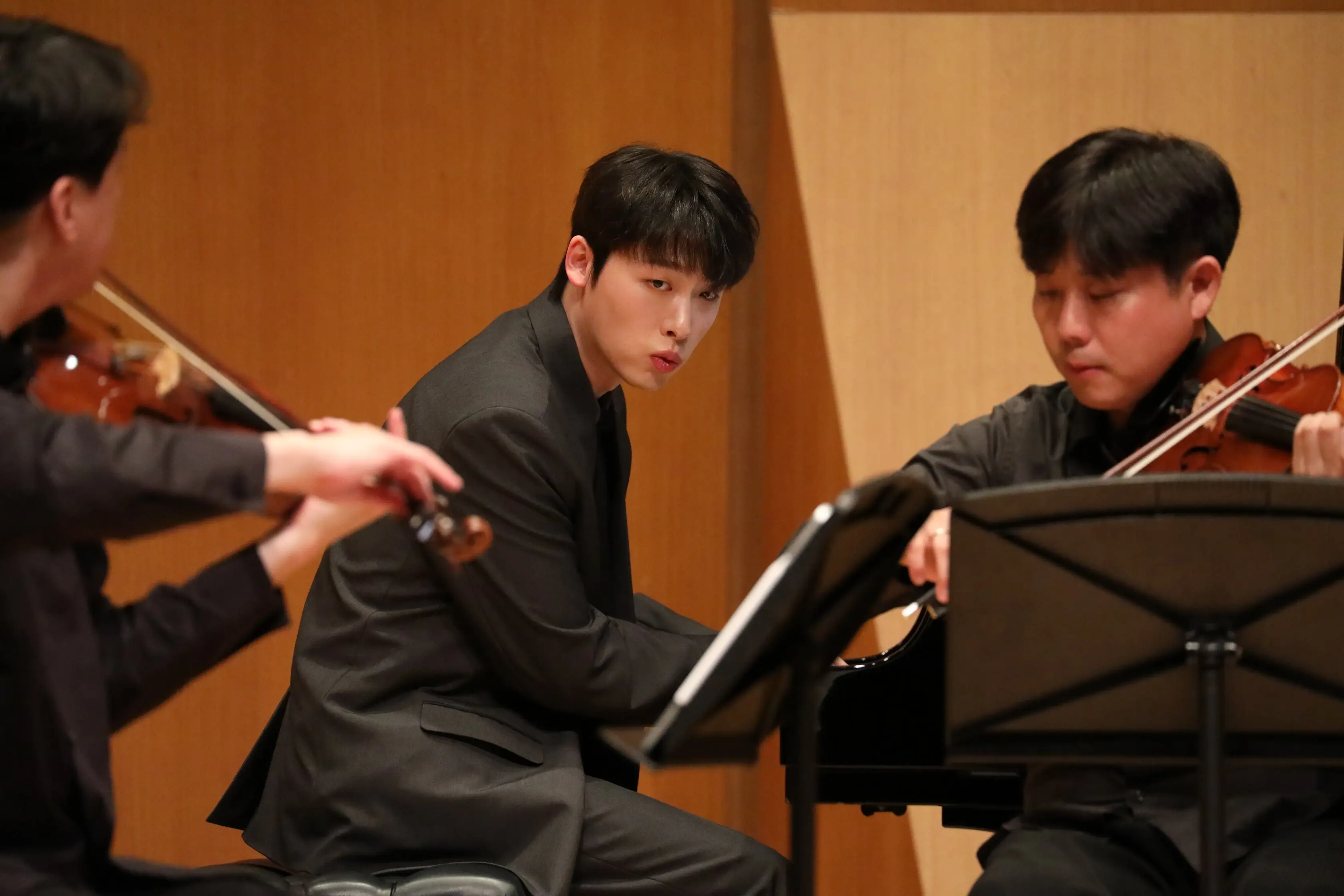
Photo courtesy of ARTS & ARTISTS
When you compose, are you searching for something different than when you perform? How do those two creative states relate to one another?
I think I am ultimately searching for the same thing when I compose and when I perform. Both are ways of expressing the emotions and images inside me in the most natural and musical way I can.
As time goes on, I increasingly feel that composing and performing constantly influence one another. When I discover a new technique, sound, or sense of breathing through performance, it naturally finds its way into my compositions. And the opposite happens as well — musical ideas I discover while composing can change the way I approach the piano as a performer.
So I do not really think of the composer and the performer in me as two separate identities. They are more like two sides of the same musician, constantly changing and developing one another.
Is there a piece — your own or someone else's — that continues to challenge you, not for technical reasons, but because you feel there's still something deeper left to find in it?
There are so many composers and works that I love, but if I had to name one right now, it would be Brahms’s Clarinet Trio, Op. 114.
I listened to it again not long ago, and for some reason, this piece always stays somewhere very deep inside me. The strange thing is that I do not listen to it very often. Instead, every once in a great while, it suddenly comes back to me, and I find myself searching for it and listening again.
And I still cannot really explain why.
I do not know whether it is the harmony, the melodies, the relationship between the three instruments, or simply something in the emotional atmosphere of the piece.
That is what fascinates me. I keep wondering, “What is it about this music that keeps bringing me back?”
Perhaps the reason it continues to stay with me is precisely because I have not found the answer yet.
I am still searching for it.
Your performances are often described as expressive and physically immersive. How much of what audiences see is instinctive in the moment, versus the result of conscious artistic intention?
I believe that the way a musician approaches the music — and the attitude they bring to the stage — naturally reveals itself through the face and the body. And I think audiences can sense that very clearly.
I have actually never tried to consciously act out a certain expression or movement on stage. Whatever happens physically comes naturally from being immersed in the music.
Sometimes I watch a video of myself performing and notice expressions I was not even aware I was making, or moments when my eyes almost seem to roll back because I am so absorbed in the music. I think in those moments I simply love the music so much that I lose myself a little. (laughs)
So I have never really thought of those things as “performance” in a theatrical sense. They are much closer to instinctive reactions that happen when I become completely absorbed in the music.
I am simply grateful that audiences respond to that honestly and see something meaningful in it.
After everything you've explored — classical, rock, crossover, tango — what still excites you enough to sit down at the piano and begin again?
That is a wonderful question.
If you asked me now, I would say the answer is the moment I discover music that truly feels like my own.
Looking back, through all the different genres I have explored — classical, rock, crossover, tango, and others — I think what I was really searching for all along was my own voice, my own music.
And very recently, while working on my new album, I felt for the first time that I had finally found it.
When I listened back to the music I had written, something happened that I had never experienced before in my life: my own music made my heart race. I felt overwhelmed, deeply moved, and even emotional listening to something I had created myself.
It was different from simply thinking, “I wrote a good piece.”
It was more like, “I think I finally found the music I have been searching for.”
This happened only recently, so even for me, the feeling is still new and a little difficult to explain. But that is exactly what makes me want to sit down at the piano again and create the next piece.
It is also why I am so excited about this album. After searching for my own voice for such a long time, I feel that I have finally begun to discover it.
I hope people will look forward to hearing it, and I would be very grateful for their support.
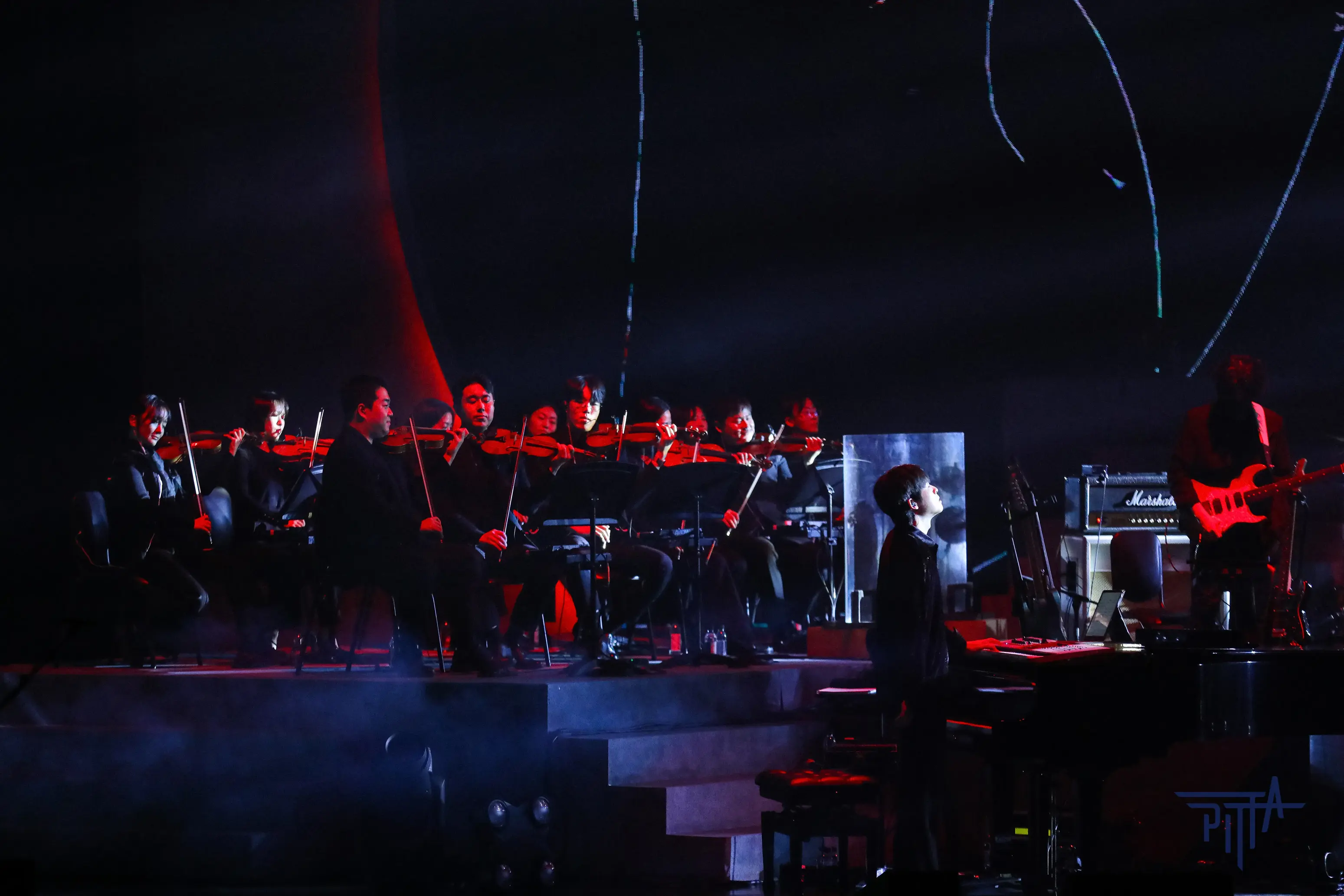
Photo courtesy of ARTS & ARTISTS
“Looking back, through all the different genres I have explored, I think what I was really searching for all along was my own voice, my own music."
— Eun-Chul Oh
 @vera.von.monika
 @veravonmonika
 Livedoor