Julian Hanses: Precision, Endurance, and the Road to Le Mans
Julian Hanses has built his career through adaptation — transitioning from the intensely competitive world of junior single-seater racing into international GT and endurance competition. Following strong performances in categories such as ADAC Formula 4, FIA Formula 3, and the Euroformula Open Championship, the German driver further developed his racecraft through Porsche Carrera Cup Deutschland before competing across multiple top-level GT platforms including Porsche, Mercedes-AMG, and BMW.
Now racing with Team WRT and coming off a P2 overall finish at the 2026 24H Dubai, Hanses continues to establish himself within modern endurance racing while preparing for one of the defining milestones of his career: Le Mans.
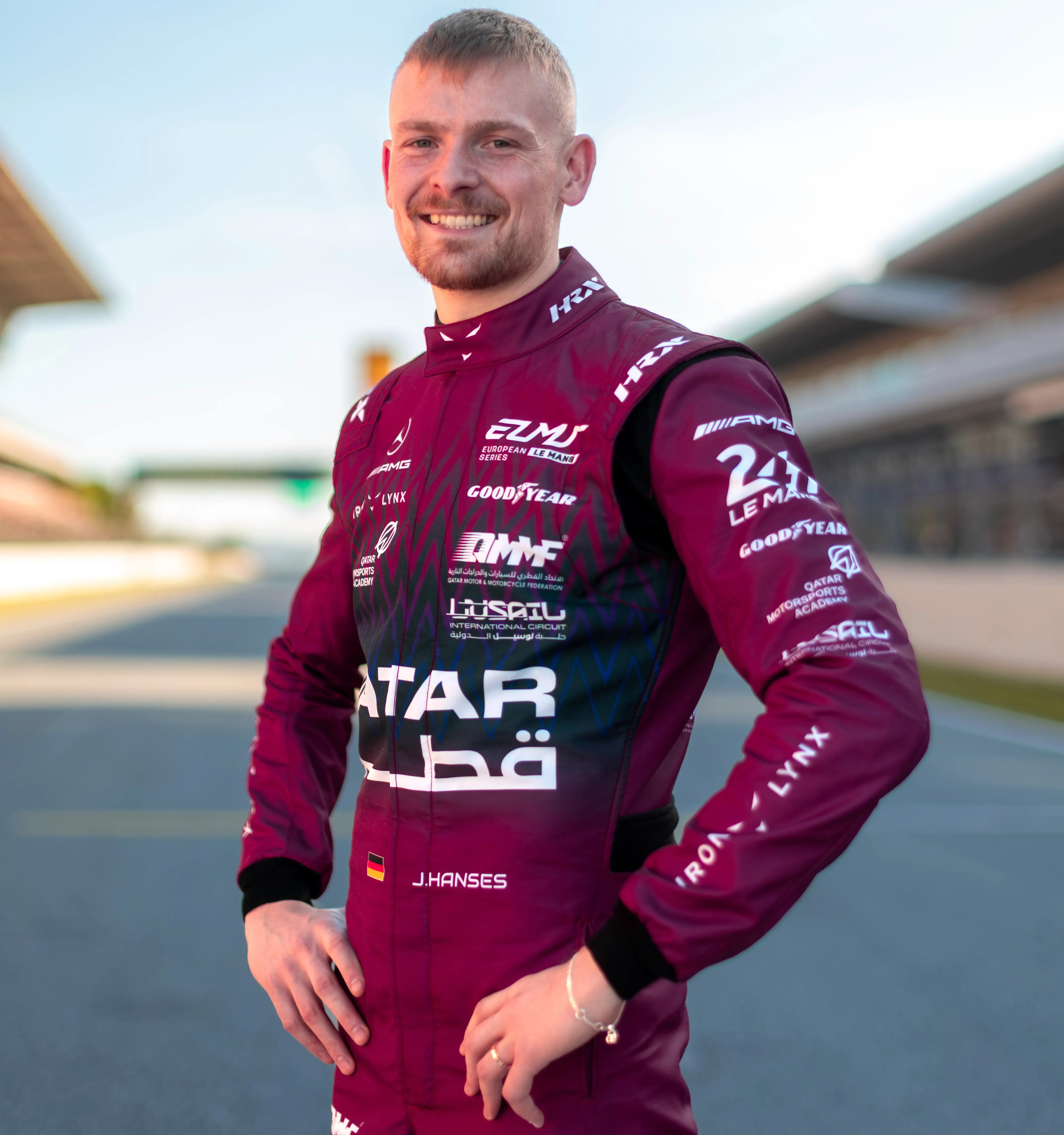
Image via Julian Hanses
In this interview, Julian Hanses discusses the transition from sprint racing to endurance competition, adapting across manufacturers, the intensity of night stints, and the mentality required to compete at the highest level of GT racing.
Your professional foundation was built in highly competitive single-seater categories such as ADAC Formula 4 and FIA Formula 3. Looking back, what was the most critical skill developed in those sprint environments that still serves you today in endurance racing?
In sprint racing, you learn to attack from the very first second and maximize track position instantly. There is simply no time to wait around. Moving into endurance racing, you still need that raw speed, but it requires a shift in mindset: a bit less aggression and much more risk management. However, that sprint mentality becomes a massive advantage during a Safety Car restart in an endurance race. While others might still be getting into their rhythm, you can flip that switch and immediately capitalize.
The 2019 Euroformula Open season marked a standout moment, with multiple podiums at demanding circuits like Pau and Hockenheim. At what point did it become clear that the long-term trajectory would move toward GT and endurance racing rather than the traditional Formula ladder?
To be completely honest, it largely came down to physics. My height, and naturally my body weight along with it, were simply never ideal for single-seaters. I always hoped to overcome that, and while 2019 was indeed a successful year, halfway through the season I had to face reality. It became clear that continuing down the formula ladder wasn't the smartest path for my physique. Together with my sponsors, we made the strategic and ultimately correct decision to pivot and invest our efforts into GT racing.
Several seasons in Porsche Carrera Cup Deutschland exposed you to one-make racing at its most unforgiving. How did that “no-room-for-error” environment shape your tactical approach to wheel-to-wheel combat?
When everyone on the grid is driving exactly the same machinery, there is absolutely nowhere to hide. The Carrera Cup is arguably one of the best schools for racecraft because it forces you to be incredibly precise. If you lock a wheel or leave a gap of a few centimeters, someone will immediately take advantage of it and you lose three positions. That "no-room-for-error" environment completely sharpened my tactical approach. It taught me how to read my opponents, set up overtakes corners in advance, and, most importantly, how to defend cleanly under immense pressure.
A career spanning Porsche, Mercedes-AMG, and now the BMW M4 GT3 EVO requires constant adaptation. What does the preparation process look like when adjusting to the distinct physical and technical demands of each platform?
Preparation is absolutely key. Every platform has its own distinct DNA. My process always starts in the simulator to adapt my driving style to the car's characteristics. But equally important is the technical deep dive ahead of the weekend: I spend a lot of time talking with the engineers, checking the functions, and as unglamorous as it sounds literally studying the user manual of the car. When you're strapped in and driving at the limit, finding the right button or understanding a specific system function has to be pure muscle memory.
Joining Team WRT for the 2025–26 season represents a significant step. Within such a high-level environment, what has been the most important lesson learned about yourself as a driver?
The most important realization has been that when I am put in a top-tier environment, I can absolutely deliver. Joining a world-class operation gave me the opportunity to finally fight against the very best drivers in the world on an equal playing field, with the exact same caliber of material. It validated my belief in my own abilities and showed me that when the car and the team are operating at the highest level, I belong right there at the sharp end of the grid.
Opening 2026 with a P2 overall at the 24H Dubai places you immediately in a high-pressure context. What kind of mental state is required to maintain precision and manage strategy in the final stages of an endurance race?
By the final hours of a 24-hour race, physical exhaustion is constantly fighting against adrenaline. The mental state required is a strange mix of hyper-focus and absolute calm. You have to tune out the fatigue and the pressure of the podium, and just execute perfect laps. It's about not overdriving the car when the track is dirty and the tires are worn, trusting the strategy, and knowing that one greedy move can throw away 23 hours of hard work. It’s high pressure, sure, but honestly, that’s exactly where the fun begins for me.
Night stints are often described as a different discipline altogether, where instinct takes over. How is focus maintained at high speed with limited visibility and constant traffic management?
I actually love night stints! In Dubai, for example, the majority of my stints were in the dark, and racing feels even more intense then. Compared to the daytime, your usual visual references and braking markers disappear into the shadows. You have to rely much more on your physical senses and your feeling for the car, which is an area where my skills really shine. Plus, let's be honest, night racing always brings out a bit of craziness on the track. It’s pure, instinctual driving.
Stepping outside the comfort zone has been a consistent pattern throughout your career. What defines the next objective? Does Le Mans remain the central target?
It absolutely is, and I have finally made it to Le Mans this year. Securing my spot feels like the culmination of a lifelong journey. It’s been a shared dream between my father and me ever since my very first karting session as a kid. To finally be out there, fighting against the best in the world, is incredible. But beyond specific races or trophies, my ultimate objective remains simple: I want to keep loving what I do every single time I put the helmet on.
Away from the cockpit, how is balance maintained during a demanding season? Are there specific routines or interests that help reset mentally?
Motorsport weekends are incredibly intense. I love that energy, but you are also constantly managing tasks and interacting with a huge number of people, which can leave you pretty overstimulated by Sunday evening. For me, the antidote is absolute quiet. After back-to-back races, finding a calm environment is crucial to reset. My perfect escape is heading up to Sylt with my fiancée and our dogs. Just being around them, enjoying the fresh air, and completely disconnecting from the noise allows me to recharge the batteries for the next race.
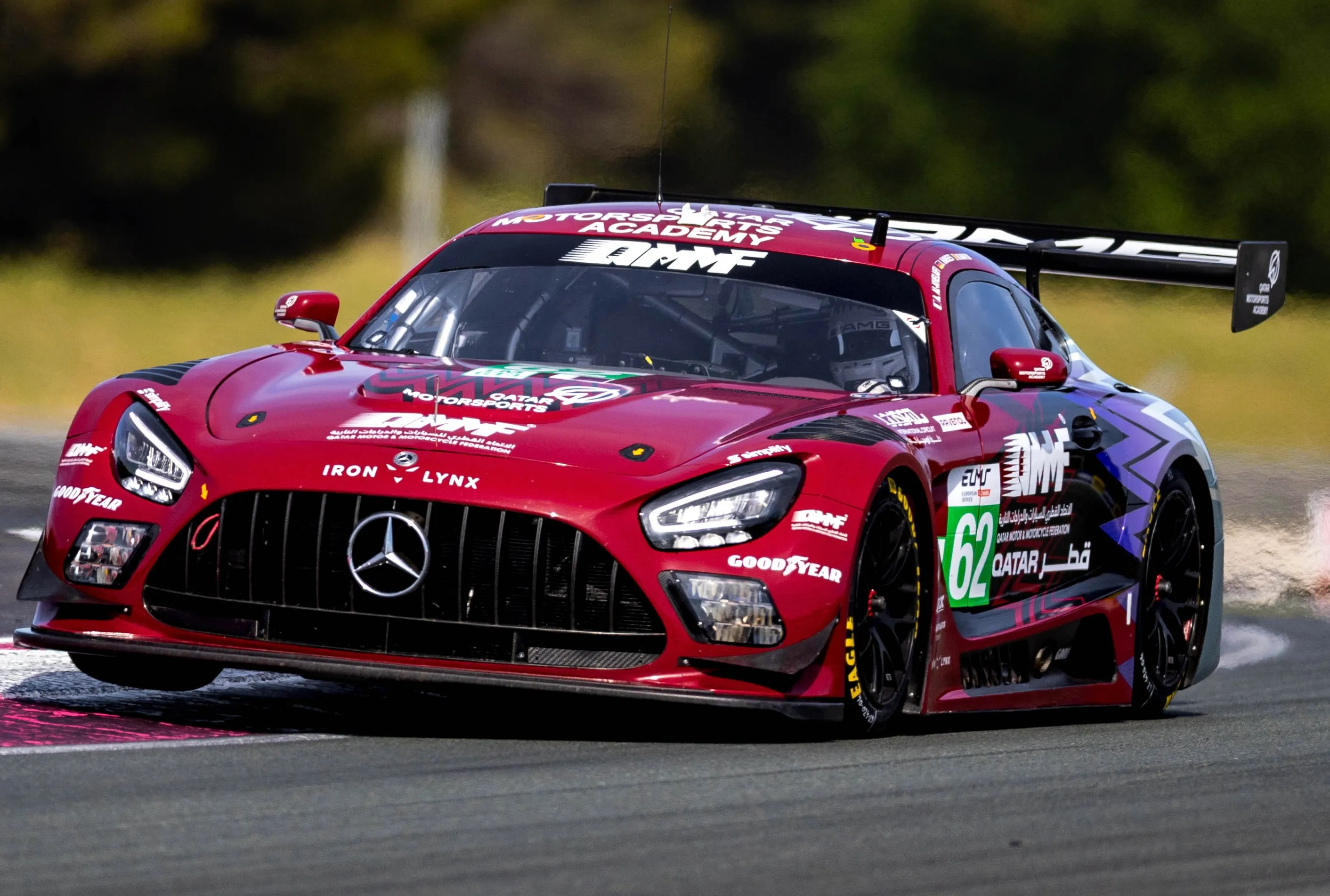
Image via Julian Hanses
“Beyond specific races or trophies, my ultimate objective remains simple: I want to keep loving what I do every single time I put the helmet on.” — Julian Hanses
 @vera.von.monika
 @veravonmonika
 Livedoor