Takuma Koga: High Speed Racing at 300 km/h in NASCAR
Takuma Koga’s career is defined by precision, persistence, and a unique cross-cultural trajectory. His journey from Japan to the high-octane world of NASCAR began with a singular, life-changing moment: watching the 1996 exhibition race at Suzuka Circuit. That spark set him on a course for the United States, shaped not only by that moment, but by a longstanding admiration for American rock music and muscle cars.
Now, having stepped away from business to fully commit to racing behind the wheel of the No. 12 Fast Track Racing Toyota, Koga is in the strongest physical condition of his career. He remains focused on refining his craft while taking on a broader role: bringing the intensity and appeal of NASCAR to Japan and a wider Asian audience.
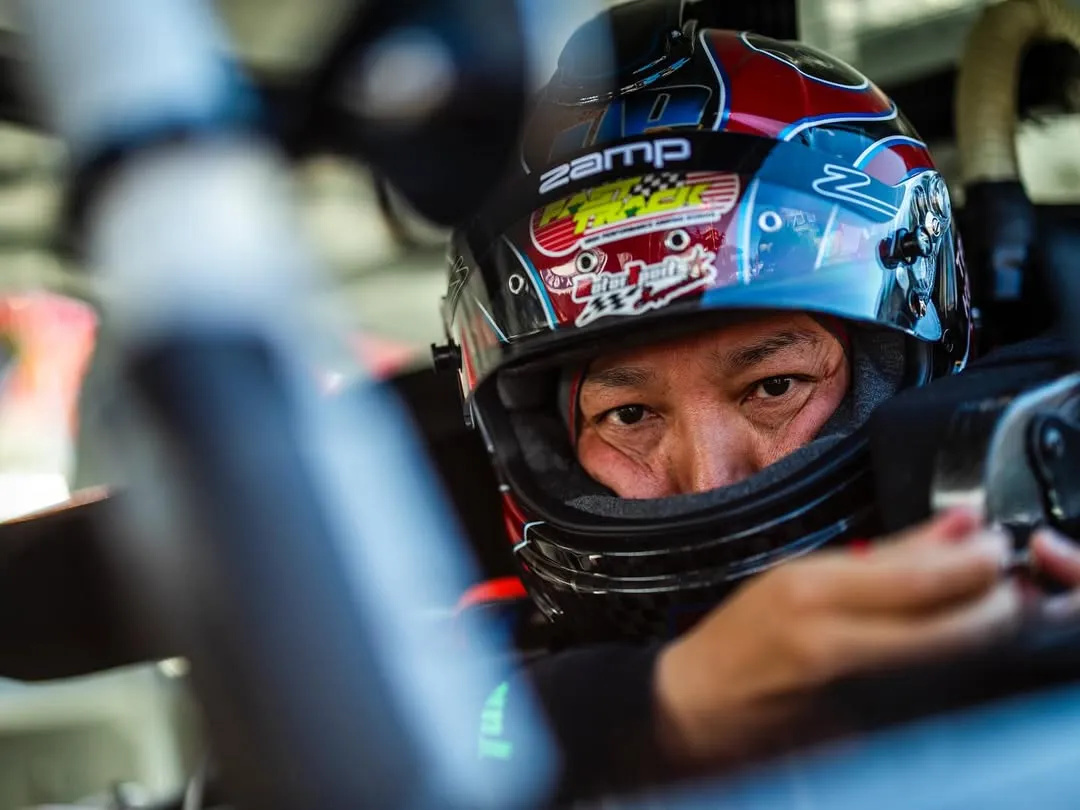
Image via Takuma Koga / Instagram
In this interview, Takuma Koga reflects on the early influences that shaped his path, the distinctly welcoming culture of American racing, and the technical demands of NASCAR - from short track precision to mastering high-speed drafting at over 300 km/h. He also speaks about the defining personal turning point that led him back to racing, and his vision for the next generation of Japanese drivers aiming for the Cup Series.
Your career has unfolded across two very different worlds: Japan and the United States. How has this constant movement shaped your understanding of yourself, not just as a driver, but as an individual navigating two cultures?
As a Japanese, I have always taken great pride in my heritage, while at the same time having a deep admiration for American culture since I was a child. Not only am I passionate about American muscle cars, but I also truly love American rock music. I believe this admiration and inspiration from my early years has stayed with me and continues to drive me even today.
Your interest in stock car racing was sparked by theNASCAR exhibition races at Suzuka Circuit in the mid-90s. What was it about seeing those American stars in Japan that convinced you to leave the traditional Japanese racing path and head to the U.S.?
Since watching the NASCAR exhibition race at Suzuka Circuit in 1996, I was instantly captivated by the thunderous roar, incredible speed, and the combat-like racing style. From that moment, I made the immediate decision to pursue my path in the United States.
As the non-American driver with the highest number of starts in the ARCA Menards Series West, what distinguishes this specific environment from other forms of motorsport you have experienced?
Not only in the ARCA West Series, but in NASCAR racing as a whole, the participants— including drivers, mechanics, and fans —are almost entirely American. However, since my first NASCAR race at Evergreen Speedway in Washington State in 2000, I have always been supported with great kindness and care. I believe this friendly and welcoming atmosphere is one of the biggest differences compared to Japan.
Stock car racing demands a specific style - from the precision of “bullring” short tracks like Orange Show Speedway to the demands of long-distance race strategy. What aspects of this discipline took the longest for you to truly master?
When it comes to driving on short tracks, the technique involves heavy braking similar to road courses, so I did not find it particularly difficult to adapt. However, what challenged me the most was learning the drafting technique at superspeedways like Daytona. Racing at speeds of over 300 km/h in extremely close proximity while managing aerodynamic drag is something I am still continuously learning and refining even today.
Marked by continuity - including a decade-long absence before your return in 2016 - your career follows an unusual trajectory. How do you personally define success now, compared to when you first debuted in 2001?
At 49, I feel more focused on racing than ever before, and thanks to the daily support of my physical trainer, I am in better physical condition now than I have ever been. While I used to balance racing with running a company in Japan, I exited the business three years ago, which has allowed me to dedicate myself fully — 100% — to racing.
Competing often involves 10-hour flights and constant travel between Nagoya and the United States. What does that level of commitment demand from you mentally and physically?
I don’t find traveling by airplane difficult at all. I actually enjoy flights as if I were relaxing at a hotel. Over the years, I have also learned how to manage jet lag effectively, so it rarely affects me.
As a Japanese driver who is a staple of the American racing system, do you feel like a “bridge” for fans in Japan, especially now that NASCAR is broadcast in Japan through ABEMA TV, or do you approach your work in more individual terms?
I believe my role today is to share the excitement and appeal of NASCAR racing with audiences in Japan. With events such as last year’s exhibition race at Fuji Speedway, I hope to continue reaching and inspiring race fans not only in Japan but across Asia.
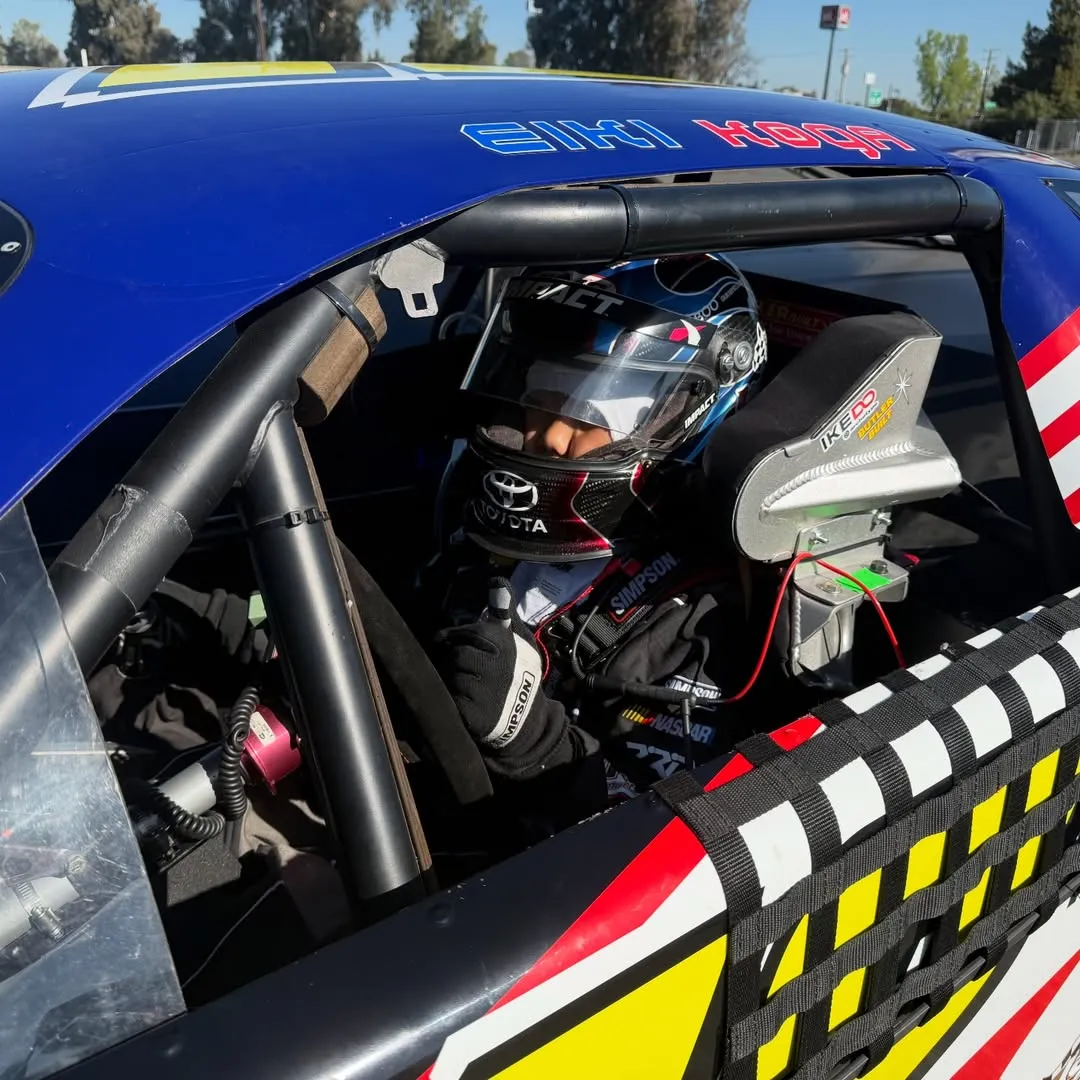
Image via Eiki Koga / Instagram
With your son, Eiki, recently making his debut as the youngest Japanese driver in a Junior Late Model - and with your expressed wish to race together one day - how does seeing him begin his journey reshape the way you view your own career and the “Koga” name in racing?
I hope that EIKI will carve out his own racing career through his own efforts and determination. He has started his NASCAR career in an excellent environment, fully supported by a strong team, and I truly hope he will aim to become the first Japanese full-time Cup Series driver.
Looking back, was there a specific moment, perhaps a tough race or a personal milestone, that completely redefined your relationship with the sport?
I believe the most significant turning point for us was when we were blessed with our first child in 2013. If our daughter RINA had not been born, I don’t think I would have returned to NASCAR racing.
If you were to describe your entire journey not through results or statistics, but through a single idea or feeling, what would it be?
By around the age of five, when I first became aware of the world, I had already decided that I would become a racing driver. It was never just a dream — I was absolutely determined to make it a reality. Since that time, my passion for racing has only continued to grow stronger.
 @vera.von.monika
 @veravonmonika
 Livedoor