Big Ocean: Beyond Sound, Beyond Boundaries
As pioneers of “Free Soul Pop,” Big Ocean have redefined what musical expression can look like. Through a unique fusion of performance, sign language, technology, and storytelling, the trio continues to challenge assumptions while building a movement rooted in inclusion, individuality, and connection.
Courtesy of Parastar Entertainment
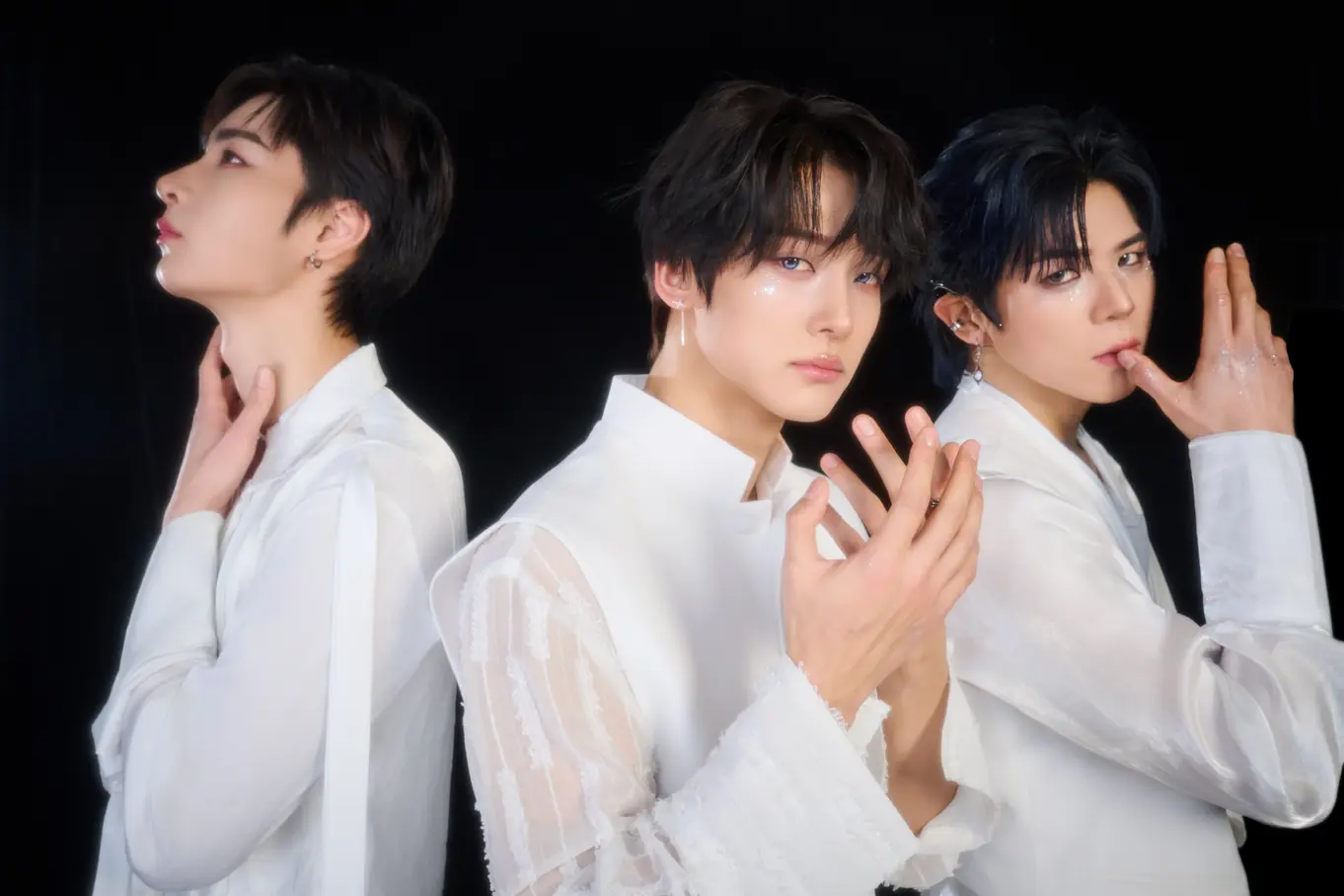
Since their debut, PJ, Chanyeon, and Jiseok have captured global attention not only as the first hard-of-hearing K-pop group, but as artists determined to expand the very language of music itself. Whether through choreography incorporating Korean Sign Language (KSL), American Sign Language (ASL), and International Sign, or through innovative performance technologies, Big Ocean have proven that music can be experienced in far more ways than one.
In this interview, Big Ocean discuss the meaning of “Free Soul Pop,” the creative process behind their sign-language performances, the role of technology in their artistry, the challenges they have overcome, and their vision for a more inclusive future for the global music industry.
How does the concept of "Free Soul Pop" shape the way you express yourselves through lyrics and melody?
PJ: "Free Soul Pop" is about music that moves freely — no barriers, no single way to experience it. It's a genre built on self-acceptance and individuality, so that shapes everything we make. Our lyrics and melodies don't follow a formula, they come directly from our own stories, our own moments of struggle and growth. Every song is almost like a timestamp of where we were, what we were feeling, what we were fighting through at that exact point in our lives. And we hope that honesty and freedom reaches people in a way where they feel free to write their own story too, to find their own "Free Soul" sound.
Since you are pioneering a completely new genre, what has been the most surprising or rewarding part of building the sound and identity of "Free Soul Pop"?
Chanyeon: What we've always wanted with "Free Soul Pop" is music that anyone can enjoy, in whatever way works for them. No barriers, no single right way to experience it. And what surprised us was how openly people received that. A lot of people came up to us curious, asking what the genre even means. And seeing audiences not just accept it but believe in it, believe that music has no limits and carry that feeling back into their own lives.
Your choreography beautifully incorporates Korean Sign Language, American Sign Language, and International Sign. Hyunjin, Chanyeon, Jiseok — what is the creative process like for each of you when transforming sign language into rhythmic performance?
Chanyeon: It usually starts with the lyrics, what is this song actually trying to say, and what does that feeling look like? From there, we look for signs across KSL, ASL, and IS that can carry that meaning visually, and then figure out how to weave them into the choreography naturally. There's a lot of back and forth in that process — we revisit and refine until the movements feel both accurate and visually cohesive with the choreography and the overall vibe of the song.
Jiseok: Although sign language is core to the performance from the very start, we don't really plan it all out in advance. Because we pick up sign language fairly quickly, that part actually tends to come together faster than the rest. Usually the choreography comes first, we get that into our bodies and then we incorporate the signing and adjust everything together until it all flows as one thing.
How does performing through sign language change the way emotion comes across on stage — both for you as performers and for the audience watching?
Jiseok: It makes the connection feel really immediate between us and the audience. And what I love is that PADO signs along with us, so even when it's not a loud, screaming kind of show, it still feels so full, so cozy. If you're far back and want to reach us, just sign it if you can. It's sometimes genuinely funny too: if your throat gives out, just sign it! In Big Ocean performances, as long as you're still in our sight, distance doesn't matter anymore, we see you the same way you see our music.
Blending different sign languages into one performance is both artistic and cultural. Were there any specific challenges each of you faced in bringing KSL, ASL, and IS together cohesively?
Jiseok: The biggest challenge is that different sign systems express the same thing in completely different ways, the signs themselves can look nothing alike across languages.
Sign languages vary so much across countries and regions, so we have to be really thoughtful about how we bring them together and make sure every choice is intentional, not just visually convenient or like we're switching channels.
Chanyeon: It was also about being respectful. These are real languages, real communities.
So we take care to represent each system accurately rather than just borrowing shapes for visual effect. There's a responsibility there that we feel pretty deeply too.
Courtesy of Parastar Entertainment
Beyond live performance, you also use AI deep learning voice programs in your recording process. How does technology shape your creative process in the studio?
Chanyeon: The process was really fascinating. We recorded our voices (talking, singing, rapping) as many times as possible, because the more data we fed in, the more accurate the voice conversion became. From there, the AI deep-learned our voices and could convert a guide vocal into one of our actual voices, so we could hear what a part would actually sound like before fully committing to it. That changed how we made decisions in the studio. It's not about replacing the natural work, if anything it pushed us to sharpen our real vocal skills even more. But as a creative tool, it opened up possibilities we genuinely hadn't imagined before.
Your vibrating smartwatches for synchronization have drawn global attention. Speaking individually — what was each of your first reactions when using this technology together during performances?
Jiseok: All three of us found it really useful, it genuinely made practicing easier. Because we can feel the beat directly through our wrists, we can stay in sync with each other and focus fully on the performance itself without having to rely on external monitors as much. It keeps us connected to each other and to the music at the same time, which makes the whole performance feel tighter and more alive on stage.
Your visual identity is very distinctive. How do fashion and styling help express Big Ocean's message of inclusivity, individuality, and connection?
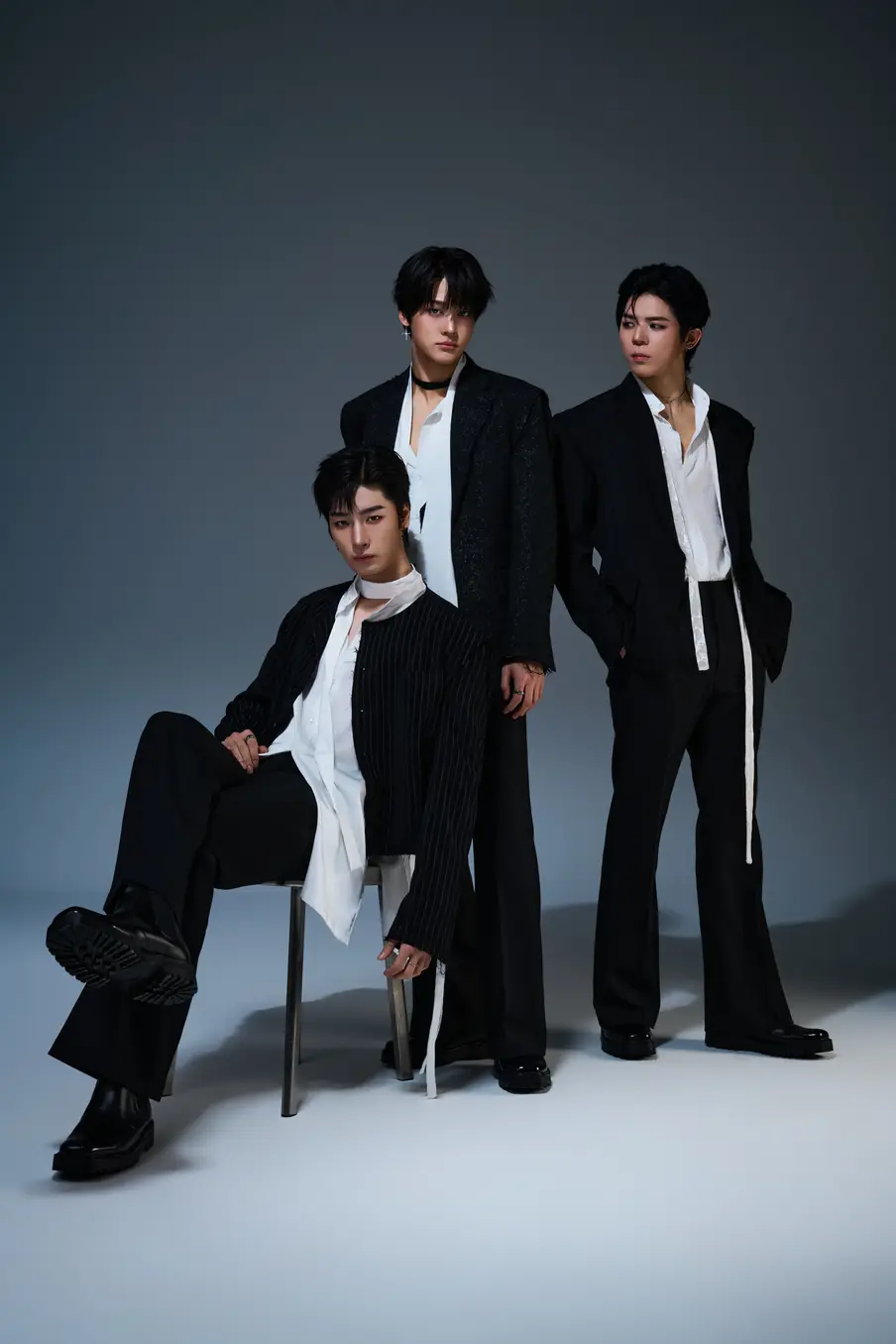
PJ: Fashion and styling is really an extension of storytelling. We explore visual elements without locking ourselves into one fixed image, it's always evolving, always reflecting where we are at that moment, both for the people watching and for ourselves. Like with The Greatest Battle, everything felt heavier and more raw, so the looks had to carry that same weight. And within that, we still want each member to feel like themselves — same world but
different personalities, different voices. That's what inclusion actually looks like.
Hyunjin, Chanyeon, Jiseok — was there a specific moment in your journey where you almost gave up, and what pulled you through?
Jiseok: Actually, I'd call it more of a period than a single moment. It was this stretch of time where doubt was just... present every day. And every day became this quiet battle of choosing to believe in yourself anyway, even when we didn't know how things would turn out. There's a scene in The Greatest Battle where the mask gets pulled off, and I've always seen that as my own hand pulling myself back up. Like a cry from somewhere deep "I can't go out like this." That feeling of wanting to live, wanting to keep going is what carried me through.
PJ: I also think about PADO, the hands that pulled me back up in those moments. On the days when the doubt felt loudest, their belief in us meant more than anything!
Chanyeon: Same for me. Then, when I think about that hand pulling me back up, I also see members too. There were moments I thought I was carrying this alone, but every time I looked around, PJ and Jiseok were right there, fighting alongside me. That's what kept me grounded. Yes, there was doubt (a lot of it) but on the other side of that, there were always people showing up for us. And that support, day after day, is also what kept us standing.
Courtesy of Parastar Entertainment
Looking ahead, how do you hope Big Ocean's journey will influence the future of the global music industry?
PJ: The global music industry is moving toward greater inclusion, and we hope our music and our presence can be part of that momentum. We are the first, but we don't want to be the only one. We hope it keeps pushing forward, toward a world where music isn't just heard through voices, but felt through every part of who we are. And alongside that, we believe accessibility has its role to play too.
But on the other side of that, we'd also like to encourage disabled artists like us to keep training, keep refining, keep pushing beyond what people think your limits are. Your effort your persistence, your talent are what open doors. And we truly believe it's that same dedication, showing up again and again, that will make this industry more open and more inclusive than it's ever been.
“We hope it keeps pushing forward, toward a world where music isn’t just heard through voices, but felt through every part of who we are.”
— Big Ocean
 @vera.von.monika
 @veravonmonika
 Livedoor