ALL'N: The Violinist Pulling K-pop's Strings
ALL’N does not enter the K-pop industry through a conventional path. An award-winning violinist with a foundation rooted in classical performance - discipline, structure, and precision shaped through years of orchestral training - yet his debut positions him within a far more fluid space, where performance, authorship, and strategy intersect.
Working through his own label, SKS Entertainment, he represents a model that moves beyond the traditional K-pop framework. Not as a rejection of it, but as an expansion - one that integrates artistic identity, business control, and a global perspective into a single structure, where technology supports the work rather than defines it. The violin, central to both his background and his current sound, functions not as an addition, but as a defining element of that identity.
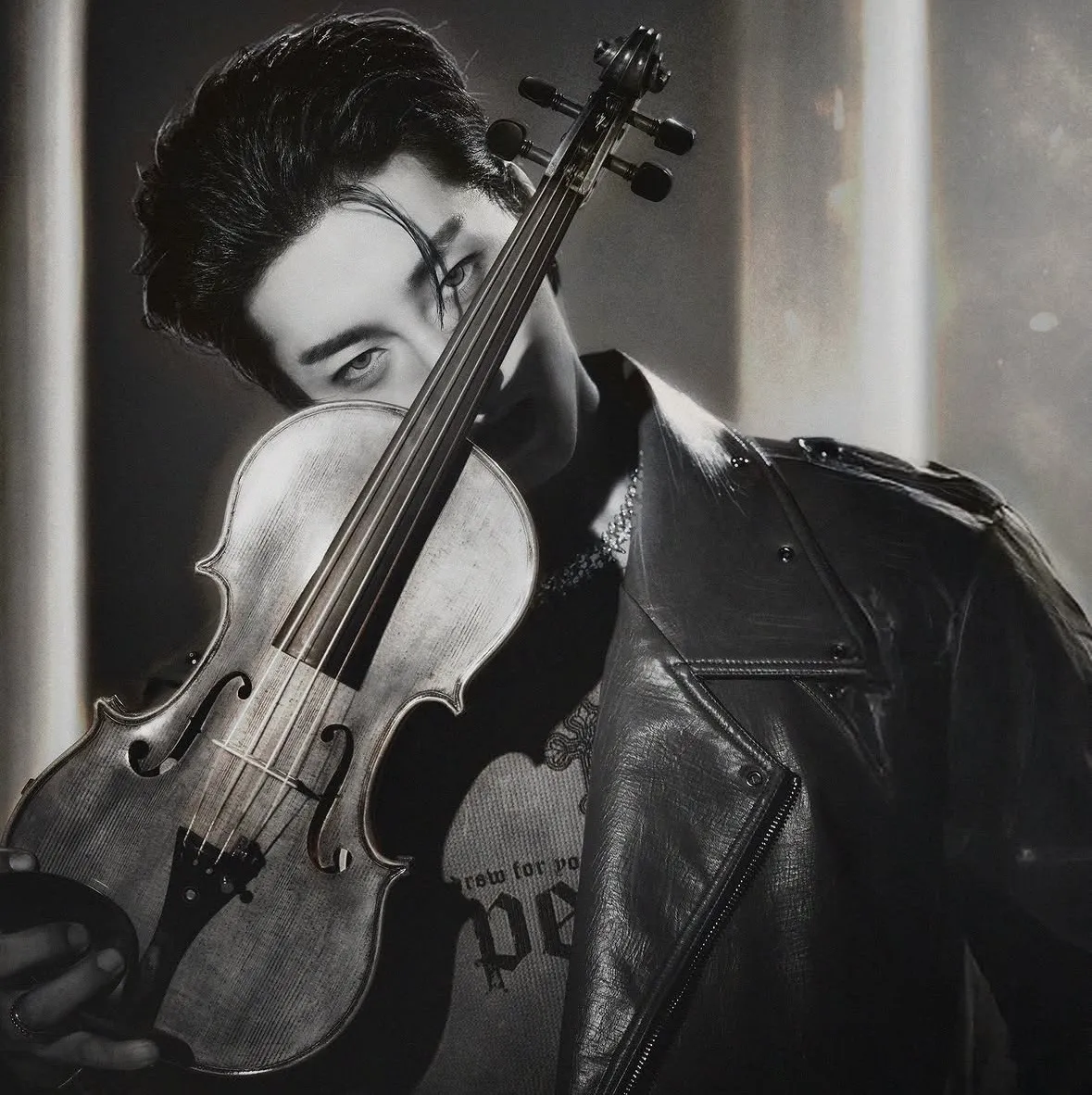
Image via ALL'N
In this interview, ALL’N reflects on that construction: the transition from classical discipline to full-body K-pop performance, the decision to build outside established systems, and the challenge of maintaining authenticity across multiple cultural and creative spaces. He also addresses the role of technology, the importance of team structure, and the long-term vision behind a project positioned not as a debut moment, but as the beginning of a sustained trajectory.
Your background is rooted in classical performance - concertmaster experience, All-State recognition, and orchestral training. How does that discipline translate when you move into choreography-driven, contemporary pop performance?
Classical training gave me the foundation for everything I do now.
When you grow up playing violin seriously, you learn very early that practice and repetition are what create excellence. You also start to understand what discipline really means, not as an idea, but as something you live every day. And when that discipline brings you to a position like concertmaster, it becomes even deeper. You are not only performing for yourself anymore.
You are leading, listening, responding, and carrying responsibility for the people around you. That translates directly into choreography and contemporary pop performance. On stage, I have to move with the dancers, understand the formation, feel the music, and stay aware of everything happening around me. It is not just about doing my own part well. It is about becoming part of one larger performance.
So for me, the transition from classical performance to K-pop does not feel disconnected. In both worlds, every detail matters. The difference is that now my whole body has become part of the instrument.
In We Up, the violin is not used as embellishment, it functions as a structural element. Do you see it as a defining signature of the ALL’N sound, or as one component within a broader sonic range?
The violin is definitely a defining signature of ALL’N.
For me, violin is not something I add at the end to make a song feel different. It is part of my identity. Even the name ALL’N comes from “all in,” but the Korean name 올린 also comes from the last part of “violin.” So the violin is not just a sound choice. It is connected to who I am.
With We Up, I wanted the violin to feel like part of the architecture of the song. It gives the track movement, tension, and emotion. It also separates my sound from a lot of other K-pop. At the same time, I do not want to limit myself to only one type of sound. I see violin as the core signature, but the world around it can keep expanding. It can live inside hip-hop, pop, EDM, orchestral music, cinematic music, or more emotional ballads. The violin is the thread that connects everything, but the sonic range can be very broad.
Having lived across multiple cultural environments, your perspective is inherently global. How does that shape the way you construct and communicate identity through your music?
I think my identity was shaped by constantly living between worlds.
I was born in Korea, grew up in the United States, trained and performed in China, and now I am building my artist career in Korea. Because of that, I never saw identity as only one fixed thing. I always had to understand different languages, different cultures, different expectations, and different ways of expressing emotion.
That is why my music naturally feels global to me. I am Korean, but I am also Korean-American. I come from classical music, but I also grew up around hip-hop, pop, dance, and global internet culture. I trained in the idol system, but I also built companies and worked in technology. So when I make music, I am not trying to erase those different parts. I am trying to bring them together honestly. I want people to feel that I am not performing a manufactured identity. I am showing the real combination of everything I have lived through.
You chose to debut under your own label, SKS Entertainment, rather than entering an established system. What level of control or flexibility were you seeking that made that decision necessary?
I chose to debut under my own label because I needed the freedom to build something that matched my actual identity.
I respect the traditional K-pop system a lot. I trained in it, and I understand how powerful it can be. But my background is unusual. I am not only a singer or dancer. I am a violinist, performer, entrepreneur, and founder. I wanted to build a project where all of those parts could exist together.
Under an established system, there is usually a clear structure already in place. That can be helpful, but it can also limit how far you can push an idea. For me, the violin, the business side, the global strategy, the technology angle, and the storytelling all had to be connected from the beginning.
Creating SKS Entertainment gave me control over the music, visual identity, rollout, partnerships, and long-term direction. It also gave me responsibility. There is no one else to blame.
Every decision is on me. But that is also why I chose the name ALL’N. If I am going to do this, I have to be all in.
SKS positions itself at the intersection of music, performance, and technology. Beyond the statement, what does that integration look like in practice, and how do you define its long-term role within the industry?
For SKS, technology is no longer something I see as the center of the company. The center will always be the artist, the music, and the performance. But in practice, I do use technology to move faster, create more efficiently, understand audiences better, and build stronger fan relationships. AI and other tools can help with visuals, content planning, workflow, and communication, but the purpose is never to replace the artist. The purpose is to give the artist more time and space to focus on the craft.
At the end of the day, music still has to move people. Performance still has to feel real. Technology is only valuable if it helps the artist and the music shine more clearly.
So for SKS, I see technology as a support system, not the identity itself. The long-term role is to use modern tools in a smart way while keeping the emotional core of entertainment human.
For your debut, you assembled your own production structure, working with directors and choreographers who have operated at the highest level of the industry. Which collaborators were most essential to realizing your vision, and what did working outside a traditional agency system reveal, both creatively and operationally?
This debut would not have been possible without the people who believed in the vision early.
My choreographer, who I have known for almost eight years, was extremely important. He and his wife, who is also a choreographer, have worked on major projects across the K-pop industry, including Produce 101, Ailee, and other top artists. They did not only help bring the choreography of We Up to life, but also helped me refine many details beyond dance. Because they have trained and worked with other idols before, they understood the full picture of what it takes to prepare an artist. Their guidance helped me through the process in a way that went far beyond choreography.
Through them, I was also able to connect with more people inside the industry, people I would call real K-pop OGs. That included a former manager of Rain, an entertainment production team connected to CUBE, professional dancers, and many others. I also worked with a talented group of Gen Z students and an assistant professor leading design at a university, as well as a very strong stylist and creative team.
K-pop is an industry where no matter how talented you are as a soloist, you need a strong team behind you. Of course, I had to assemble the structure and take responsibility for the vision, but the people themselves are what made it work. Their experience, effort, and belief in the project are a huge reason this debut was possible.
Visual identity plays a central role in how an artist is understood. How directly are you involved in shaping your styling, and what function does fashion serve within the ALL’N framework?
I am very directly involved.
For me, fashion is not just about looking good. It is part of the storytelling. The way I dress has to communicate the world of ALL’N before I even say anything. It should feel sharp, athletic, modern, and performance-driven, but still connected to elegance because of the violin and classical background. I think the ALL’N framework is about contrast. Classical and contemporary. Discipline and rebellion. K-pop and global culture. Artist and founder. Violinist and performer.
Fashion helps make those contrasts visible. It gives people an immediate understanding of the identity. I want the styling to feel like someone who could walk onto a K-pop stage, perform with a violin, then walk into a business meeting right after.
Your previous performances have shown range across styles. Moving forward, which vocal direction or tonal space are you most interested in developing further?
I want to develop a stronger, more emotional, anthem-like vocal space.
I am interested in songs that feel powerful and uplifting, but still personal. I like vocals that carry ambition, pain, and hope at the same time. Because my story has a lot of struggle behind it, I do not want the vocal direction to feel too polished or empty. I want people to feel the fight in it.
At the same time, I want to keep building range. I want to explore stronger pop hooks, more rhythmic rap sections, and emotional vocal moments where the violin can answer the voice almost like a second singer.
The goal is to create a sound where the vocal and violin feel connected. Not just a singer with a violin part, but one artist using both as part of the same emotional language.
Your international audience has expanded rapidly. Beyond performance, what do you consider essential for that audience to understand about you as an artist?
I want them to understand that this is not just a performance concept. This is my real life.
I did not come into this through the easiest path. I trained in different countries, stepped away from music, built in the tech and startup world, and then came back to K-pop by creating my own company and taking a major risk on myself.
So when people see ALL’N, I want them to understand the mindset behind it. It is about committing fully, even when the path does not make sense to other people. It is about betting on yourself. It is about combining every part of who you are instead of hiding the parts that do not fit the standard mold.
The violin, the performance, the business side, the global background, the discipline, the risk, all of that is connected. I want the audience to feel like they are not just watching an artist debut. They are watching someone build something from the ground up.
With your debut now established, how are you defining the next phase - whether through releases, live performance, or expansion into new markets?
The next phase is about proving that this was not a one-time debut moment. It is about building momentum.
Musically, I want to keep releasing songs that define the ALL’N sound more clearly, especially the fusion of violin, K-pop, hip-hop, and cinematic performance. Performance-wise, I want to continue improving the live stage and eventually bring this into larger venues, festivals, and global markets.
At the same time, I want to expand the world around ALL’N and SKS Entertainment. That means more content, more collaborations, stronger fan engagement, and more international growth. I am especially interested in markets where people connect with both K-pop and global storytelling.
For me, the debut was the beginning. The next phase is about turning attention into trust, and trust into a real long-term movement.
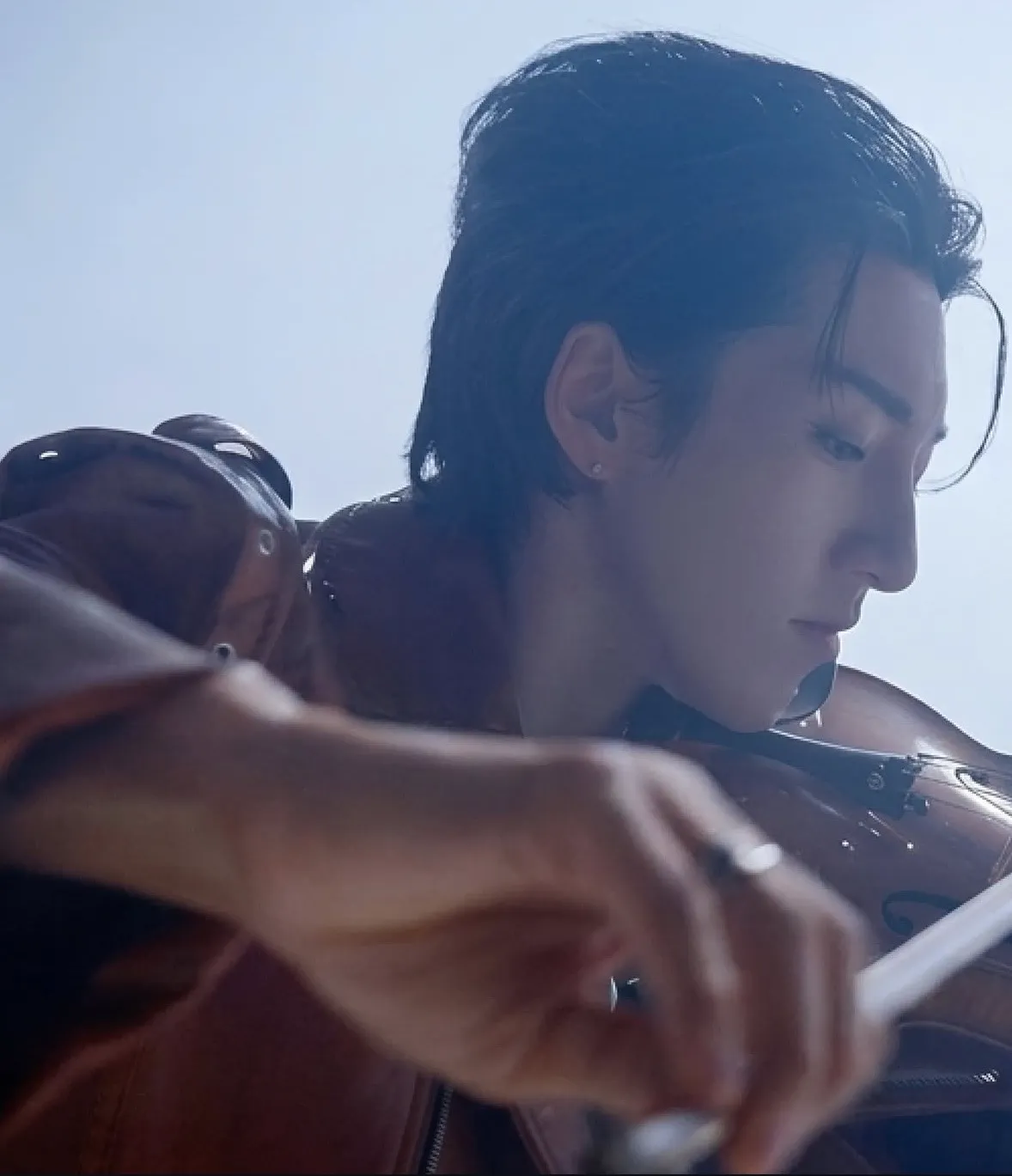
Image via ALL'N
"The debut was the beginning. The next phase is about turning attention into trust, and trust into a real long-term movement." — ALL'N
 @vera.von.monika
 @veravonmonika
 Livedoor