Director Choi Eun-jong: On Cinema and Korean Screen Narratives
For South Korean director Choi Eun-jong, format is secondary to intention. Whether working on television series, web dramas, or feature films, he approaches each project with the discipline and density of cinema — privileging story above genre and narrative coherence above spectacle.
From Dokgo Rewind, which marked both EXO’s Sehun’s first leading role and Choi’s first commercial directing project, to the recently completed emotional noir Red Tide, his work reflects a consistent philosophy: that sincerity in storytelling outweighs scale, and that the most culturally rooted narratives can travel the farthest.
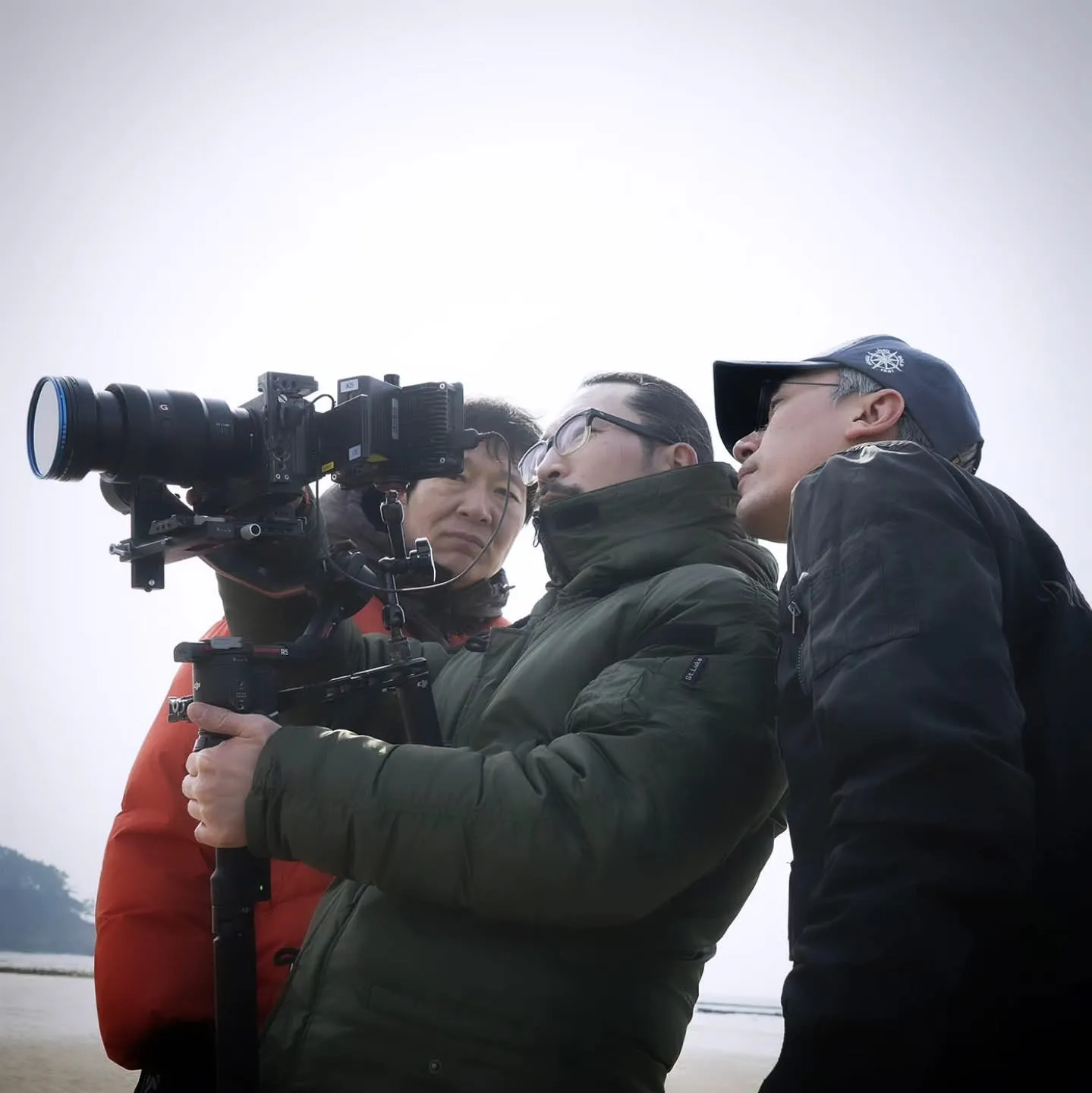
Image courtesy of Director Choi Eun-jong
In this interview, Choi speaks about directing idol-turned-actors, the evolving landscape of Korean entertainment, genre hybridity, and his belief that what is most Korean can also be most universal.
Your work ranges from action-driven television like Dokgo Rewind to a feature such as There Is an Alien Here. How does your directing approach shift across genres, and what elements of your style remain consistent regardless of form?
I direct across different formats: TV series, films, web dramas, and short — form projects. But my personal philosophy is not to approach each format differently by genre or platform. I try to approach everything with a cinematic mindset. Film is where I started, and it’s still the medium I love the most.
No matter the genre, runtime, or platform - whether it’s a theater, TV, or smartphone screen - I prefer the dense, distilled language of cinema. That’s the approach I try to keep consistent in all my work.
When beginning a new project, what do you determine first: theme, tone, character, or visual rhythm, and why does that element lead your process?
When I begin a project, the first thing I decide is the story. I ask myself whether the story is interesting, meaningful, and something I genuinely want to tell.
Themes, characters, and visuals can sometimes feel more striking, but ultimately I see all of those elements as part of the story. That’s why the narrative is always my starting point.
Dokgo Rewind marked EXO’s Sehun’s first leading acting role. How did you approach directing a performer coming from an idol background, and how did you balance his development as an actor with the narrative demands of the series?
Dokgo Rewind was my first time working with Sehun from EXO, and the project has special meaning for both of us. It was his first leading role, and it was my first commercial directing project.
At the time, there were concerns about his acting because he was an idol. It was natural for people to worry about someone known mainly for music suddenly taking on a lead acting role. But I wasn’t too worried. I felt Sehun could handle the character Kang Hyuk well and that he was the right fit. Kang Hyuk doesn’t express emotions overtly - he acts first and speaks later - so I thought the role suited an actor just starting out.
Instead of focusing on polished line delivery, I asked him to express emotions through raw expressions and physical movement. Just as Kang Hyuk grows through his relationships in the story, Sehun also grew through the project. That parallel helped the story feel more complete.
As idols increasingly transition into acting within Korean entertainment, what do you see as the particular strengths they bring, and what challenges directors must navigate when working with performers rooted in music and performance?
Recently, more idols in Korea have been pursuing acting. In the early days, there were missteps and controversies, but now I think the positives outweigh the negatives.
Many agencies now provide structured acting training alongside music activities, and there are more successful cases. From a director’s perspective, this expands casting options. When a well-known and likable actor is cast appropriately, audiences can connect with the character more easily.
However, if casting or directing prioritizes popularity over suitability, it can harm the essence of the work. That’s something I always try to be careful about.
Your projects often blend genres, such as action with drama or comedy with science fiction. How do you think hybrid storytelling shapes audience engagement with contemporary Korean cinema and television?
In today’s content-saturated environment, audiences seem to want a wider range of emotions and experiences within a single project.
Korean creators tend not to be afraid of experimentation. We follow genre conventions but also reinterpret, combine, or even break them apart. I’ve been interested in those kinds of experiments myself.
Genre mixing is relatively natural in Korea, and audiences seem to engage with it without much resistance.
When it comes to pacing, rhythm, and visual energy, how does your approach differ between film and television - if at all?
Personally, I don’t see a huge difference in how I approach films and TV series. As I mentioned, I try to maintain a cinematic density regardless of format. Because of that, I don’t feel a major gap between the two mediums.
Korean film and television continue to resonate strongly with global audiences. How has your own experience shifted as Korean storytelling reaches increasingly international viewerships?
Martin Scorsese once said, “The most personal is the most creative.” In that sense, I believe that the most Korean stories can also be the most global.
With the expansion of international audiences, more projects are being developed with the global market in mind. But I think the priority is still to make works that are loved in Korea, by Korean audiences. If a project is made sincerely for its own culture, I believe it will naturally resonate overseas as well.
Are there aspects of traditional Korean narrative forms or cultural storytelling that influence your filmmaking, consciously or unconsciously?
In Korea’s education system, we study Korean history and ethics. Through history, I learned about many events and figures, and through ethics, I learned about moral questions and standards.
I think those experiences unconsciously influence my work. Historical narratives and moral questions naturally form the backbone of my storytelling.
Could you describe your rehearsal and shooting process? How do you work with actors to develop scene dynamics both before and during filming?
During pre-production, I spend the most time communicating with actors. Even if the script has been carefully developed with the writer, discussions with actors often lead to changes in emotional arcs, dialogue, and blocking.
I believe actors think more deeply about their characters than directors do. When an actor builds a vivid, three-dimensional character, the director’s role is to make sure everything fits together within the overall work.
That’s why I revise the script heavily during readings and stay flexible on set, adjusting movement and emotional flow through rehearsals.
You are currently filming a new project with Jo Byeong-kyu. Without revealing details, how would you describe the creative intention or thematic direction of this collaboration?
I recently completed filming the emotional noir film Red Tide with actor Jo Byeong-kyu and am currently in post-production.
The logline is:
An older brother who hides a crime to build a family, living with guilt. A younger brother who consumes himself with remorse for failing to protect that family. As the truth that shaped them is revealed, they spiral toward destruction.
Looking ahead, what kinds of stories, themes, or formats are you most interested in exploring next? Are there any actors you particularly hope to collaborate with in the future?
In the future, I’d like to direct a human drama like Life Is Beautiful—a story that is sad but also full of humor and emotion, something that leaves a lasting aftertaste. A story that feels deeply human.
As for actors, I’d love to continue working with Jo Byeong-kyu, whom I collaborate with frequently. I also admire Lee Byung-hun and Jung Woo-sung. I worked with them as an assistant director in the past, and I hope to reunite with them one day as director and lead actor.
 @vera.von.monika
 @veravonmonika
 Livedoor